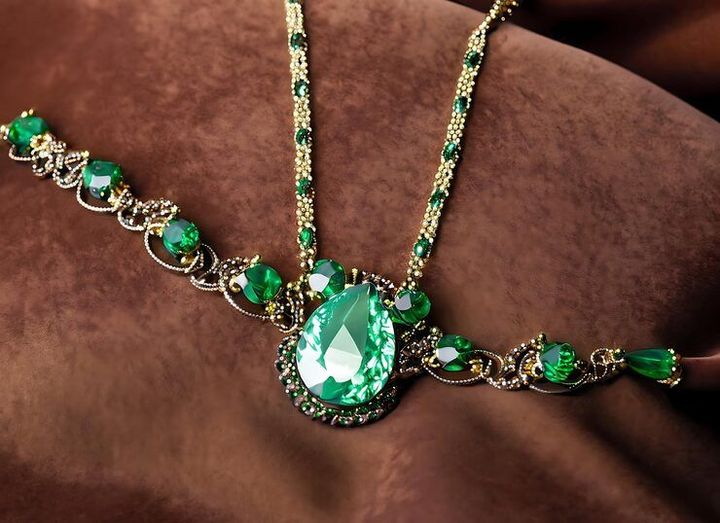
Royal Emerald Necklace Sets Information With Gemstone Quality and Jewelry Design Knowledge
Royal emerald necklace sets are jewelry collections built around emerald gemstones, which are known for their green color and long history in decorative arts. A typical set may include a necklace, matching earrings, and sometimes a pendant, ring, or additional decorative pieces.
The term royal generally describes a design inspired by historical court jewelry, ceremonial ornaments, and elaborate gemstone arrangements rather than a formal gemstone classification.
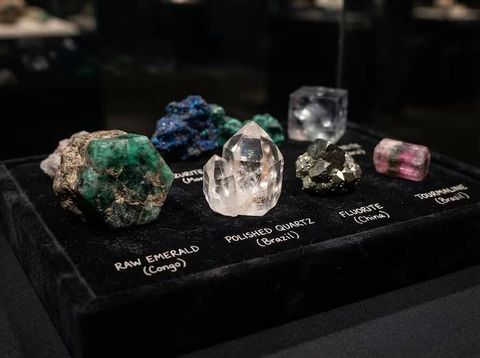
Emeralds belong to the beryl mineral family and receive their green color primarily from trace amounts of chromium, vanadium, or both. Their appearance can range from light green to deep green, depending on the stone's chemical composition and physical characteristics. Royal emerald necklace designs may combine natural emeralds with diamonds, pearls, gold, platinum, or other decorative materials.
Historical Background and Jewelry Traditions
Emeralds have been used in jewelry across several ancient civilizations, including societies in Egypt and parts of the Mediterranean and Central America. Their green color has been associated with nature, renewal, and visual richness in different cultural traditions. Over time, emerald jewelry became part of ceremonial clothing, formal occasions, and collections of decorative objects.
Royal-inspired necklace sets often feature symmetrical arrangements, layered gemstone patterns, intricate metalwork, and prominent central stones. Some designs draw from historical European jewelry, while others reflect South Asian bridal ornaments or contemporary interpretations of traditional craftsmanship. These differences influence the necklace's shape, proportions, decorative details, and overall appearance.
Common Components and Design Styles
A royal emerald necklace set can have several components, depending on its intended use and design.
Necklace: The main piece, which may feature a central emerald, multiple gemstone rows, or repeated decorative motifs.
Matching earrings: Designed to coordinate with the necklace through similar colors, shapes, and metal finishes.
Pendant or ring: Sometimes included to create a coordinated jewelry collection.
Decorative accents: Diamonds, pearls, enamel, or smaller colored stones may complement the emeralds.
Design styles include vintage-inspired collars, elaborate statement necklaces, floral arrangements, geometric patterns, and layered bridal sets. Each style creates a different visual effect and suits different clothing necklines and occasions.
Importance
Why Gemstone Quality Matters
Gemstone quality affects the appearance, durability, and material value of royal emerald necklace sets. Two emeralds of similar size may look different because of variations in color, transparency, inclusions, treatment, and cutting quality. Understanding these characteristics helps readers interpret gemstone descriptions and compare jewelry more accurately.
Emeralds commonly contain internal features called inclusions. These may appear as fine lines, small crystals, or branching patterns sometimes described as a garden-like structure. Such features are common in natural emeralds, but their number, visibility, location, and effect on durability can differ considerably.
Key Factors Used to Assess Emeralds
The following characteristics are commonly considered when evaluating emerald gemstones.
Color: A balanced green appearance, including hue, tone, and saturation, strongly influences visual character.
Clarity: The visibility and distribution of inclusions affect transparency and appearance.
Cut: The shape and proportions influence how the gemstone reflects light and displays its color.
Carat weight: This measures gemstone mass, not its physical dimensions or visual quality.
Treatment: Some emeralds receive clarity enhancement, commonly through oil or resin filling, to reduce the visibility of surface-reaching fractures.
No single characteristic determines the complete quality of an emerald. A larger stone may have more visible inclusions, while a smaller stone may display more even color and greater transparency.
Practical Considerations for Wearers
Royal emerald necklace sets can be substantial in weight and may contain multiple gemstones, making comfort an important consideration. Necklace length, clasp construction, earring weight, and the distribution of decorative elements can affect how the set feels during extended wear.
Emeralds also require thoughtful handling because they can contain fractures and may be more vulnerable to impact than some other gemstones. Individuals choosing a set for occasional ceremonies may prioritize elaborate decoration, while those intending to wear emerald jewelry regularly may prefer simpler settings that are easier to maintain.
Recent Updates
Current Emerald Jewelry Design Trends
Recent jewelry design trends have continued to combine traditional craftsmanship with contemporary styling. Royal emerald necklace sets increasingly appear in variations that adapt historical patterns to different occasions, clothing styles, and personal preferences. Rather than following one uniform design, current collections encompass both elaborate gemstone arrangements and relatively minimal pieces inspired by heritage jewelry.
Several design directions remain relevant:
Vintage-inspired settings: Ornamental metalwork, detailed borders, and symmetrical gemstone arrangements reference historical jewelry.
Mixed gemstone combinations: Emeralds may be paired with diamonds, pearls, or contrasting colored stones.
Convertible designs: Some jewelry pieces are constructed so that detachable pendants or other elements can be worn separately.
Contemporary silhouettes: Traditional green gemstones are incorporated into geometric, asymmetrical, or streamlined necklace designs.
Personalized settings: Engraving, customized lengths, and coordinated components allow variations in appearance and fit.
These are broad design developments rather than claims that every trend has increased in popularity across all markets.
Greater Attention to Disclosure and Traceability
Gemstone transparency has become an important subject in jewelry discussions. Consumers and industry participants increasingly pay attention to whether an emerald is natural, laboratory-grown, treated, or accompanied by reliable documentation. These distinctions matter because the stones can differ in origin, formation, treatment history, and market classification.
Laboratory-grown emeralds have essentially the same principal chemical composition and crystal structure as their natural counterparts, although their formation processes differ. Imitation stones may use glass or other materials to resemble emeralds without having the same mineral properties. Clear identification helps prevent confusion between these categories.
Digital product records and gemstone identification reports can also help organize information about stone characteristics and treatment disclosures. However, digital descriptions alone do not establish authenticity unless the underlying information has been properly verified.
Comparison of Emerald Types
Category | Formation | Important considerations |
|---|---|---|
Natural emerald | Forms through geological processes | Inclusions, origin information, and treatments may require assessment |
Laboratory-grown emerald | Produced under controlled laboratory conditions | Has emerald's principal mineral characteristics but a different formation history |
Emerald imitation | Made from another material that resembles emerald | Appearance may be similar, but material properties differ |
Treated emerald | Natural or laboratory-grown emerald that has undergone a treatment | The treatment type and extent should be disclosed |
The word treated describes a process rather than a separate geological origin. For example, a natural emerald may receive clarity enhancement, so its natural origin and treatment history are two distinct pieces of information.
Laws or Policies
Jewelry Disclosure and Consumer Protection
The rules governing emerald jewelry vary by country and may cover gemstone descriptions, metal purity, product labeling, consumer transactions, and misleading representations. In general, descriptions should accurately distinguish natural gemstones from laboratory-grown materials and imitations. Any applicable disclosure requirements depend on the relevant jurisdiction and the type of transaction.
Buyers and jewelry professionals may also encounter industry standards used for gemstone identification, grading terminology, and treatment disclosure. These standards can help establish consistent descriptions, but not every industry guideline is automatically a legal requirement.
Rules Relevant to Jewelry in India
In India, jewelry regulations may be relevant when a royal emerald necklace set includes precious-metal components or is represented through particular gemstone claims.
The Bureau of Indian Standards administers hallmarking frameworks for specified precious-metal jewelry. Gold hallmarking and the associated purity information are relevant when a necklace set is made from gold and falls within applicable requirements. A hallmark for gold should not be interpreted as independent proof of emerald authenticity or quality.
Other relevant considerations include:
Accurate gemstone descriptions, particularly distinctions between natural, laboratory-grown, and imitation stones.
Appropriate disclosure of gemstone treatments where required or represented in the transaction.
Compliance with applicable consumer protection rules concerning misleading product descriptions.
Documentation for precious-metal purity and gemstone characteristics when relevant.
Specific obligations depend on the product, transaction, and current rules. Readers should not assume that every necklace set or gemstone report follows an identical regulatory process.
Understanding Gemstone Certificates
A gemstone identification report may describe the material, natural or laboratory-grown origin where determinable, and certain detectable treatments. The scope depends on the laboratory and the report type. Some reports identify a gemstone without assigning a comprehensive quality grade or confirming every aspect of its geographical origin.
A report should be checked for consistency with the actual stone or jewelry item. When a necklace contains multiple emeralds, a report for one central stone does not automatically verify every smaller gemstone in the set.
Tools and Resources
Gemstone Evaluation Tools
Several resources can help readers understand emerald characteristics and jewelry construction.
Gemstone identification reports: Laboratory documentation can provide information about gemstone identity and detectable treatments.
Jeweler's loupe: Magnification can help examine visible inclusions, surface-reaching fractures, and setting details, although it does not establish authenticity by itself.
Digital calipers: These measure gemstone dimensions and can help compare stone proportions.
Jewelry weighing scales: Appropriate scales can measure the overall weight of a necklace set, although the total weight does not reveal the individual gemstone weights.
Metal purity documentation: Hallmarks and supporting records can help identify precious-metal fineness where applicable.
Visual inspection tools are useful for observation, but professional gemological testing may be necessary when identification is uncertain.
Information Platforms and Reference Materials
Gemological laboratories, mineral databases, jewelry education materials, and precious-metal standards organizations provide information about gemstones and jewelry construction. Their publications may explain emerald formation, treatment methods, physical properties, and identification procedures.
When reviewing online product descriptions, readers can compare the stated gemstone type, treatment information, metal purity, dimensions, and included components. Consistent terminology makes comparisons more meaningful than relying on photographs alone, since lighting, camera settings, and image processing can change the apparent color of an emerald.
Jewelry Care and Maintenance
Emerald jewelry benefits from careful handling and appropriate storage. Strong impacts can damage stones or loosen their settings, particularly where fractures are present. Exposure to certain chemicals, sudden temperature changes, or unsuitable cleaning methods may also affect some treated emeralds.
General care practices include storing pieces separately to reduce scratches, checking clasps and settings periodically, and asking a qualified jeweler about cleaning methods suitable for the specific stones and treatments. Ultrasonic and steam cleaning should not be used automatically because they may be unsuitable for some emeralds.
FAQs
What Determines the Quality of Royal Emerald Necklace Sets?
Quality depends on several factors, including emerald color, clarity, cut, carat weight, treatment history, setting construction, and overall design. The coordination of the necklace and accompanying pieces also influences the appearance of the complete set.
How Can Natural Emeralds Be Distinguished From Laboratory-Grown Emeralds?
Natural emeralds form through geological processes, while laboratory-grown emeralds develop under controlled conditions. Their visual characteristics can overlap, so reliable identification may require gemological testing and a report from a qualified laboratory.
Are Emerald Necklace Sets Suitable for Regular Wear?
They can be worn regularly when their design, settings, and condition are appropriate for frequent use. However, emeralds may contain fractures and can require more careful handling than some other gemstones. Lightweight designs and secure settings may be more practical for everyday use.
What Should an Emerald Gemstone Certificate Include?
Depending on the report type, it may identify the gemstone, indicate whether it is natural or laboratory-grown, and describe detectable treatments. Some reports also provide measurements and other identifying characteristics. A report's scope should be checked before interpreting it as a complete quality assessment.
How Should Royal Emerald Necklace Sets Be Cleaned?
Gentle cleaning with a method suitable for the specific emerald and its treatment is generally preferable. Harsh chemicals, steam, and ultrasonic equipment may damage certain stones or treatments. Professional guidance is appropriate when the treatment history is unknown.
Conclusion
Royal emerald necklace sets combine gemstone characteristics, metalwork, and design traditions that have developed across different cultures. Their appearance and durability depend on emerald color, clarity, cutting, treatments, setting construction, and overall proportions. Understanding the differences between natural, laboratory-grown, and imitation stones helps readers interpret product descriptions and gemstone documentation. Careful handling and accurate material disclosures remain important considerations for preserving jewelry and understanding its characteristics.