Vial Capping Machines Guide With Automated Sealing Systems and Pharmaceutical Technology
Vial capping machines are equipment used to close and secure small containers called vials. These containers are commonly made from glass or plastic and hold liquid or powdered products in pharmaceutical manufacturing, laboratory operations, biotechnology, and other controlled production environments.
A vial capping machine applies or tightens a cap to help protect the contents from contamination, leakage, and unwanted exposure.
Automated sealing systems have become an important part of modern packaging technology. Instead of relying entirely on manual handling, these machines use mechanical components, sensors, and controlled movements to position caps and secure them consistently. Their design depends on the vial dimensions, closure type, production requirements, and the characteristics of the material being packaged.
Vial capping technology developed alongside the growth of industrial packaging and pharmaceutical production. As manufacturing processes became more organized, producers needed equipment that could handle containers efficiently while maintaining repeatable sealing conditions. Automated systems now support different production scales, from small laboratory operations to larger packaging lines.
How Vial Capping Machines Work
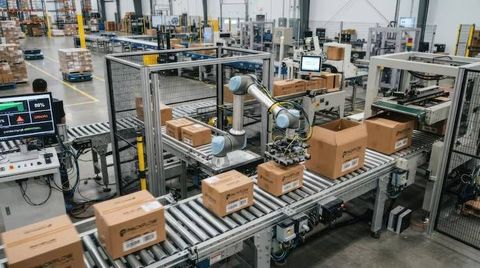
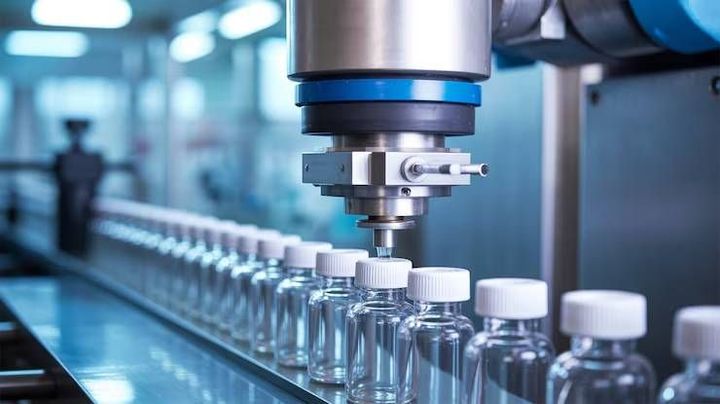
A typical vial capping machine moves containers through several stages. Vials enter the machine, caps are positioned over their openings, and a capping mechanism secures each closure. Depending on the equipment, containers may move along a conveyor or remain in a fixed position during the sealing process.
Some machines use mechanical gripping components, while others use rotating heads or controlled pressing mechanisms. Sensors may detect vial presence, cap position, or equipment faults. These features help coordinate machine movements and identify certain packaging problems.
Common Types of Vial Capping Equipment
Different vial capping machines are designed for different closure types and production needs.
Crimp capping machines: These machines fold or press the edges of a metal cap around a vial neck. They are commonly used with compatible rubber stoppers and aluminum closures.
Screw capping machines: These systems rotate threaded caps until the required closure condition is reached. They are used with containers designed for screw-type closures.
Press capping machines: These machines apply downward pressure to secure caps designed for press fitting.
Semi-automatic machines: Operators position containers or caps manually while the equipment performs the capping operation.
Fully automatic machines: These systems can integrate container feeding, cap placement, sealing, and inspection into a coordinated production process.
The appropriate machine depends on the container design, closure material, required output, and the level of automation needed.
Importance
Vial capping machines play an important role in packaging quality because the closure forms a protective barrier between the contents and the surrounding environment. An improperly secured cap may allow leakage, expose contents to contaminants, or affect the integrity of the packaged product.
In pharmaceutical manufacturing, packaging quality is especially important because containers may hold sensitive materials that require controlled storage and handling. A suitable sealing process helps maintain the intended packaging condition throughout transportation, storage, and routine handling.
Benefits for Manufacturing Operations
Automated sealing systems can reduce repetitive manual work and help maintain consistent packaging operations. Their practical benefits depend on machine design, setup, maintenance, and the suitability of the closure system.
Important operational advantages include:
Repeatability: Controlled machine movements help apply closures using consistent operating parameters.
Production coordination: Automated equipment can connect with filling, inspection, labeling, and packaging stages.
Reduced manual handling: Automatic cap feeding and positioning can limit the need for repeated operator intervention.
Process monitoring: Sensors and control systems can identify selected faults, such as missing containers or incorrectly positioned components.
Packaging traceability: Integrated monitoring systems can record selected production parameters for quality review.
Automation does not eliminate every packaging defect. Incorrect settings, worn components, unsuitable closures, and damaged containers can still affect results. Inspection and process verification remain important.
Industries That Use Vial Capping Machines
Pharmaceutical manufacturers use capping equipment for compatible vial formats that require controlled closure application. Biotechnology facilities and diagnostic laboratories may also use vial packaging systems for suitable materials and applications.
Other potential users include research laboratories, cosmetic manufacturers, chemical producers, and specialized packaging facilities. The machine configuration varies according to the product, container material, closure design, cleanliness requirements, and production environment.
For example, a small laboratory may need a compact semi-automatic machine, while a large manufacturing facility may integrate multiple capping heads into a continuous packaging line. Both applications require equipment that matches the vial and closure specifications.
Factors That Influence Sealing Quality
Several variables affect how reliably a vial is closed. These include the dimensions of the vial neck, cap material, stopper compatibility, alignment, applied force, and machine speed.
A closure that is too loose may not provide the intended protection. Excessive force may deform the cap, damage the container, or interfere with closure integrity. For this reason, manufacturers establish suitable operating parameters and verify them through inspection and testing.
Recent Updates
Recent developments in vial capping machines reflect wider changes in industrial automation, digital monitoring, and pharmaceutical packaging technology. Current systems increasingly combine mechanical sealing equipment with electronic controls, sensors, and production data collection.
Smart Controls and Automated Inspection
Modern equipment may use programmable logic controllers, touchscreen interfaces, and sensors to coordinate different packaging stages. Operators can adjust approved machine settings, monitor selected operating conditions, and review fault messages through the control interface.
Some production lines also incorporate machine vision. Cameras can inspect visible features such as cap presence, container position, and certain closure defects. However, visual inspection cannot identify every hidden sealing problem, so additional testing may be necessary.
Integration With Packaging Lines
Vial capping machines are increasingly designed to connect with upstream filling equipment and downstream labeling or inspection systems. Coordinated equipment can reduce interruptions between packaging stages and support a more organized production workflow.
Integration requires attention to conveyor speed, container spacing, communication between control systems, and safe access for operators. A mismatch between connected machines can create bottlenecks or increase the number of rejected containers.
Current Technology Trends
The following table summarizes common developments in automated vial sealing.
Technology | Main function | Practical consideration |
|---|---|---|
Programmable controls | Manage machine sequences and settings | Requires correct configuration |
Electronic sensors | Detect selected operating conditions | Sensors need periodic verification |
Machine vision | Inspect visible packaging features | Cannot detect every hidden defect |
Data logging | Record selected process information | Records require review and protection |
Modular machine design | Supports configuration for different production needs | Changeovers may require validation |
Automated cap feeding | Positions closures for machine operation | Cap compatibility and alignment matter |
These developments reflect a broader move toward connected manufacturing. Their usefulness depends on production requirements, the complexity of the packaging line, and the quality controls established by the facility.
Laws or Policies
Vial capping machines used in pharmaceutical manufacturing operate within a wider framework of product quality, equipment safety, hygiene, and manufacturing controls. Applicable requirements depend on the country, product category, intended use, and facility operations.
Pharmaceutical Manufacturing Requirements
Good Manufacturing Practice, commonly known as GMP, provides principles for controlling manufacturing processes and maintaining product quality. In pharmaceutical environments, these principles generally cover equipment suitability, documented procedures, cleanliness, maintenance, process control, and personnel training.
A vial capping machine should be suitable for its intended operation and compatible with the production environment. Where required, equipment qualification and process validation provide documented evidence that the machine performs according to established requirements.
Packaging Integrity and Quality Control
Packaging controls help confirm that containers and closures meet applicable specifications. Depending on the product and closure system, testing may examine cap dimensions, crimp appearance, closure application, and container-closure integrity.
Container-closure integrity testing can help determine whether a package maintains the required protective barrier. The appropriate method depends on the container design, product characteristics, and applicable quality requirements.
Manufacturers may also maintain records covering machine settings, maintenance activities, inspection results, deviations, and corrective actions. These records support process review and traceability.
Equipment Safety and Documentation
Industrial packaging equipment should include appropriate safeguards for moving components and other operational hazards. Risk assessments, protective guards, emergency stops, and operating instructions may be relevant depending on the machine design and applicable rules.
In India, pharmaceutical manufacturing is subject to applicable provisions of the Drugs and Cosmetics Act and Rules, along with relevant GMP requirements. Other countries have their own regulatory frameworks. Facilities must determine which requirements apply to their products, equipment, and manufacturing activities.
Tools and Resources
Selecting, operating, and maintaining vial capping machines involves several practical resources. These help manufacturers evaluate equipment compatibility, monitor packaging quality, and organize routine production activities.
Equipment Selection Tools
A machine specification checklist can help compare equipment configurations before installation. Important details include:
Vial height, diameter, and neck dimensions.
Closure material, shape, and size.
Required production throughput.
Manual, semi-automatic, or fully automatic operation.
Compatibility with existing filling and inspection equipment.
Available space, electrical requirements, and safety features.
Cleaning, maintenance, and changeover requirements.
The checklist should reflect actual container and closure specifications rather than general equipment descriptions.
Inspection and Monitoring Resources
Quality teams may use calibrated measurement tools, visual inspection procedures, closure application checks, and suitable container-closure integrity tests. The selected methods should be appropriate for the packaging design and established quality requirements.
Maintenance schedules can document cleaning, lubrication where applicable, component inspection, and replacement of worn parts. Electronic production records may help track recurring faults, downtime, and rejected containers.
Example of a Production Monitoring Checklist
Monitoring item | Purpose | Suggested record |
|---|---|---|
Cap positioning | Confirm correct placement | Inspection results |
Crimp or closure condition | Identify visible irregularities | Defect observations |
Machine alignment | Maintain consistent operation | Adjustment history |
Sensor operation | Confirm detection functions | Verification record |
Rejected containers | Identify recurring problems | Rejection count and cause |
Maintenance activities | Track equipment condition | Maintenance log |
The monitoring frequency should follow the equipment manufacturer's instructions and the facility's documented procedures. Critical process checks may require more frequent verification.
FAQs
What Is a Vial Capping Machine?
A vial capping machine is packaging equipment that places and secures closures on compatible vials. Depending on its design, it may use crimping, rotation, or pressing mechanisms to apply caps.
How Does an Automated Vial Sealing System Work?
An automated vial sealing system positions containers and caps, performs the closure operation, and may inspect selected packaging features. Sensors and programmable controls coordinate the process, while additional testing may be needed to verify container-closure integrity.
What Is the Difference Between Crimp Capping and Screw Capping?
Crimp capping forms a metal closure around a compatible vial neck, often over a stopper. Screw capping tightens a threaded cap by rotation. Each method requires compatible containers, closures, and operating settings.
How Is Sealing Quality Checked in Pharmaceutical Packaging?
Quality checks may include visual inspection, dimensional measurements, closure application assessments, and container-closure integrity testing. The selected methods depend on the package design and applicable manufacturing requirements.
What Should Be Considered When Selecting Vial Capping Machines?
Important considerations include vial dimensions, closure type, production volume, automation level, inspection capabilities, equipment safety, cleaning requirements, and compatibility with other packaging equipment.
Conclusion
Vial capping machines support packaging operations by applying closures that help protect container contents and maintain packaging integrity. Automated sealing systems combine mechanical components, sensors, and controls to coordinate closure application and identify selected production faults. Equipment selection depends on vial design, closure compatibility, throughput, and applicable quality requirements. Regular maintenance, documented procedures, and suitable inspection methods remain important parts of reliable pharmaceutical packaging operations.