Explore Cartoning Machines With Automatic Folding, Filling, and Sealing Solutions
Cartoning machines are packaging systems designed to form cartons, place products inside them, and close the packages for storage, transportation, or retail distribution. They are used in industries such as food processing, cosmetics, household goods, electronics, and pharmaceutical packaging.
Depending on the machine design, the process may include automatic carton folding, product filling, leaflet insertion, and carton sealing.
Carton packaging developed as manufacturers needed consistent ways to protect products and organize them for distribution. Early packaging operations relied heavily on manual folding and packing, which required repeated handling. As production lines became more automated, mechanical and electronic systems made it possible to perform several packaging steps in sequence.
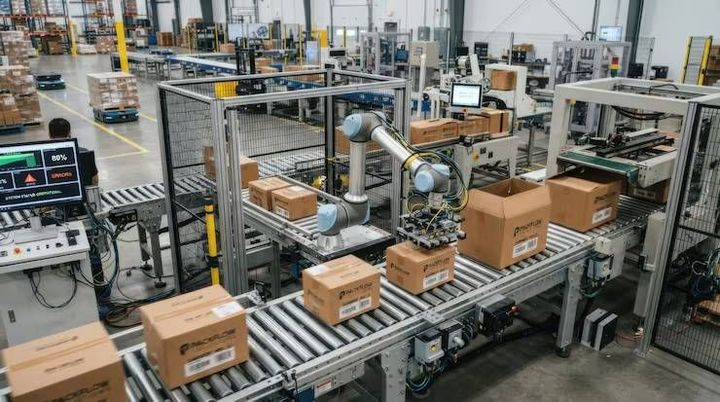
An automatic cartoning machine typically receives flat carton blanks from a magazine, folds them into a usable shape, places a product inside, and closes the carton. Some systems also apply adhesive or tuck carton flaps into position. The exact sequence depends on the carton style, product dimensions, and packaging requirements.
How automatic cartoning systems work
Most cartoning systems follow a series of coordinated operations. Sensors, mechanical guides, motors, and control systems help move cartons and products through the machine while checking whether individual stages have been completed.
The typical process includes:
Carton feeding: Flat carton blanks are supplied from a storage magazine.
Carton erection: Folding mechanisms open the blanks into three-dimensional cartons.
Product loading: Products are inserted manually, mechanically, or through an automated feeding system.
Carton closing: Flaps are tucked, folded, or secured with an appropriate adhesive.
Inspection and discharge: Sensors or inspection devices check selected packaging conditions before cartons leave the line.
Not every machine performs all these steps automatically. Some equipment handles only carton forming or closing, while integrated systems combine several operations with product conveyors and inspection equipment.
Main types of cartoning machines
Horizontal cartoning machines generally load products through the side of a carton. They are commonly used for items such as tubes, bars, sachets, small bottles, and packaged consumer goods. Vertical cartoning machines load products from above, making them suitable for certain bottles, pouches, loose items, and products that can be dropped or placed vertically.
Intermittent-motion machines pause cartons during particular operations, whereas continuous-motion systems move products through a sequence of synchronized stations. The choice depends on product characteristics, packaging design, required output, and available production space.
Importance
Cartoning machines play an important role in modern manufacturing because packaging must protect products, support distribution, and present essential information clearly. Manual packaging may be practical for small production runs, but larger operations can face difficulties maintaining consistent carton dimensions, packing sequences, and closure quality.
Automatic folding, filling, and sealing solutions can reduce repetitive handling and help manufacturers coordinate packaging tasks. They can also make production processes easier to monitor when the equipment includes suitable sensors, counters, and control panels.
Benefits for manufacturers and consumers
Consistent carton formation helps prevent poorly shaped packages that may be difficult to stack or transport. Correct product placement and carton closure also help reduce the likelihood of items shifting during routine handling, although the level of protection depends on the carton material and package design.
For consumers, well-organized cartons can make products easier to identify, store, and handle. Packaging may also display ingredients, instructions, batch identification, expiry information, or other details required for a particular product category.
Common challenges addressed by automation
Manufacturers may encounter several packaging difficulties:
Inconsistent folding: Incorrect carton alignment can create uneven edges or interfere with closure.
Product misplacement: Poor synchronization between product feeding and carton movement can result in empty or incorrectly packed cartons.
Sealing problems: Inappropriate adhesive application or incorrectly folded flaps can weaken package closure.
Material waste: Damaged carton blanks and rejected packages can increase material consumption.
Production interruptions: Carton shortages, product jams, sensor faults, and equipment adjustments can interrupt the packaging line.
Automation can help manage these issues, but it does not eliminate the need for maintenance, operator training, quality checks, and suitable packaging materials.
Recent Updates
Cartoning technology continues to develop as manufacturers seek better coordination between packaging equipment, production data, and material handling. Current developments focus on machine flexibility, digital monitoring, product traceability, and packaging designs that use materials more efficiently.
Automation and digital monitoring
Modern cartoning machines may use programmable logic controllers (PLCs), touchscreen interfaces, servo-driven mechanisms, and sensors to coordinate different packaging stages. These features allow operators to adjust selected settings, monitor machine conditions, and identify certain faults during production.
Some systems also connect with manufacturing execution systems (MES) or supervisory control and data acquisition (SCADA) platforms. These connections can support production reporting, equipment monitoring, and analysis of recurring interruptions, depending on the installed configuration.
Flexible packaging formats
Manufacturers increasingly handle products in different sizes and carton formats on the same production line. Cartoning equipment may therefore include adjustable guides, interchangeable change parts, and stored machine settings for different products.
However, changing formats still requires appropriate adjustments and verification. Carton dimensions, product orientation, feeding methods, and closure arrangements determine how easily a machine can accommodate another package design.
Material efficiency and inspection
Packaging development also emphasizes carton designs that reduce unnecessary material while maintaining adequate strength and protection. Recyclable paperboard, lightweight cartons, and improved blank-cutting layouts are among the approaches used in packaging development.
Machine vision and sensor-based inspection can help identify missing products, incorrect carton positions, or certain printing and closure defects. Detection capabilities vary by system, and inspection equipment must be configured for the specific defect it is expected to identify.
Comparison of cartoning machine features
Feature | Typical function | Main consideration |
|---|---|---|
Automatic carton folding | Forms flat blanks into cartons | Carton dimensions and board quality |
Automatic product filling | Places products into cartons | Product shape and feeding method |
Carton sealing | Closes flaps using adhesive or tuck mechanisms | Closure strength and carton design |
Sensor monitoring | Detects selected machine or product conditions | Sensor placement and calibration |
Machine vision | Inspects defined packaging characteristics | Lighting, image quality, and defect criteria |
Format adjustment | Supports different carton sizes | Changeover time and required adjustments |
Laws or Policies
Cartoning machine requirements depend on the country, industry, product type, and packaging materials. Equipment used for general consumer goods may face different obligations from equipment used for food, cosmetics, or pharmaceutical products. Manufacturers must consider both the machinery itself and the information printed on the finished package.
Packaging regulations in India
In India, packaging and labeling requirements may be governed by the Legal Metrology Act, 2009, the Legal Metrology (Packaged Commodities) Rules, 2011, and relevant amendments. Applicable requirements can include declarations such as the manufacturer's or packer's details, product identity, net quantity, and other prescribed information, depending on the product and the nature of the transaction.
Food packaging is also subject to the Food Safety and Standards Act, 2006, and applicable regulations issued by the Food Safety and Standards Authority of India (FSSAI). These requirements may cover food-contact materials, labeling, packaging hygiene, and product-specific declarations.
Machinery safety and operational controls
Industrial equipment should be installed and operated according to applicable safety requirements, electrical standards, and workplace procedures. Practical safeguards can include emergency stops, protective guards, interlocks, safe access for cleaning, and procedures for isolating power before maintenance.
Businesses operating in other countries must check the rules that apply in their markets. For example, machinery supplied within the European Union may fall under applicable machinery safety legislation and conformity requirements, while food-contact packaging materials may be subject to separate rules.
Compliance considerations for packaging lines
Before a cartoning system is integrated into production, relevant checks may include:
Confirming that the machine is suitable for the intended product and packaging materials.
Verifying guarding, electrical safety, and emergency-stop arrangements.
Checking carton labels against applicable product and packaging regulations.
Establishing cleaning, inspection, and maintenance procedures.
Keeping appropriate production, quality, and equipment records.
The exact requirements depend on the operation. Regulatory compliance should be assessed using the applicable legislation and product-specific rules rather than relying on a machine's general description.
Tools and Resources
Selecting and operating cartoning equipment involves more than reviewing the machine's advertised output. Manufacturers need to evaluate product characteristics, packaging specifications, production targets, safety requirements, and integration with existing equipment.
Equipment selection and planning tools
A packaging specification sheet helps organize information about carton length, width, height, board thickness, closure style, product dimensions, and packaging orientation. These details help determine whether a proposed machine can handle the intended format.
A production capacity calculator can estimate the number of cartons required per hour or shift. For example, a line producing 60 cartons per minute has a theoretical output of 3,600 cartons per hour. Actual output may be lower because of changeovers, stoppages, rejected cartons, and routine adjustments.
Other useful planning tools include:
Carton dimension templates: Record the internal and external dimensions needed for packaging design.
Changeover checklists: Document the guides, tooling, and settings that need adjustment between product formats.
Maintenance logs: Track inspections, worn components, faults, and corrective actions.
Quality inspection sheets: Record carton formation, product presence, closure integrity, and label accuracy.
Line layout software: Help plan conveyor routes, operator access, equipment spacing, and material movement.
Digital and regulatory resources
Manufacturers in India can consult the official FSSAI website for food safety and packaging regulations and the Department of Consumer Affairs for Legal Metrology requirements. The Bureau of Indian Standards (BIS) provides information about applicable Indian standards, while the International Organization for Standardization (ISO) publishes standards relevant to quality management, packaging, and machinery-related processes.
Equipment documentation is another important resource. Operating manuals, electrical diagrams, approved format specifications, and maintenance schedules help operators understand machine settings and follow consistent procedures.
FAQs
What is an automatic cartoning machine?
An automatic cartoning machine forms cartons from flat blanks, loads products, and closes the packages. Depending on its configuration, it may perform these operations in one integrated sequence.
How do automatic folding, filling, and sealing solutions work?
These systems coordinate carton erection, product placement, and carton closure through mechanical components, sensors, and electronic controls. The exact process depends on the product, carton format, and machine design.
What is the difference between horizontal and vertical cartoning machines?
Horizontal cartoning machines generally load products through the side of a carton, while vertical machines load products from above. The appropriate arrangement depends on product dimensions, orientation, and handling requirements.
Which industries use cartoning machines?
Cartoning machines are used in food processing, cosmetics, personal care, household products, electronics, and pharmaceutical manufacturing. Each industry has specific packaging, labeling, and quality requirements.
What should manufacturers consider when selecting a cartoning machine?
Important considerations include product size, carton dimensions, required production speed, closure method, changeover needs, operator safety, and integration with existing equipment. Manufacturers should also assess maintenance requirements and inspection capabilities.
Conclusion
Cartoning machines combine carton folding, product filling, and package sealing to support organized manufacturing and distribution. Machine designs vary according to product characteristics, carton formats, and production requirements. Digital monitoring, flexible format adjustment, and automated inspection are important developments in modern packaging systems. Applicable safety, labeling, and material regulations remain essential considerations when designing and operating a packaging line.