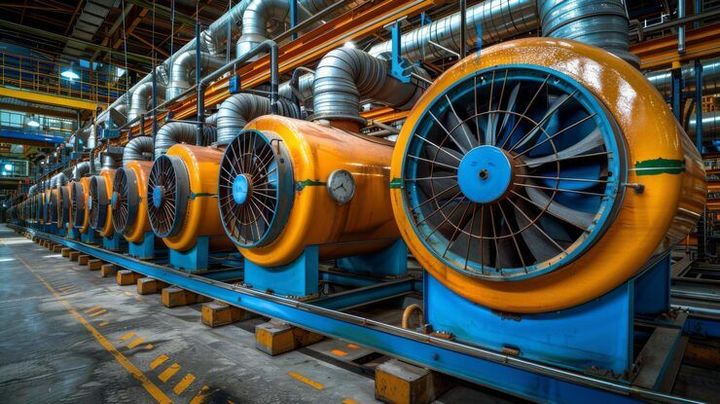
Explore Top Blower Manufacturers With Industrial Equipment and Air Handling Technology
Blower manufacturers play an important role in industrial equipment and air handling technology by developing machines that move air or gases through production systems, ventilation networks, and processing facilities.
Industrial blowers are used in factories, warehouses, commercial buildings, wastewater treatment plants, food processing facilities, and other environments where controlled airflow is necessary. These machines support ventilation, cooling, drying, material movement, and pressure management.
The development of industrial blowers is closely connected to advances in mechanical engineering, manufacturing, and fluid dynamics. Early air-moving equipment relied on relatively simple mechanical designs, while modern industrial blowers use improved impellers, electric motors, control systems, and monitoring technologies to manage airflow more efficiently.
Industrial blower manufacturers produce equipment in different sizes and configurations to meet specific operating requirements. The appropriate design depends on factors such as airflow volume, pressure requirements, operating temperature, surrounding conditions, and the characteristics of the material being moved.
Understanding blower manufacturers, equipment categories, and air handling technology helps readers recognize how these systems work and why different industries require different configurations.
What Industrial Blowers Do
An industrial blower uses mechanical energy to move air or gas through a system. An electric motor usually drives an impeller, which accelerates the moving air and creates the pressure difference needed to direct it through ducts, pipes, filters, or processing equipment.
Common applications include:
Ventilation in industrial buildings and enclosed production areas.
Air supply for combustion and selected manufacturing processes.
Cooling of machinery, electrical equipment, and production components.
Drying operations involving manufactured materials.
Pneumatic conveying, where airflow transports suitable powders or lightweight materials.
Aeration systems used in wastewater treatment.
Main Types of Industrial Blowers
Blower manufacturers develop different machine designs because airflow and pressure requirements vary between applications. Centrifugal, axial, and positive displacement blowers are common categories, although positive displacement equipment is often classified separately in some industrial applications.
Centrifugal blowers use a rotating impeller to accelerate air outward and convert part of that energy into pressure. Axial blowers move air mainly along the direction of the rotating shaft, making them suitable for applications requiring substantial airflow with comparatively modest pressure increases.
Positive displacement blowers move defined volumes of gas through a mechanism such as rotating lobes. They are commonly used in applications that require relatively steady airflow against varying system pressures.
Importance
Industrial blower technology matters because airflow affects equipment performance, workplace conditions, product quality, and environmental management. Inadequate ventilation can allow heat, moisture, dust, or process fumes to accumulate, while poorly matched airflow equipment can create unnecessary energy consumption and operational difficulties.
Blower manufacturers help industrial operators address these challenges by designing equipment for particular pressure ranges, airflow rates, environmental conditions, and operating schedules. The correct equipment configuration can support consistent production and help maintain suitable working conditions.
Industries That Depend on Blower Technology
Different sectors use industrial blowers for different purposes. Manufacturing plants may need controlled airflow for cooling or pneumatic conveying, while commercial buildings rely on ventilation equipment to circulate air through occupied spaces.
Important application areas include:
Manufacturing: Air movement for cooling, drying, combustion, and selected production processes.
Food processing: Air circulation for drying, ventilation, and temperature management, subject to appropriate hygiene requirements.
Wastewater treatment: Aeration systems that supply oxygen to biological treatment processes.
Construction materials: Air movement for drying, dust collection, and equipment cooling.
Chemical processing: Gas movement within compatible process systems, subject to material and safety requirements.
Commercial buildings: Ventilation and air circulation in large indoor environments.
Challenges Addressed by Industrial Blowers
Industrial facilities face several practical challenges when selecting and operating air handling equipment. A blower that cannot meet the required pressure may fail to deliver the expected airflow, while an oversized machine can consume more electricity than necessary under certain operating conditions.
Other concerns include noise, vibration, dust accumulation, corrosion, maintenance access, and compatibility with the operating environment. Manufacturers address these factors through equipment design, material selection, balancing, protective features, and control options.
Factors to Compare When Evaluating Manufacturers
Comparing industrial blower manufacturers involves more than examining the machine's physical dimensions. Technical documentation should explain the equipment's operating range and the conditions under which its performance figures apply.
Evaluation factor | What it explains | Why it matters |
|---|---|---|
Airflow capacity | Volume of air moved over time | Determines whether ventilation or process requirements can be met |
Static pressure | Resistance the blower can overcome | Helps establish compatibility with ducts, filters, and equipment |
Energy performance | Electrical input relative to useful output | Supports operating efficiency assessments |
Construction materials | Materials used in the housing and internal components | Influences corrosion resistance and application suitability |
Noise and vibration | Acoustic output and mechanical stability | Affects workplace conditions and equipment reliability |
Control compatibility | Available speed controls and monitoring interfaces | Helps coordinate airflow with changing demand |
Technical documentation | Performance curves, installation details, and operating limits | Supports engineering evaluation and system integration |
Recent Updates
Industrial blower technology continues to develop through improvements in electric motors, electronic controls, equipment monitoring, and system integration. Recent industry trends from 2024 through 2026 emphasize energy performance, operational visibility, and the ability to adjust airflow according to changing process requirements.
The pace of adoption varies by industry, equipment type, facility budget, and existing infrastructure. These developments represent broader engineering trends rather than evidence that every manufacturer has introduced the same features.
Variable-Speed Controls and Energy Management
Variable-frequency drives allow compatible electric motors to operate at different speeds. Instead of running continuously at one speed, a blower can adjust its output to match changing airflow requirements.
This approach can reduce electricity consumption in suitable applications, particularly when demand varies substantially. Actual savings depend on the system design, control settings, operating hours, and the blower's performance characteristics.
Smart Monitoring and Predictive Maintenance
Industrial equipment increasingly incorporates sensors and digital monitoring systems that track variables such as vibration, temperature, motor current, and operating pressure. These measurements can help maintenance teams identify unusual operating conditions before they develop into more serious equipment problems.
Predictive maintenance systems analyze equipment data to identify patterns that may indicate wear or developing faults. Their effectiveness depends on sensor quality, suitable operating thresholds, data interpretation, and consistent maintenance procedures.
Improved Motor and Impeller Designs
Manufacturers continue to refine motor efficiency, impeller geometry, internal clearances, and aerodynamic performance. These engineering improvements can help reduce losses and improve airflow characteristics when equipment is correctly selected and installed.
Material selection is also important in demanding environments. Corrosion-resistant alloys, protective coatings, and application-specific construction may help equipment withstand moisture, chemical exposure, or abrasive particles.
Integration With Building and Factory Controls
Industrial blowers can increasingly be integrated with building management systems and industrial automation platforms. This allows airflow equipment to respond to temperature measurements, pressure conditions, production schedules, or other operating signals.
Integration can improve visibility across a facility, although compatibility depends on communication protocols, controller capabilities, and the design of the existing automation system.
Laws or Policies
Industrial blower manufacturers and equipment operators must consider the rules applicable to the country, industry, and installation environment. Since the intended audience is global, there is no single regulatory framework that applies to every blower or industrial facility.
Relevant requirements may address machinery safety, electrical systems, workplace ventilation, environmental emissions, occupational noise, and energy performance. The exact obligations depend on the equipment's intended use, installation location, and operating conditions.
Machinery and Electrical Safety
Industrial blower installations may need to comply with applicable machinery safety and electrical safety requirements. These can cover protective guards, safe isolation procedures, motor protection, wiring, emergency controls, and instructions for installation and maintenance.
Equipment operating in potentially explosive atmospheres may require additional protection and certification. Ordinary industrial blower specifications should not be assumed suitable for environments containing flammable gases, vapours, or combustible dust.
Workplace Ventilation and Environmental Requirements
Ventilation rules may establish requirements for controlling indoor contaminants, supplying suitable air circulation, or managing emissions from industrial processes. Blowers used in dust collection or exhaust systems must be compatible with the broader pollution-control arrangement where applicable.
Noise regulations may also affect equipment selection, installation location, acoustic enclosures, and operating procedures. Compliance depends on local requirements and the characteristics of the facility.
Energy Efficiency and Technical Standards
Some jurisdictions apply energy-efficiency requirements to electric motors, fans, or related equipment. Standards developed by recognized engineering organizations can also provide methods for measuring airflow, pressure, noise, and performance.
Manufacturers' declarations, test reports, and certification documents help establish which standards apply to a particular model. Readers should distinguish between voluntary technical standards, mandatory legal requirements, and manufacturer-specific performance claims.
Tools and Resources
Technical tools help readers understand blower performance, compare equipment configurations, and plan industrial air handling systems. The usefulness of each tool depends on the accuracy of the input information and the complexity of the installation.
Blower Selection Calculators
Blower selection calculators estimate the airflow and pressure requirements of a system. Typical inputs include duct dimensions, air volume, system resistance, temperature, and operating conditions.
These calculators provide an initial assessment rather than a complete engineering design. Complex systems may require specialist calculations and manufacturer performance data.
Performance Curves and Technical Datasheets
A blower performance curve shows the relationship between airflow and pressure under specified operating conditions. It helps readers understand how a machine behaves as system resistance changes.
Technical datasheets commonly include motor power, rotational speed, dimensions, construction materials, operating limits, and noise information. Comparisons are meaningful only when the equipment is assessed under equivalent conditions.
Energy Consumption Calculators
Energy calculators estimate electricity use from motor input power and operating hours. For a basic estimate, electrical energy consumption can be calculated as follows:
Energy consumption in kilowatt-hours = Input power in kilowatts × Operating hours.
For example, a blower drawing 5 kW over 8 hours would consume 40 kWh during that period, assuming constant input power. Actual consumption may vary with load, speed, control settings, and operating conditions.
Manufacturer Documentation and Engineering Resources
Manufacturer catalogues, installation manuals, maintenance schedules, and technical support documentation can clarify model differences and operating requirements. Engineering handbooks and recognized standards provide additional information about fluid dynamics, ventilation design, and equipment testing.
When reviewing technical information, readers should check the measurement units, test conditions, applicable standards, and stated limitations. These details make comparisons between industrial blower manufacturers more meaningful.
FAQs
What Do Industrial Blower Manufacturers Produce?
Industrial blower manufacturers produce air-moving equipment for ventilation, cooling, drying, aeration, pneumatic conveying, and other industrial processes. Their product ranges may include centrifugal blowers, axial blowers, and specialized high-pressure equipment.
How Can Readers Compare Top Blower Manufacturers?
Readers can compare blower manufacturers by reviewing airflow capacity, pressure performance, energy requirements, construction materials, technical documentation, and application experience. Installation requirements and compatibility with existing systems are also important considerations.
What Is the Difference Between Centrifugal and Axial Blowers?
Centrifugal blowers move air outward through a rotating impeller, generally supporting applications that require a pressure increase. Axial blowers move air mainly parallel to the shaft and are commonly used when substantial airflow is needed at relatively low pressure.
How Does Industrial Air Handling Technology Improve Efficiency?
Air handling technology can improve efficiency through appropriate equipment sizing, variable-speed controls, efficient motors, reduced system resistance, and condition monitoring. Results depend on system design, maintenance, and the relationship between airflow demand and equipment capacity.
Which Standards Apply to Industrial Blower Manufacturers?
Applicable standards depend on the equipment type, intended application, and installation location. Requirements may address electrical safety, machinery protection, energy efficiency, noise, and hazardous environments, so relevant technical documentation must be assessed for each application.
Conclusion
Industrial blower manufacturers support a wide range of industries through equipment designed for ventilation, cooling, drying, aeration, and process air movement. Understanding blower types, performance specifications, and operating conditions helps explain how these systems contribute to industrial air handling. Developments in variable-speed controls, motor design, and digital monitoring continue to influence equipment design and operation. Applicable safety requirements, technical standards, and installation conditions remain important considerations when evaluating industrial blower technology.