PV Ribbon Soldering Machines Information With Automated Solar Panel Assembly Solutions
PV ribbon soldering machines are specialized manufacturing systems used to connect photovoltaic (PV) solar cells with thin conductive metal strips known as ribbons. These ribbons carry the electrical current generated by solar cells and help connect individual cells into a functional solar module.
The process is an important part of solar panel manufacturing because electrical connections influence the panel's performance, reliability, and durability.
Photovoltaic technology converts sunlight into electricity using semiconductor materials, commonly silicon. During solar panel assembly, individual cells must be connected in a specific electrical arrangement. PV ribbon soldering machines perform these connections through controlled heating, pressure, alignment, or other joining methods, depending on the machine design and cell technology.
How Automated Solar Panel Assembly Works
Automated solar panel assembly combines several manufacturing operations into a coordinated production process. Depending on the factory layout, these operations may include solar cell inspection, ribbon preparation, cell interconnection, string formation, layup, lamination, framing, and electrical testing.
Ribbon soldering generally takes place when individual solar cells are connected into groups called cell strings. A machine positions the ribbon against the cell's electrical contact points and applies a controlled joining process. The connected strings can then move to subsequent assembly stages.
Automation reduces the need for repeated manual positioning and helps manufacturers maintain consistent production procedures. However, the level of automation varies between production lines, and some facilities use a combination of automated equipment and operator-controlled stations.
Main Components of a PV Ribbon Soldering Machine
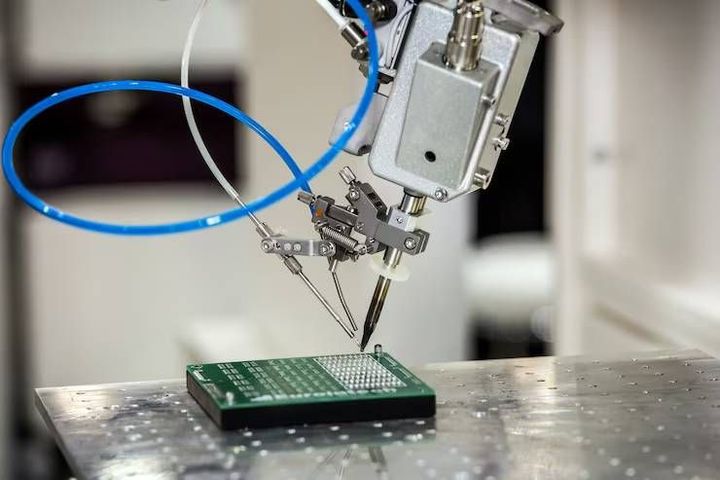
A typical machine may include several components that work together to establish accurate electrical connections.
Ribbon feeding system: Supplies conductive ribbon in the required length and position.
Cell positioning mechanism: Aligns solar cells before the joining process begins.
Heating or joining unit: Applies the heat or other joining method required by the selected process.
Control system: Regulates operating parameters such as temperature, movement, timing, and sequence.
Inspection mechanism: Checks alignment, visible connection defects, or other quality indicators, depending on the equipment.
Safety enclosure: Helps protect operators from hot components, moving mechanisms, and other production hazards.
The specific configuration depends on the type of solar cell, ribbon material, manufacturing speed, and production requirements.
Importance
Why Ribbon Soldering Matters in Solar Manufacturing
Solar panels are used in residential rooftops, commercial buildings, industrial facilities, and large solar power plants. As solar electricity becomes part of more energy systems, manufacturers need production methods that support consistent electrical connections and dependable module construction.
Ribbon soldering helps connect solar cells into an electrical circuit. Poorly aligned ribbons, weak joints, excessive heating, or damaged cells can affect electrical output and contribute to manufacturing defects. Automated equipment helps control these risks by maintaining repeatable operating conditions and reducing variations between production cycles.
Benefits of Automated Solar Panel Assembly
Automation can support several practical manufacturing objectives.
Consistent connections: Controlled positioning and joining parameters help reduce variation between cell strings.
Production efficiency: Automated feeding and alignment reduce repeated manual handling and can support continuous production.
Material control: Accurate ribbon placement can reduce avoidable material waste and the need to rework defective connections.
Quality inspection: Integrated sensors and inspection systems can identify certain alignment problems or visible defects before the module advances.
Production records: Digital controls can record operating parameters, helping manufacturers investigate recurring defects and monitor process stability.
These benefits depend on machine configuration, maintenance, material quality, and operator training. Automation does not eliminate every manufacturing defect, so inspection and electrical testing remain necessary.
Challenges Faced by Manufacturers
PV ribbon soldering machines must accommodate different solar cell dimensions, ribbon widths, contact patterns, and module designs. Changes in cell technology may require adjustments to heating profiles, alignment systems, and joining methods.
Thermal stress is another concern. Solar cells are thin and can crack if they experience excessive mechanical pressure or uneven heating. Manufacturers must balance reliable electrical contact with the need to protect delicate cells during handling and assembly.
Production planning also involves matching the soldering machine's output to the capacity of the rest of the assembly line. A fast soldering station cannot improve overall factory throughput if downstream equipment, such as laminators or testing stations, becomes a bottleneck.
Recent Updates
Developments in Solar Cell and Ribbon Technology
From 2024 through 2026, solar module manufacturing has continued moving toward higher-efficiency cell designs, including tunnel oxide passivated contact (TOPCon) and heterojunction technology (HJT). Manufacturers have also adopted more complex multi-busbar layouts, which use multiple electrical collection paths across a cell. These changes influence ribbon placement, interconnection design, and the precision required from automated assembly equipment.
Smart multi-busbar designs use finer conductive connections distributed across the cell. Zero-busbar concepts go further by changing how the cell's fine metal contact lines connect to external conductors. These approaches can reduce some material use and electrical losses, but they also introduce different interconnection requirements and manufacturing challenges.
Smarter Automation and Quality Monitoring
Modern solar manufacturing equipment increasingly combines machine vision, programmable controls, sensors, and production data collection. Vision systems can check cell orientation and ribbon positioning, while sensors monitor selected process conditions. Manufacturers may use recorded data to identify recurring faults and adjust production parameters.
Another development is the growing interest in flexible equipment configurations. Production facilities may need to accommodate different cell sizes, ribbon specifications, and module formats without extensive changes to the entire production line. Equipment selection therefore increasingly considers changeover procedures, software compatibility, inspection capability, and integration with upstream and downstream machinery.
Comparison of Manufacturing Approaches
Feature | Conventional manual process | Automated ribbon soldering |
|---|---|---|
Cell alignment | Operator-dependent | Mechanically or optically controlled |
Ribbon positioning | Manual placement | Programmed feeding and positioning |
Process consistency | Depends heavily on technique | Supported by repeatable settings |
Production monitoring | Primarily manual records | May include digital data collection |
Format changes | Manual adjustments | May use stored recipes and automated settings |
Quality control | Operator inspection and testing | Can combine automated inspection with testing |
The actual differences depend on the equipment and factory workflow. Automated systems still require skilled oversight, calibration, and regular checks.
Laws or Policies
Solar Manufacturing Regulations in India
India's solar manufacturing sector is influenced by policies administered by the Ministry of New and Renewable Energy (MNRE). These policies address manufacturing capacity, product quality, domestic supply chains, and the eligibility of solar modules used in specified categories of projects.
The Approved List of Models and Manufacturers (ALMM) is particularly relevant. It identifies eligible solar photovoltaic module models and manufacturers for projects covered by the applicable requirements. India's framework was expanded to include a separate list for solar PV cells, with requirements taking effect under the notified provisions in 2026. Applicability depends on the project category, relevant dates, and any exemptions or transitional provisions.
Manufacturing Standards and Quality Requirements
Solar panel manufacturers may need to consider applicable Bureau of Indian Standards (BIS) requirements, product testing procedures, and project-specific technical specifications. Relevant requirements can depend on the module technology, intended application, certification framework, and destination market.
Machine manufacturers and factory operators should distinguish between equipment compliance and finished-module compliance. A ribbon soldering machine does not, by itself, establish that a completed solar module meets every applicable standard.
Government Support for Domestic Manufacturing
India's Production Linked Incentive (PLI) programme for high-efficiency solar PV modules supports eligible manufacturing capacity under specified scheme conditions. The programme aims to strengthen domestic production and encourage the adoption of advanced manufacturing technology.
Such initiatives can influence factory investment decisions, including the selection of automated cell interconnection equipment. However, eligibility for government support depends on the relevant scheme rules and approval process, not simply on purchasing a particular machine.
Tools and Resources
Equipment Selection and Production Planning Tools
Manufacturers evaluating PV ribbon soldering machines can use technical documents, production planning worksheets, and equipment specifications to understand whether a system fits their manufacturing requirements. These resources help compare machine capabilities without relying on advertised performance figures alone.
Useful resources include:
Machine specification sheets: Review supported cell dimensions, ribbon materials, joining methods, operating speed, changeover procedures, and inspection features.
Production capacity calculators: Estimate output using operating hours, expected cycle time, equipment availability, and planned maintenance periods.
Quality control checklists: Record ribbon alignment, solder joint appearance, cell cracks, electrical continuity, and other relevant inspection results.
Process monitoring software: Track machine settings, production counts, recurring faults, and inspection results when supported by the equipment.
Module testing equipment: Use appropriate electrical testing and inspection systems to evaluate completed modules and identify manufacturing defects.
Online Industry and Technical Resources
India's MNRE website provides information about solar manufacturing policies, ALMM requirements, and related government notifications. The National Institute of Solar Energy (NISE) also publishes information relevant to solar technology, testing, and research.
For equipment research, technical manuals and documentation from machine manufacturers can explain supported materials, operating conditions, maintenance intervals, and integration requirements. International Electrotechnical Commission (IEC) standards are another relevant resource for understanding applicable photovoltaic module qualification and testing requirements.
Important Parameters to Compare
Parameter | What to examine |
|---|---|
Cell compatibility | Supported dimensions, thicknesses, and cell technologies |
Ribbon specifications | Width, thickness, material, and feeding method |
Joining process | Heating method, temperature control, and pressure settings |
Throughput | Cycle time and expected output under defined conditions |
Quality monitoring | Vision inspection, fault detection, and data recording |
Integration | Compatibility with cell handling and downstream equipment |
Maintenance | Calibration needs, replacement parts, and maintenance intervals |
These parameters help manufacturers assess equipment suitability based on their actual production requirements rather than relying on a single performance figure.
FAQs
What is a PV ribbon soldering machine?
A PV ribbon soldering machine is equipment used to connect solar cells through conductive metal ribbons. It helps establish electrical pathways within a solar panel and may include automated feeding, positioning, heating, and inspection systems.
How does automated solar panel assembly work?
Automated solar panel assembly uses coordinated machinery to position cells, connect them into strings, arrange the strings, laminate the module, and perform inspections. The exact sequence depends on the production line and the module design.
Which factors matter when selecting PV ribbon soldering machines?
Important factors include cell compatibility, ribbon specifications, joining accuracy, production capacity, changeover flexibility, inspection features, and integration with existing equipment. Manufacturers also need to consider maintenance requirements and operator safety.
What is the difference between manual and automatic ribbon soldering?
Manual ribbon soldering relies more heavily on operator positioning and process control. Automatic systems use programmed movements and controlled operating parameters to improve repeatability, although both approaches require appropriate inspection and quality control.
How do solar manufacturing policies affect automated assembly equipment?
Policies can influence manufacturing investment, product certification, and the eligibility of modules used in particular projects. In India, ALMM requirements and applicable BIS standards are relevant to manufacturers, but compliance depends on the finished product, project conditions, and applicable rules.
Conclusion
PV ribbon soldering machines play an important role in connecting solar cells and supporting automated solar panel assembly. Their capabilities depend on cell technology, ribbon specifications, process controls, and integration with other manufacturing equipment. Developments in higher-efficiency cells, advanced interconnection designs, and digital quality monitoring continue to influence solar manufacturing processes. In India, manufacturing policies and applicable product standards also shape equipment planning and finished-module requirements.