Stone Crushing Plants Overview With Equipment, Production Processes, and Technical Information
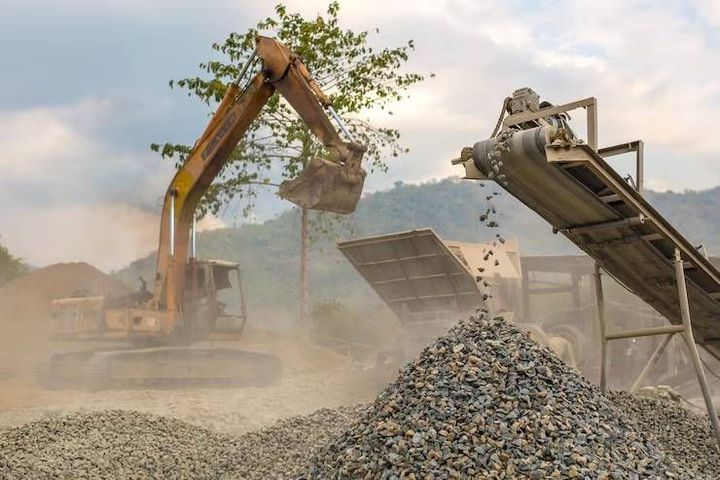
Stone crushing plants are industrial facilities that process large rocks into smaller stones, gravel, and crushed aggregates. These materials are widely used in road construction, building foundations, concrete production, railway infrastructure, drainage systems, and other construction activities.
A stone crushing plant combines mechanical equipment and material-handling systems to produce aggregates of different sizes.
Natural rock is obtained from quarries, where deposits of granite, limestone, basalt, sandstone, and other geological materials are extracted. Since these rocks are often too large for direct use in construction, they must be reduced to suitable sizes through crushing, screening, and related processes. Stone crushing plants make this transformation possible by applying mechanical force to rock materials.
How Stone Crushing Plants Work
A typical stone crushing plant receives raw material through a loading system or feeding hopper. The material moves through crushing equipment, where large rocks are broken into smaller pieces before passing through screening equipment that separates them according to size.
The overall arrangement depends on the type of rock, the required aggregate sizes, production capacity, and site conditions. Some plants operate as stationary installations, while others use mobile or portable equipment that can be relocated between construction projects.
Main Types of Stone Crushing Plants
Stone crushing plants can be classified according to their mobility and production arrangement.
Stationary crushing plants: These installations remain at a fixed location and are commonly used in quarries and large aggregate production facilities.
Mobile crushing plants: These units can move between locations and are useful when processing requirements change with construction activities.
Portable crushing plants: These systems are designed for transportation and temporary installation at different sites.
Modular crushing plants: These systems use separate equipment modules that can be arranged according to production requirements and available space.
Each configuration has different installation requirements, maintenance needs, and material-handling characteristics.
Importance
Stone crushing plants play an important role in supplying the aggregates needed for construction and infrastructure development. Crushed stone provides strength, stability, and drainage characteristics in applications ranging from residential buildings to highways and industrial facilities.
The quality and consistency of these materials influence construction performance. Aggregates with unsuitable particle sizes, excessive dust, or weak rock properties may affect concrete mixtures, road layers, and drainage performance.
Who Uses Stone Crushing Plants
Several industries depend on crushed stone production. Construction contractors use aggregates for foundations, road surfaces, and structural projects, while concrete manufacturers require controlled particle sizes for mixture preparation.
Other users include asphalt producers, railway construction companies, infrastructure developers, and landscaping businesses. Quarry operators and aggregate producers use crushing plants to process extracted rock into materials suitable for different applications.
Problems Addressed by Crushing Technology
Raw rock is difficult to handle and cannot always be incorporated directly into construction materials. Crushing technology addresses this limitation by reducing large stones to specified sizes and separating the resulting particles.
Modern systems also help manage material flow and reduce unnecessary handling. Screening equipment separates different aggregate grades, while dust collection and water-suppression systems can reduce airborne particles during processing.
Factors That Influence Plant Performance
Plant performance depends on several technical conditions, including:
Rock hardness and abrasiveness, which influence equipment wear and crushing efficiency.
Feed size, which determines the amount of reduction required.
Desired product size, which affects the number and arrangement of crushing stages.
Moisture content, which can influence material flow and screen performance.
Equipment maintenance, which affects reliability and operating continuity.
Material handling, including conveyor capacity, stockpile arrangements, and feed consistency.
Understanding these factors helps explain why two stone crushing plants with similar equipment may produce different quantities of finished aggregate.
Recent Updates
Developments in Crushing Equipment
Current developments in stone crushing plants emphasize automation, energy management, equipment monitoring, and improved control over material quality. Electronic control systems can monitor operating conditions and help operators identify changes in production performance.
Sensors may measure equipment vibration, motor temperature, power consumption, and conveyor operation. When connected to suitable monitoring software, these measurements can help maintenance teams identify unusual operating patterns before equipment problems interrupt production.
Dust Control and Environmental Management
Dust management remains an important consideration for modern crushing operations. Enclosed transfer points, water-spray systems, covered conveyors, and dust extraction equipment are used to limit the release of airborne particles.
Water requirements and environmental conditions influence the choice of control methods. Facilities in areas with limited water availability may examine dry dust collection systems, while other sites may combine water suppression with enclosure and filtration equipment.
Energy Efficiency and Plant Automation
Crushing and screening equipment can consume substantial electrical power, depending on the material processed and the required production rate. Plant operators increasingly examine motor efficiency, conveyor loading, equipment settings, and production scheduling to improve energy management.
Automation can also coordinate feeders, crushers, screens, and conveyors. Interlocks and monitoring systems help prevent equipment from operating under unsuitable conditions, although trained supervision and established safety procedures remain necessary.
Mobile and Modular Equipment Trends
Mobile and modular crushing systems provide flexibility for projects with changing material sources or temporary production requirements. Equipment selection increasingly considers transportation limitations, installation time, maintenance access, and the ability to change product specifications.
These developments reflect a broader industry trend toward efficient material handling, improved operational visibility, and better environmental management rather than a single universal design for every plant.
Laws or Policies
Environmental Requirements
Stone crushing plants are subject to environmental requirements that vary by country, state, and local jurisdiction. Common regulatory areas include air pollution, noise, wastewater management, land use, and the handling of waste material.
In India, applicable requirements may involve the Air (Prevention and Control of Pollution) Act, 1981, the Environment (Protection) Act, 1986, and relevant rules or directions issued by environmental authorities. Depending on the site and activity, operators may need consent or authorization from the appropriate State Pollution Control Board or Pollution Control Committee.
Requirements can differ according to the plant's location, scale, operating arrangements, and applicable local directions. Environmental permissions and operating conditions therefore need to be assessed for the specific facility.
Worker Safety and Equipment Protection
Crushing plants contain moving machinery, rotating components, electrical systems, elevated platforms, and areas where falling rocks can cause injuries. Safety arrangements commonly include machine guards, emergency stops, restricted access zones, lockout procedures during maintenance, and suitable personal protective equipment.
Indian occupational safety requirements may also apply through the Occupational Safety, Health and Working Conditions Code, 2020, and other applicable legislation, rules, and transitional provisions. The precise obligations depend on the legal framework in force and the characteristics of the workplace.
Noise, Dust, and Site Management
Environmental management may require controls for noise levels, airborne particulate matter, runoff, and material storage. Plants located near homes, schools, roads, or other sensitive areas may face additional site-specific restrictions.
Operators may need to maintain monitoring records, follow approved operating conditions, and implement measures to limit environmental impacts. Compliance depends on the applicable permissions and current legal requirements, not simply on the type of crushing equipment installed.
Tools and Resources
Equipment Selection and Production Planning
Technical tools help plant designers and operators evaluate equipment arrangements, production requirements, and material characteristics. Selection usually begins with an assessment of the raw rock, the maximum feed size, the required output grades, and the intended production capacity.
Useful planning resources include equipment specification sheets, plant layout drawings, process flow diagrams, maintenance schedules, and aggregate grading tables.
Common Equipment in Stone Crushing Plants
Equipment | Main function | Typical application |
|---|---|---|
Vibrating feeder | Controls the flow of raw rock | Feeding primary crushers |
Jaw crusher | Breaks large rocks through compression | Primary crushing |
Cone crusher | Reduces hard rock through compression | Secondary or tertiary crushing |
Impact crusher | Breaks material through impact forces | Processing selected rock types |
Vibrating screen | Separates aggregates by particle size | Product grading |
Belt conveyor | Moves material between equipment | Material transportation |
Dust collector | Captures airborne particles | Dust management |
Control panel | Monitors and coordinates equipment | Plant operation |
The exact equipment combination depends on the required product, rock properties, and operating conditions.
Production Capacity and Material Calculations
Production planning commonly uses tonnes per hour as a measure of equipment throughput. However, the rated capacity of an individual crusher does not necessarily represent the final output of the entire plant.
For example, a plant may process material at a nominal rate of 100 tonnes per hour, but actual production can be lower because of feed interruptions, screening limitations, equipment maintenance, or the need to recirculate oversized material.
Plant operators may use production logs, motor power readings, belt scales, and material sampling records to evaluate performance. Manufacturer specification documents and engineering calculations provide additional information for equipment sizing and process planning.
Maintenance and Quality Monitoring
Maintenance resources typically include inspection checklists, lubrication schedules, wear-part records, vibration monitoring tools, and electrical inspection procedures. These resources help teams track equipment condition and plan maintenance activities.
Aggregate testing may include particle-size distribution, material strength, abrasion resistance, and other properties required for the intended application. The relevant test methods depend on the material specification and the requirements of the construction project.
FAQs
What Is a Stone Crushing Plant?
A stone crushing plant is a facility that reduces large rocks into smaller aggregates using crushers, screens, feeders, and material-handling equipment. The finished materials are used in construction, road building, concrete production, and infrastructure projects.
What Equipment Is Used in Stone Crushing Plants?
Common equipment includes vibrating feeders, jaw crushers, cone crushers, impact crushers, vibrating screens, belt conveyors, and dust-control systems. The equipment arrangement depends on the rock type, feed size, and required aggregate grades.
How Does a Stone Crushing Plant Production Process Work?
The process generally begins with feeding raw rock into a primary crusher. The material then passes through secondary or tertiary crushing when needed, followed by screening, size separation, and transportation to designated stockpiles.
What Factors Affect Stone Crushing Plant Capacity?
Capacity depends on rock hardness, feed size, crusher specifications, screening efficiency, moisture content, equipment availability, and the required final product sizes. Actual output can differ from the rated capacity stated by the equipment manufacturer.
What Environmental Controls Are Used in Stone Crushing Plants?
Common controls include water sprays, enclosed transfer points, dust collectors, noise-reduction measures, and managed material storage areas. The appropriate controls depend on the site conditions and applicable environmental requirements.
Conclusion
Stone crushing plants convert natural rock into aggregates used in construction, infrastructure, drainage, and concrete production. Their performance depends on suitable equipment selection, material characteristics, process configuration, maintenance, and product grading requirements. Developments in automation, energy monitoring, mobile equipment, and dust management continue to influence plant design and operation. Environmental compliance and workplace safety remain important considerations throughout the production process.