Blow Molding Machine Information With Molding Processes, Equipment, and Technical Insights
Blow molding is a manufacturing process used to produce hollow plastic products by shaping heated plastic with compressed air. A blow molding machine transforms plastic material into containers, bottles, storage vessels, automotive components, and various industrial products.
The process is widely used because it can create hollow shapes with consistent dimensions and relatively thin walls.
The development of blow molding technology followed the growing demand for lightweight, durable, and easily transportable plastic containers. Manufacturers needed a practical method to produce hollow objects in large quantities without assembling multiple components. Blow molding addressed this requirement by combining heat, pressure, and specially designed molds.
A typical blow molding system includes a plastic heating unit, mold assembly, air supply, cooling equipment, and a control system. Depending on the machine design, plastic material enters as a tube-like parison or a preformed component called a preform. Compressed air expands the heated material against the mold surface, creating the required shape.
How Blow Molding Works
The process begins with thermoplastic material being heated until it becomes sufficiently flexible for shaping. The machine positions the heated material inside a mold, where compressed air expands it against the mold walls. After cooling, the plastic retains the shape of the mold and can be removed for inspection or additional finishing.
The main stages include:
Material preparation: Plastic resin is prepared for processing according to the required material properties.
Heating and melting: The plastic is heated until it reaches a suitable processing temperature.
Mold formation: The machine positions a parison or preform within the mold.
Air expansion: Compressed air pushes the plastic against the mold's internal surfaces.
Cooling and removal: The formed product cools, solidifies, and is removed for inspection.
Temperature, air pressure, mold design, and cooling time influence the final product's quality. Incorrect settings can create uneven walls, incomplete shapes, surface defects, or dimensional variations.
Main Types of Blow Molding Machines
Different blow molding systems are designed for particular products, production volumes, and material requirements.
Extrusion blow molding uses an extruder to produce a heated plastic parison. The mold closes around the parison, and compressed air expands it into a hollow product. This method is commonly used for bottles, jerrycans, ducts, and industrial containers.
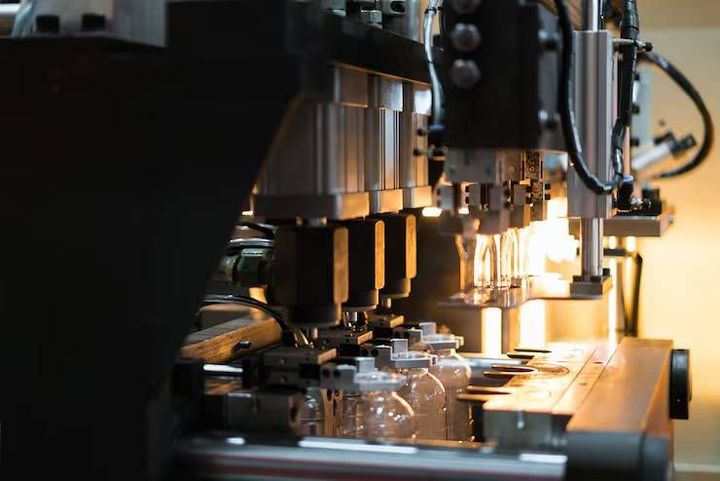
Injection blow molding first forms a preform through injection molding. The preform is then transferred to a blowing station, where air expands it into the final shape. This approach is suitable for smaller containers that require controlled dimensions and consistent neck finishes.
Stretch blow molding uses a preform that is heated and stretched before or during air expansion. The stretching process aligns the plastic structure and improves certain mechanical properties. It is frequently used for beverage bottles and other containers made from polyethylene terephthalate (PET).
Importance
Blow molding machines are important because hollow plastic products are used across packaging, household goods, transportation, agriculture, and industrial manufacturing. Their applications range from small containers to large storage tanks and specialized technical components.
The technology helps manufacturers produce complex hollow shapes with fewer assembly operations. It can also support repeatable production when the material, machine settings, mold design, and cooling conditions are properly controlled.
Industries That Use Blow Molding
Packaging manufacturers use blow molding to produce bottles, jars, and containers for liquids and other products. Household product manufacturers use it for storage containers, cleaning-product bottles, and selected kitchen items.
Automotive manufacturers use blow-molded components for air ducts, fluid reservoirs, and other hollow parts. Agricultural and industrial applications include chemical containers, water storage vessels, protective housings, and material-handling components.
The following factors explain why the process matters:
Production consistency: Automated machine controls help maintain repeatable dimensions across production batches.
Design flexibility: Mold cavities can accommodate different shapes, sizes, and surface features.
Material efficiency: Process settings and suitable product designs can reduce unnecessary material use.
Production planning: Cycle time, mold capacity, and cooling requirements help determine manufacturing output.
Product durability: Appropriate materials and wall thicknesses can support the intended mechanical requirements.
Common Technical Challenges
Blow molding involves several variables that affect product quality. Uneven wall thickness may occur when the parison expands inconsistently or the material distribution is poorly controlled. Insufficient cooling can cause deformation, while excessive heating may damage the polymer or produce surface irregularities.
Other challenges include air leakage, mold alignment problems, flash formation, and inconsistent dimensions. Operators and maintenance teams monitor machine performance, inspect finished products, and adjust process parameters to address these issues.
Recent Updates
Current developments in blow molding focus on automation, energy efficiency, material optimization, digital monitoring, and improved quality control. Manufacturers are increasingly integrating sensors and programmable control systems to monitor operating conditions and identify process variations.
Automation and Digital Monitoring
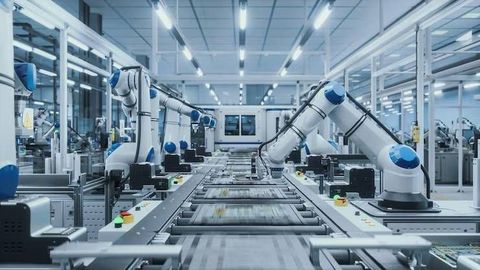
Modern blow molding equipment can use programmable logic controllers, touchscreen interfaces, temperature sensors, and pressure monitoring systems. These features allow operators to adjust production parameters and observe machine conditions more consistently.
Some systems also use production monitoring software to record cycle times, machine interruptions, material consumption, and quality measurements. This information can help identify recurring faults and support maintenance planning.
Energy and Material Efficiency
Machine designers continue to focus on reducing unnecessary energy consumption through improved heating systems, optimized hydraulic circuits, electric drives, and more efficient cooling arrangements. The practical results depend on machine configuration, operating conditions, and the products being manufactured.
Material optimization is another important development. Improved parison programming, precise temperature management, and mold design can help distribute plastic more evenly. Lightweight product designs may reduce resin consumption while maintaining the required strength, provided that the finished product meets its performance requirements.
Recycled Plastics and Alternative Materials
Interest in recycled polymers and improved material recovery is influencing plastic processing. However, recycled resin must be evaluated for contamination, consistency, thermal behavior, and suitability for the intended application.
Compatibility varies by polymer and product category. Food-contact packaging, for example, may require specific evidence that the material and manufacturing process meet applicable safety requirements. The use of recycled material therefore depends on technical performance and relevant regulatory conditions.
Blow Molding Process Comparison
Process | Starting material | Typical applications | Main technical consideration |
|---|---|---|---|
Extrusion blow molding | Heated plastic parison | Containers, ducts, tanks | Wall thickness and parison control |
Injection blow molding | Injection-molded preform | Small bottles and containers | Dimensional accuracy and neck finish |
Stretch blow molding | Heated preform | PET beverage bottles | Stretch ratio and material orientation |
The appropriate process depends on product geometry, material properties, production volume, and required dimensional accuracy rather than a single universal machine specification.
Laws or Policies
Blow molding equipment and its products may be subject to rules covering machinery safety, worker protection, electrical systems, environmental performance, packaging, and material handling. Requirements vary by country and depend on the intended product, production facility, and machinery configuration.
Machinery and Workplace Safety
Industrial machinery generally requires suitable guarding, emergency stopping arrangements, electrical protection, and procedures for maintenance and operation. Blow molding systems may also involve high temperatures, compressed air, moving mold assemblies, and hydraulic or pneumatic equipment.
Facilities should assess these hazards and apply appropriate risk controls. Relevant requirements may include machine safety standards, workplace risk assessments, operator training, and procedures for isolating energy sources before maintenance.
Environmental and Plastic Waste Requirements
Environmental policies may address plastic waste collection, recycling, packaging design, and industrial emissions. Depending on the jurisdiction, manufacturers may need to follow requirements for waste segregation, resin handling, energy use, and the management of production scrap.
Plastic containers intended for food, beverages, chemicals, or other regulated uses may be subject to additional material and labeling requirements. Manufacturers must consider the specific rules that apply to the product and its intended use.
Standards and Regulatory Compliance
International and national standards can provide guidance for machinery safety, electrical equipment, quality management, and environmental management. Their legal status varies: some are incorporated into regulations, while others are voluntary or become mandatory through contracts or other requirements.
A compliance assessment should consider the machine, the workplace, and the finished product separately. Meeting one machinery standard does not automatically establish that every product manufactured on that equipment satisfies all applicable requirements.
Tools and Resources
Several technical tools support blow molding machine selection, process planning, troubleshooting, and quality inspection. Their usefulness depends on the product design, machine type, available measurements, and the operator's technical experience.
Machine Selection and Process Planning Tools
Machine specification sheets help compare clamping force, mold dimensions, extrusion capacity, shot capacity, power requirements, and compatible materials. These specifications should be assessed alongside the dimensions and production requirements of the intended product.
Computer-aided design (CAD) software helps develop product geometry and mold layouts. Computer-aided engineering tools can support wall-thickness analysis, structural assessment, and thermal studies when suitable simulation methods are available.
Production and Quality Control Tools
Useful tools include:
Temperature sensors for monitoring heating zones and material conditions.
Pressure gauges and sensors for checking compressed-air and hydraulic systems.
Thickness gauges for evaluating product wall distribution.
Dimensional measuring instruments for checking height, diameter, and neck geometry.
Energy meters for recording electricity consumption.
Maintenance logs for documenting machine faults, repairs, and inspection results.
Cycle-time calculators can estimate theoretical output from the number of operating cycles and the number of products produced per cycle. Actual output may be lower because of downtime, setup changes, rejected products, and maintenance requirements.
Technical Documentation
Machine manuals provide information about operating limits, maintenance intervals, approved materials, and safety procedures. Polymer technical data sheets describe properties such as density, melt behavior, and recommended processing conditions.
Applicable machinery standards, workplace safety guidance, and environmental authority publications can help facilities understand their compliance responsibilities. Technical documentation should be matched to the exact equipment model and intended application.
FAQs
What is a blow molding machine used for?
A blow molding machine produces hollow plastic products such as bottles, containers, automotive ducts, storage vessels, and industrial components. The final applications depend on the machine type, mold design, and polymer used.
What are the main types of blow molding processes?
The three common types are extrusion blow molding, injection blow molding, and stretch blow molding. Each uses a different material preparation and shaping method suited to particular product geometries and manufacturing requirements.
Which materials are used in blow molding machines?
Common materials include high-density polyethylene (HDPE), polyethylene terephthalate (PET), polypropylene (PP), and selected other thermoplastics. Material selection depends on strength, flexibility, transparency, chemical compatibility, temperature resistance, and intended use.
How does a blow molding machine control product quality?
Quality control involves monitoring temperature, air pressure, cooling time, mold alignment, and material distribution. Inspection methods such as wall-thickness measurement, dimensional checks, and leak testing help identify defects.
What factors affect blow molding machine performance?
Machine performance depends on material properties, mold design, cycle settings, cooling capacity, maintenance, and automation. Production planning also considers downtime, product rejection, energy consumption, and the required output rate.
Conclusion
Blow molding machines manufacture hollow plastic products through controlled heating, mold formation, air expansion, and cooling. The main process types serve different applications, from small containers to larger industrial components. Automation, digital monitoring, energy efficiency, and material optimization continue to influence equipment development. Machinery safety, environmental responsibilities, and product-specific regulations remain important considerations throughout manufacturing.