Automated Guided Vehicles Information With Smart Warehouse Technology and Process Automation
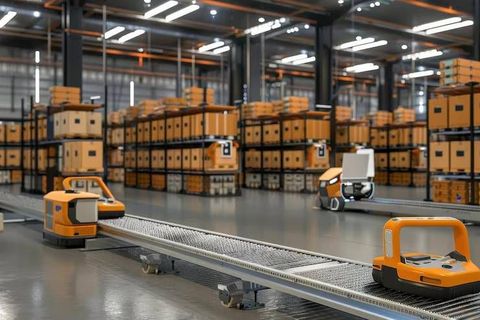
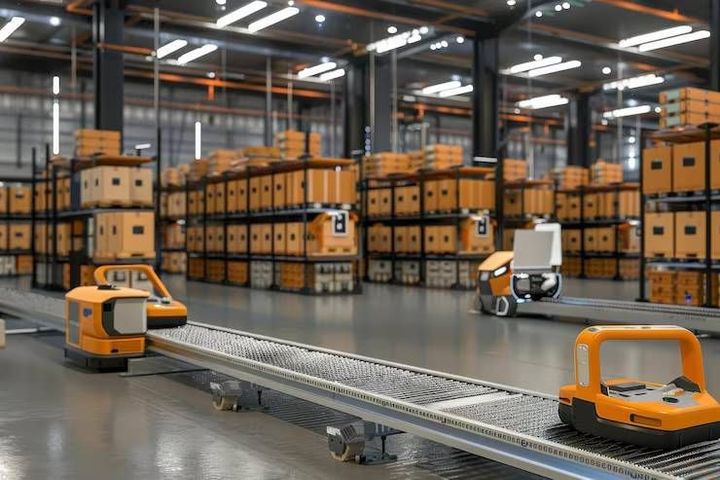
Automated Guided Vehicles (AGVs) are mobile machines designed to transport materials, products, containers, and equipment within warehouses, factories, and distribution centers. They follow predefined routes or use navigation systems to move between locations with limited human intervention.
Automated Guided Vehicles are an important part of smart warehouse technology because they connect material movement with digital inventory systems and industrial process automation.
The development of AGVs began with efforts to reduce repetitive material handling in industrial environments. Early systems often followed physical guide paths, such as wires embedded in floors or magnetic strips. Modern systems can use laser navigation, cameras, sensors, and digital maps to understand their surroundings and travel through designated areas.
Automated Guided Vehicles support several warehouse activities, including moving raw materials to production lines, transporting finished products to storage areas, and carrying containers between picking stations. Their operation depends on vehicle design, navigation technology, warehouse layout, and communication with other equipment.
How Automated Guided Vehicles Work
An AGV receives movement instructions from a control system or an operator. It uses navigation technology to follow a route, detect obstacles, and reach a designated destination. Depending on its design, the vehicle may stop at a workstation, transfer a load, or wait for another instruction.
Common components include:
Navigation systems that identify routes and vehicle positions.
Sensors that detect obstacles, nearby objects, and changes in the operating environment.
Controllers that process instructions and coordinate vehicle movement.
Battery systems that provide electrical power.
Safety mechanisms that help prevent collisions and unsafe movement.
Communication equipment that exchanges information with warehouse software.
Common Types of AGVs
Different vehicle designs support different material handling requirements.
AGV type | Main function | Typical application |
|---|---|---|
Towing AGV | Pulls one or more carts | Moving materials between production areas |
Unit-load AGV | Carries individual loads | Transporting containers and pallets |
Forklift AGV | Lifts and moves palletized goods | Warehouse storage and retrieval |
Heavy-load AGV | Transports large or heavy items | Industrial manufacturing facilities |
Assembly-line AGV | Moves components between workstations | Manufacturing and assembly operations |
The appropriate vehicle depends on load dimensions, floor conditions, travel distances, operating speed, and the level of automation required.
Importance
Automated Guided Vehicles have become relevant as warehouses handle larger product ranges, shorter processing cycles, and more complex inventory movements. Traditional material handling often requires workers to push carts, operate forklifts, or repeatedly transport items between locations. These activities can involve physical effort, repetitive movement, and coordination challenges.
AGVs can support consistent material transportation while allowing employees to focus on inventory verification, equipment supervision, quality checks, and other tasks requiring judgment. Their usefulness depends on how well they fit the facility's processes and how effectively people and machines work together.
Benefits for Warehouse Operations
One important advantage is predictable material movement. When routes and delivery instructions are properly configured, AGVs can transport materials between designated points according to operational requirements. This helps warehouse teams coordinate receiving, storage, picking, and dispatch activities.
Other potential benefits include:
Reduced manual movement of heavy or bulky materials.
More consistent transportation between workstations.
Improved visibility into vehicle movements and task status.
Better coordination between storage areas and production lines.
Reduced exposure to some repetitive material handling activities.
More organized movement through defined warehouse routes.
These benefits are not automatic. Poor route planning, unsuitable flooring, equipment downtime, and inadequate employee training can reduce operational effectiveness.
Who Uses Automated Guided Vehicles?
AGVs are used across several industries. Manufacturing facilities use them to move components and work-in-progress materials. Distribution centers use them to transfer pallets and containers, while food processing and pharmaceutical manufacturing facilities may use specially configured vehicles to support controlled material movement.
Retail distribution operations can use AGVs to transport stock between receiving, storage, and picking zones. Automotive facilities may use them to deliver parts to assembly stations. Smaller warehouses can also consider compact automated vehicles when their layouts and workloads support practical implementation.
Challenges and Operational Considerations
Introducing AGVs requires planning beyond purchasing equipment. Facilities need suitable travel routes, reliable communication, charging arrangements, and procedures for dealing with unexpected obstacles. Existing warehouse activities may also need adjustments to accommodate automated traffic.
Important considerations include:
Initial equipment and infrastructure expenditure.
Integration with inventory and warehouse management software.
Battery charging and maintenance schedules.
Employee training and emergency procedures.
Pedestrian safety and traffic separation.
System downtime and recovery procedures.
A warehouse should evaluate these factors alongside expected productivity improvements rather than assuming automation will resolve every operational problem.
Recent Updates
Smart warehouse technology has continued to develop through improvements in navigation, artificial intelligence, sensor systems, battery management, and software integration. Recent industry trends emphasize flexible automation, allowing facilities to coordinate mobile vehicles with changing storage arrangements and production requirements.
AI-Based Navigation and Sensor Technology
Traditional AGVs generally follow established routes, whereas newer autonomous mobile robots (AMRs) can often navigate more dynamically. These technologies overlap in purpose, but they are not identical. AGVs typically rely more heavily on predefined routes, while AMRs generally use environmental mapping and onboard perception to adjust their paths.
Modern navigation systems may combine laser scanners, cameras, positioning sensors, and digital maps. These capabilities help vehicles identify obstacles and navigate busy operational areas. Performance still depends on environmental conditions, system configuration, and the reliability of onboard equipment.
Integration With Smart Warehouse Systems
Warehouse management systems (WMS) organize inventory information, storage locations, picking tasks, and order movements. AGV fleet management software coordinates vehicle assignments, routes, charging, and traffic flow.
When these systems communicate effectively, a warehouse can assign transportation tasks according to operational priorities. For example, a completed picking task may generate a request to move a container to a packing station.
Connected Equipment and Predictive Maintenance
Connected sensors can monitor battery condition, motor performance, wheel wear, and other operating indicators. Maintenance teams can use this information to identify developing problems and schedule inspections before a minor issue interrupts operations.
The following table summarizes common technology developments and their practical uses.
Technology | Warehouse application | Operational consideration |
|---|---|---|
AI-assisted navigation | Route adaptation and obstacle recognition | Requires suitable sensor data and configuration |
Fleet management software | Coordinating multiple vehicles | Depends on reliable communications |
Battery monitoring | Tracking charging and battery condition | Requires appropriate charging infrastructure |
Digital warehouse mapping | Defining routes and movement zones | Maps must reflect actual site conditions |
Predictive maintenance | Identifying possible equipment problems | Predictions require reliable operating data |
These developments reflect a broader shift toward connected industrial automation rather than a complete replacement of human supervision.
Laws or Policies
Automated Guided Vehicles operate within a wider framework of workplace safety, machinery safety, electrical safety, and industrial risk management. Applicable requirements depend on the country, vehicle design, operating environment, and whether the equipment is used in manufacturing, logistics, or another setting.
Workplace Safety Requirements
Facilities generally need procedures for managing interactions between automated vehicles, employees, visitors, and manually operated equipment. Common safety measures include designated travel routes, warning indicators, emergency stops, pedestrian crossings, speed restrictions, and documented risk assessments.
Employers should also establish procedures for maintenance, battery charging, equipment inspection, and recovery after an unexpected stop. Employees who work near automated vehicles need training appropriate to their responsibilities.
Machinery and Technical Standards
International standards can provide guidance for the design, integration, and safe operation of industrial mobile equipment. ISO 3691-4 addresses safety requirements and verification for driverless industrial trucks and their systems. Its applicability depends on the equipment classification and intended use.
Electrical equipment, batteries, radio communication, and workplace installations may be subject to additional technical requirements. Facilities should determine which standards and regulations apply to their specific installation.
Policies in India
In India, AGV installations may be affected by applicable occupational safety requirements, factory rules, electrical safety provisions, and machinery-related obligations. The relevant requirements depend on the facility, the activities performed, and the current legal framework.
Organizations should assess workplace hazards, maintain equipment records, establish emergency procedures, and verify applicable compliance obligations before deployment. This overview is general information and does not replace a site-specific legal or engineering assessment.
Tools and Resources
Selecting and managing Automated Guided Vehicles involves several technical and operational tools. These resources help organizations assess warehouse layouts, estimate material movement requirements, and coordinate automated equipment.
Warehouse Planning and Simulation Tools
Warehouse simulation software can model vehicle routes, storage locations, traffic congestion, and material flow. It allows planners to compare different layouts before making physical changes. Simulation results depend on the quality of the assumptions and operational data entered into the model.
Computer-aided design (CAD) software can help create warehouse floor plans and mark vehicle routes, loading points, pedestrian walkways, and charging stations. These plans support discussions between warehouse managers, safety teams, and automation engineers.
Fleet Management and Inventory Platforms
AGV fleet management platforms assign tasks, monitor vehicle status, and coordinate traffic. Depending on the system, they may also provide battery information, fault notifications, and operational reports.
Warehouse management systems maintain inventory records and coordinate storage and picking activities. Manufacturing execution systems can connect material transportation with production schedules. Integration between these platforms helps reduce information gaps, although compatibility must be verified before implementation.
Evaluation Checklist
Before selecting or introducing AGVs, organizations can assess the following areas:
Material requirements: Identify typical load weights, dimensions, and transportation frequency.
Facility layout: Review aisle widths, floor surfaces, intersections, and pedestrian movement.
Navigation: Determine whether fixed routes or more flexible navigation are appropriate.
Software compatibility: Confirm integration requirements for existing warehouse systems.
Safety planning: Establish traffic rules, emergency procedures, and employee training.
Maintenance: Define inspection routines, battery management, and technical support arrangements.
Performance measurement: Track completed transport tasks, waiting time, equipment availability, and interruptions.
A structured assessment helps organizations understand whether AGVs suit their actual workflow and what operational changes may be necessary.
FAQs
What are Automated Guided Vehicles used for in warehouses?
Automated Guided Vehicles transport pallets, containers, components, and other materials between warehouse locations. They can support receiving, storage, production supply, picking, and internal distribution activities.
How do Automated Guided Vehicles work with smart warehouse technology?
AGVs can communicate with warehouse management and fleet control systems to receive transportation tasks. Sensors and navigation equipment help them follow routes, detect obstacles, and report operating conditions.
What is the difference between an AGV and an AMR?
An AGV generally follows predefined routes or controlled navigation paths. An autonomous mobile robot typically uses environmental mapping and onboard sensing to adapt its movement more flexibly. Actual capabilities vary by model.
Are Automated Guided Vehicles safe for warehouse employees?
AGVs can incorporate obstacle detection, warning signals, emergency stops, and speed controls. However, safety depends on equipment design, installation, maintenance, traffic management, and employee training.
Which industries use AGV process automation?
Manufacturing, automotive production, retail distribution, food processing, electronics assembly, and pharmaceutical manufacturing are among the industries that use AGVs. The vehicle configuration depends on the materials handled and the operating environment.
Conclusion
Automated Guided Vehicles support warehouse technology by connecting material transportation with digital control systems and industrial process automation. Their applications range from pallet movement and production supply to inventory handling and internal distribution. Navigation improvements, connected sensors, and fleet management software are expanding the ways facilities coordinate automated equipment. Successful implementation depends on suitable infrastructure, employee training, system integration, maintenance planning, and compliance with applicable safety requirements.