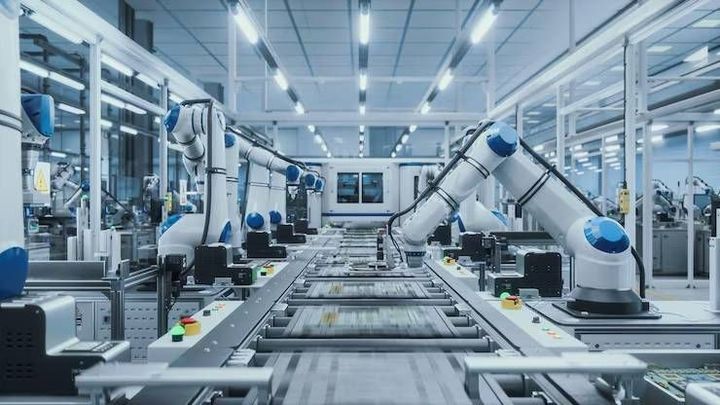
Factory Automation Units Information With Automated Production and Process Optimization
Factory automation units are machines, control systems, sensors, and connected technologies that help manufacturing facilities perform production tasks with limited manual intervention.
These units can manage activities such as material movement, component assembly, product inspection, packaging, and equipment monitoring. They work together to make industrial processes more consistent and easier to manage.
Factory automation developed from basic mechanical equipment into advanced electronic and computer-controlled systems. Earlier manufacturing operations depended heavily on manual work and individual machines. The introduction of programmable controllers, industrial robotics, and computer-based monitoring gradually enabled manufacturers to coordinate multiple production stages within a single system.
Today, factory automation units are used in industries such as automotive manufacturing, electronics, food processing, pharmaceuticals, metal fabrication, and consumer goods production. Their design varies according to the materials handled, production volume, operating environment, and required accuracy.
Automated production and process optimization are closely connected. Automation allows machines to perform predefined activities, while process optimization focuses on improving how those activities are organized, monitored, and adjusted. Together, these approaches help facilities manage production flow, equipment performance, product consistency, and resource use.
Importance
Why Factory Automation Units Matter
Modern manufacturing involves several connected activities that must operate in a coordinated manner. Delays in one production stage can affect other stages, while inconsistent machine settings may create defective products or unnecessary material waste. Factory automation units help address these challenges by coordinating operations and collecting information about production conditions.
These systems affect manufacturers, equipment operators, maintenance teams, product designers, and consumers. Consistent manufacturing processes can support product availability and quality, while reliable equipment monitoring can help identify developing problems before they interrupt production.
Automation also helps manage repetitive tasks that require precise timing or consistent movements. However, automated systems still need suitable supervision, maintenance, programming, and safety procedures.
Common Types of Factory Automation Units
Different automation technologies perform different functions within a manufacturing facility.
Programmable logic controllers (PLCs): These industrial computers control machine sequences, input signals, motors, valves, and other equipment according to programmed instructions.
Industrial robots: Robotic arms perform tasks such as welding, material handling, assembly, painting, and repetitive positioning.
Sensors and inspection units: These devices measure temperature, pressure, position, vibration, dimensions, or other operating conditions.
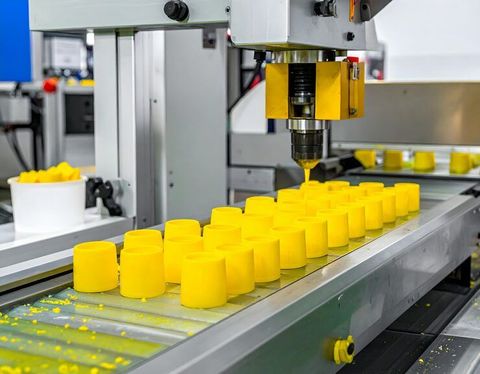
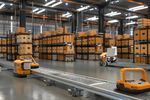
Conveyor and material-handling systems: These units transport components, raw materials, and finished products between production stages.
Human-machine interfaces (HMIs): These displays allow operators to monitor machine conditions, adjust permitted settings, and review alarms.
Supervisory control and data acquisition (SCADA) systems: These systems collect and display operational information across machines or industrial processes.
Automated inspection equipment: Cameras, optical sensors, and measurement instruments identify visible defects or dimensional differences.
Applications Across Manufacturing Industries
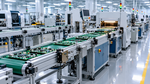
Factory automation units are adapted to the needs of individual industries. Automotive facilities use robots for welding, assembly, and handling heavy components. Electronics manufacturers use precision placement systems and inspection equipment to handle small parts and examine circuit boards.
Food-processing facilities may use automated filling, weighing, sealing, and packaging equipment. Metalworking plants use computer-controlled cutting, bending, and machining systems to produce components with defined dimensions.
The following table summarizes common applications and their operational purposes.
Industry | Automation application | Main purpose |
|---|---|---|
Automotive | Robotic assembly and welding | Consistent component positioning |
Electronics | Component placement and optical inspection | Precision assembly and defect detection |
Food processing | Filling, weighing, and packaging | Controlled processing and packaging |
Metal fabrication | CNC machining and cutting | Repeatable component production |
Pharmaceuticals | Process monitoring and packaging | Controlled operations and traceability |
Warehousing | Automated guided vehicles | Organized material movement |
Recent Updates
Trends in Factory Automation From 2024–2026
Factory automation is increasingly connected with industrial data systems, artificial intelligence, machine vision, and flexible production technologies. Rather than operating as isolated machines, many modern units exchange information with production management platforms. This makes it easier to monitor operations across different stages of a manufacturing process.
Artificial intelligence is also being applied to selected inspection, forecasting, and equipment-monitoring tasks. For example, an image-based inspection system may identify surface irregularities, while an analytical model may detect unusual vibration patterns that indicate possible equipment deterioration. These applications depend on data quality, suitable configuration, and validation under actual operating conditions.
Industrial Internet of Things and Predictive Maintenance
The Industrial Internet of Things (IIoT) connects sensors, machines, and software platforms so that operational information can be collected and analyzed. Temperature, vibration, energy consumption, and machine-cycle data can help maintenance teams understand equipment behavior.
Predictive maintenance uses this information to estimate when equipment may require attention. It differs from reactive maintenance, which occurs after a failure, and scheduled maintenance, which follows predetermined intervals. Predictions are not always accurate, so inspection and established maintenance procedures remain important.
Digital Twins and Flexible Production
A digital twin is a digital representation of a physical machine, production line, or industrial process. Depending on its design, it may combine engineering models with current operational data to help teams examine performance, test scenarios, and investigate potential changes before implementing them.
Flexible automation is another developing trend. Modular production equipment, collaborative robots, and programmable systems can support changes in product design or manufacturing sequences. Nevertheless, flexibility depends on machine compatibility, tooling, programming, operator training, and appropriate safety controls.
Challenges When Introducing New Technology
Modernization can introduce technical and organizational difficulties. Older machines may use communication protocols that do not integrate easily with newer systems, while connected equipment may create additional cybersecurity risks.
Other considerations include staff training, data accuracy, system reliability, maintenance requirements, and production downtime during installation. A factory automation project therefore involves both equipment selection and planning for the wider production environment.
Laws or Policies
Industrial Safety and Machinery Requirements
Factory automation units must operate within the safety requirements applicable to their location and industry. These requirements may cover machine guarding, emergency stops, electrical systems, hazardous energy isolation, operator training, and safe access to moving equipment.
In many jurisdictions, machinery manufacturers and facility operators have separate responsibilities. Manufacturers may need to meet product safety and conformity requirements, while operators are generally responsible for maintaining safe working conditions and using equipment according to applicable instructions.
International standards, including ISO 10218 for industrial robots and ISO 13849 for safety-related control systems, provide technical frameworks for relevant machinery applications. Their legal status depends on local adoption and the specific rules governing a facility.
Environmental and Energy Considerations
Automation equipment can influence electricity consumption, material waste, and industrial emissions. Some jurisdictions establish energy-efficiency requirements for particular equipment categories, while environmental rules may govern waste handling, emissions, and the use of certain materials.
Manufacturers may also use energy-monitoring systems to measure consumption across production lines. These measurements can help identify inefficient operating patterns, although actual improvements depend on machine configuration, production schedules, maintenance, and operating practices.
Country-Specific Regulatory Frameworks
Requirements differ according to the country, industry, equipment type, and intended use. For example, facilities operating in India may need to consider applicable occupational safety legislation, machinery-related requirements, electrical safety rules, and environmental permissions. Other countries may use different conformity assessment systems and industrial safety frameworks.
Because requirements can change, manufacturers should distinguish between voluntary technical standards, mandatory regulations, and industry-specific obligations. Compliance may require documented risk assessments, equipment inspections, maintenance records, and appropriate worker training.
Tools and Resources
Software for Production Monitoring
Several categories of industrial software support factory automation units and process optimization. The appropriate platform depends on the complexity of the facility, the types of machines installed, and the information required by production teams.
Manufacturing execution systems (MES): Coordinate production activities, record manufacturing progress, and support traceability.
Computerized maintenance management systems (CMMS): Organize maintenance schedules, work orders, equipment histories, and spare-parts records.
SCADA platforms: Display machine status, alarms, and process measurements.
Industrial data historians: Store time-based operational information for later analysis.
Computer-aided manufacturing (CAM) software: Helps prepare manufacturing instructions for compatible computer-controlled machines.
Energy-monitoring platforms: Track electricity use and identify consumption patterns across equipment or production areas.
Calculators and Planning Templates
Basic analytical tools can help teams understand production performance before changing automation equipment. Spreadsheet templates and manufacturing dashboards can organize information about output, downtime, defects, maintenance, and energy consumption.
Common measurements include:
Cycle time: The time required to complete a defined production cycle.
Throughput: The number of units produced during a specified period.
Defect rate: The proportion of inspected or produced units that fail defined quality requirements.
Downtime: The time equipment remains unavailable for production.
Overall equipment effectiveness (OEE): A combined measure of availability, performance, and quality.
OEE is commonly calculated by multiplying availability, performance, and quality. Its usefulness depends on consistent definitions and accurate production records.
Example of Production Performance Measurement
Consider a production line scheduled to operate for 480 minutes. If unplanned stoppages account for 48 minutes, the line operates for 432 minutes.
Availability is calculated as operating time divided by scheduled production time, multiplied by 100. In this example, availability is 90%. This figure describes availability alone; it does not account for slower-than-planned production or defective units, which are included in the broader OEE calculation.
FAQs
What Are Factory Automation Units?
Factory automation units are machines and control technologies that perform or coordinate manufacturing activities. Examples include PLCs, industrial robots, sensors, conveyor systems, and automated inspection equipment.
How Do Factory Automation Units Improve Production?
Factory automation units can coordinate machine sequences, maintain repeatable operating conditions, monitor production data, and identify process interruptions. The actual results depend on equipment suitability, programming, maintenance, and production requirements.
What Is the Role of PLCs in Automated Production?
PLCs receive signals from sensors and execute programmed control instructions. They can operate motors, valves, conveyors, and other equipment in a defined sequence, while monitoring conditions that may require an alarm or shutdown.
How Does Predictive Maintenance Support Process Optimization?
Predictive maintenance analyzes equipment information to identify patterns associated with possible deterioration. It can help maintenance teams plan inspections, but predictions need validation and cannot eliminate every unexpected failure.
Which Regulations Apply to Industrial Automation Equipment?
Applicable requirements depend on the country, machinery category, industry, and operating environment. They may include machinery safety, electrical safety, workplace protection, environmental rules, and relevant technical standards.
Conclusion
Factory automation units support manufacturing through machine control, material handling, inspection, and production monitoring. Developments in industrial connectivity, artificial intelligence, digital twins, and predictive maintenance are expanding how factories analyze and coordinate their operations. Effective implementation depends on equipment compatibility, workforce training, reliable data, maintenance planning, and compliance with applicable safety requirements. Process optimization remains an ongoing activity shaped by production objectives, operating conditions, and measured performance.