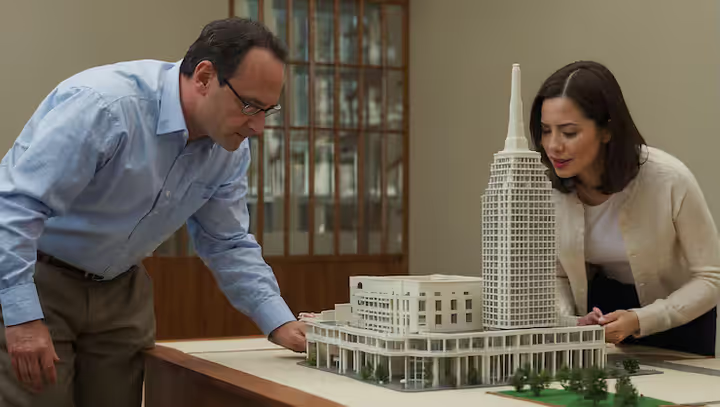
Exploring real estate works in Singapore: A Complete Guide
Real estate works in Singapore operate within a structured framework shaped by long-term planning, land scarcity, and rigorous zoning rules. The topic exists because Singapore is a city-state with limited land, making land use planning an essential component of national development. Housing, business districts, green spaces, transport corridors, and industrial zones must fit within a carefully managed land ecosystem. As a result, real estate planning is not just about structures; it is tied to economic strategy, community growth, and national priorities.
Singapore’s real estate landscape is supported by agencies that coordinate development, including the Urban Redevelopment Authority (URA), Housing & Development Board (HDB), and Singapore Land Authority (SLA). These organizations manage zoning, land allocation, public housing planning, and lease administration. Their coordinated approach has shaped everything from residential neighborhoods to major hubs like Marina Bay, Jurong Lake District, and Punggol Digital District.
In this context, understanding how Singapore’s real estate system functions offers insights into urban development policy, land use planning, and infrastructure strategy, all of which influence long-term growth and sustainability.
Importance: Why Real Estate Works Matter Today
Real estate in Singapore matters to residents, investors, policymakers, and global observers because it reflects how a land-scarce country successfully plans urban growth. With a population living primarily in high-density environments, well-designed land management ensures quality of life, efficient transport systems, and sustainable community planning.
Real estate works also play a role in:
-
Urban infrastructure development – shaping transportation networks, smart city technology, and public facilities.
-
Environmental protection – integrating parks, water bodies, and green connectors into development plans.
-
Long-term economic stability – supporting business hubs and innovation districts that drive competitiveness.
-
Housing availability and planning – ensuring proper allocation of residential zones through structured demand forecasting.
These processes solve several challenges, including efficient land usage, optimized infrastructure distribution, and sustainable growth. Because Singapore constantly evolves with new regional centers, digital districts, and transport expansions, its real estate system must stay adaptable while maintaining clarity and stability.
This importance has made terms such as real estate market trends, zoning regulations Singapore, and urban planning insights highly researched topics.
Recent Updates: Trends and Developments from the Past Year
The past year has seen notable updates across Singapore’s real estate and urban planning landscape. These developments reflect current property market analysis, infrastructure enhancement, and sustainability-focused planning.
Key highlights include:
Updated Master Plan Reviews (2024–2025)
URA continued refining concepts for mixed-use precincts such as the Greater Southern Waterfront and Punggol Digital District. These plans focus on integrating housing, commercial spaces, transport, and recreation within the same districts.
Expansion of Transport Nodes
Several announcements regarding new MRT line extensions were made in 2024, improving overall accessibility. Transport upgrades influence zoning decisions and future population planning.
Green and Sustainable Infrastructure Push
Singapore strengthened its sustainable development goals, including:
-
increased emphasis on energy-efficient buildings,
-
improved green standards for large projects,
-
expanded green corridors linked to community spaces.
Digital Planning Tools
Government agencies introduced or enhanced digital portals that provide real-time planning information, development guidelines, and environmental data. These updates help the public better understand zoning maps and land use restrictions.
Economic and Population Forecast Adjustments
Adjustments were made in 2024 regarding future population projections, which impact strategies for residential zoning and regional center expansion.
These updates demonstrate the ongoing evolution of Singapore's urban structure and highlight why smart city planning, zoning insights, and development strategy Singapore remain trending topics.
Laws or Policies: Regulations That Shape Real Estate Works
Real estate operations in Singapore are strongly influenced by national policies, regulatory frameworks, and long-term development strategies. These rules ensure transparent land management, efficient planning, and consistent standards.
Important regulations affecting the sector include:
Land Use and Zoning Guidelines
URA’s Master Plan divides Singapore into multiple zones such as residential, commercial, industrial, open space, and mixed-use categories. Each zone has specific guidelines for:
-
permissible building types
-
density limits
-
height controls
-
environmental considerations
These zoning rules guide how areas evolve over time.
Leasehold Structure
Most land in Singapore operates on a leasehold system (commonly 99 years for residential and 60 years or less for industrial). This system ensures alignment with long-term national planning cycles.
Environmental and Sustainability Regulations
Policies promoting low-carbon development, conservation areas, green building standards, and resource-efficient construction apply to large developments. These rules support Singapore’s sustainability goals.
Infrastructure Planning Requirements
Major developments must align with transport, drainage, and environmental requirements under agencies such as:
-
Land Transport Authority (LTA)
-
National Environment Agency (NEA)
-
Public Utilities Board (PUB)
These requirements prevent congestion, flooding, and infrastructure strain.
Building and Construction Standards
To maintain safety and structural integrity, Singapore enforces strict technical guidelines for building design, fire safety, and structural engineering.
Policies collectively ensure that land use planning Singapore, urban development strategy, residential zoning regulations, and infrastructure alignment requirements operate cohesively across the country.
Tools and Resources: Helpful Platforms for Real Estate Understanding
Several digital tools and platforms support those who wish to explore Singapore’s real estate system, conduct research, or understand planning insights. The following resources can be useful for academic, personal, or professional reference.
URA Space (URA Map Services)
Provides zoning maps, land use details, plot ratios, and planning boundaries. It is one of the most widely used planning tools.
URA Master Plan Portal
Displays long-term planning intentions for every district. Useful for understanding development strategies, future infrastructure, and zoning updates.
SLA OneMap
A map-based platform offering information on schools, parks, amenities, transport networks, and boundaries across Singapore.
HDB Map Services
Useful for understanding public housing planning, neighborhood amenities, and building information.
Data.gov.sg
Provides datasets related to urban planning, infrastructure growth, transport planning, and demographic distribution.
Population.sg
Useful for studying demographic trends that influence long-term land use planning.
Singapore Statutes Online
Offers access to legal frameworks related to land management, building regulations, zoning rules, and planning acts.
These tools support research on urban planning analytics, real estate market trends Singapore, land development insights, and policy-based property analysis.
FAQs
1. How does zoning affect real estate planning in Singapore?
Zoning determines what type of development can occur in a specific area. It influences land use, building density, transport planning, and neighborhood layout. URA’s Master Plan outlines zoning rules for all districts.
2. What is the role of the Urban Redevelopment Authority?
URA manages land use planning, zoning rules, regional development strategies, heritage conservation, and long-term urban design. It ensures that Singapore’s limited land is used efficiently.
3. Why does Singapore use a leasehold system for most land?
Leasehold arrangements allow the government to align land use with long-term planning goals. It ensures land can be renewed, reallocated, or adjusted according to future needs.
4. How does Singapore ensure sustainable real estate development?
Environmental standards, green building certifications, drainage guidelines, and land use policies promote sustainability. Government agencies integrate environmental factors into every planning cycle.
5. Are digital tools available for understanding real estate planning?
Yes. Platforms like URA Space, OneMap, and Master Plan portals allow users to explore zoning maps, amenities, planning boundaries, and population data.
Conclusion
Real estate works in Singapore reflect carefully planned urban development shaped by limited land resources, sustainability goals, and long-term national strategies. Through zoning rules, infrastructure policies, environmental standards, and coordinated planning agencies, the country ensures efficient land management and high-quality living environments.
Recent updates in transport planning, digital mapping, sustainability initiatives, and regional development show that Singapore’s urban landscape continues to evolve. With multiple planning tools available, residents and researchers can explore real estate market trends, land use insights, and development strategies Singapore with clarity and transparency.
This structured and reliable system makes Singapore a globally recognized example of effective urban planning and land use governance.