A Complete Guide to Industrial Lifts for Warehouses and Factories
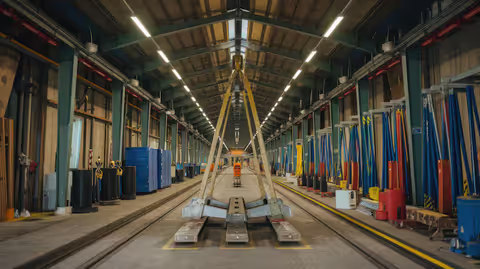
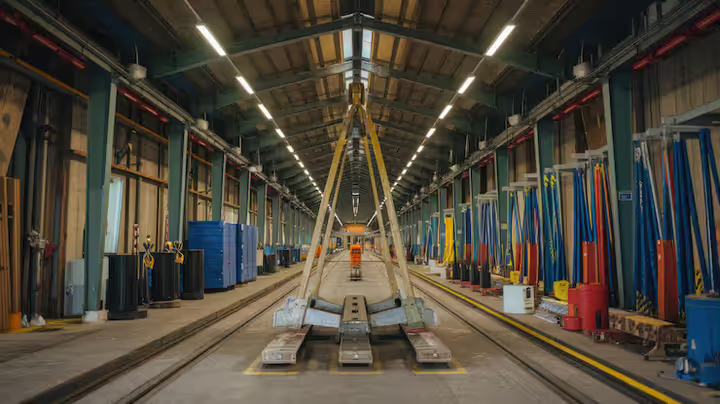
Industrial lifts are mechanical systems designed to move goods, materials, or equipment vertically or between levels within warehouses and factories. As manufacturing and logistics operations expanded beyond single-floor layouts, the need for safe and controlled vertical material movement became essential. Industrial lifts exist to address this requirement by reducing manual handling and improving operational flow inside large facilities.
Unlike passenger elevators, industrial lift systems are built specifically for materials, pallets, and heavy loads. They are commonly integrated into storage facilities, production plants, cold storage units, and distribution centers. Their designs vary depending on load capacity, height, usage frequency, and environmental conditions.
In today’s industrial infrastructure, warehouse material handling equipment plays a central role in maintaining efficiency, accuracy, and workplace safety. Industrial lifts form a core part of that ecosystem.
Importance: Why Industrial Lifts Matter Today
The relevance of industrial lifts has increased significantly due to rising warehouse automation, multi-level storage facilities, and higher throughput requirements. Modern supply chains rely on speed, precision, and safety, all of which are influenced by how materials are moved vertically.
Industrial lifts directly affect:
-
Warehouse operators managing high-density storage
-
Manufacturing plants with multi-stage production lines
-
Logistics centers handling bulk pallet movement
-
Cold storage and pharmaceutical facilities requiring controlled handling
Key problems solved by industrial lift solutions include:
-
Reduced risk of manual lifting injuries
-
Improved vertical space utilization
-
Consistent movement of heavy loads
-
Enhanced workflow between floors
From a compliance and safety perspective, properly designed lifting equipment also helps organizations align with occupational safety standards and internal risk management policies.
Recent Updates: Trends and Developments (2024–2025)
Over the past year, several notable trends have shaped the industrial lift sector.
In March 2024, increased adoption of sensor-based safety mechanisms was observed across warehouse lift installations. These systems focus on load monitoring, automatic stop functions, and real-time diagnostics.
By September 2024, the integration of industrial lifts with warehouse management systems (WMS) became more common. This allows lift operations to align with inventory tracking and automated material flow.
In January 2025, sustainability discussions influenced lift design choices, with manufacturers emphasizing energy-efficient motors and low-maintenance hydraulic alternatives. This shift aligns with broader industrial sustainability goals rather than operational marketing claims.
Another emerging trend is modular lift construction, enabling easier scalability as warehouse layouts evolve.
Laws and Policies: Regulatory Framework and Safety Oversight
Industrial lifts operate under strict safety and engineering regulations to ensure safe usage and structural reliability.
In the United States, industrial lifting equipment is regulated by Occupational Safety and Health Administration (OSHA), which outlines requirements for load handling, maintenance, and operator safety.
Internationally, standards published by International Organization for Standardization (ISO) define specifications for industrial lift design, testing, and performance. ISO 9386 and related standards are frequently referenced for lift platforms.
In the European Union, machinery directives and CE conformity requirements govern the deployment of industrial lifting systems in warehouses and factories.
These policies ensure:
-
Structural safety and load integrity
-
Clear operational limits
-
Emergency stop and safety control mechanisms
-
Routine inspection and documentation practices
Compliance with such regulations is essential for safe industrial operations and long-term equipment reliability.
Tools and Resources: Practical References for Industrial Lift Planning
Several technical tools and reference resources support informed decision-making and safe operation.
Helpful tools and platforms include:
-
Load capacity calculators for industrial lift platforms
-
Vertical material flow simulation software
-
Warehouse layout planning tools
-
Safety inspection checklists for lifting equipment
-
Digital maintenance log templates
Commonly referenced online resources include:
-
OSHA industrial equipment guidance libraries
-
ISO standard documentation portals
-
Engineering forums focused on warehouse automation systems
-
Academic publications on material handling efficiency
Below is an example table showing how industrial lifts are typically categorized by application:
| Lift Category | Typical Usage Area | Load Characteristics |
|---|---|---|
| Goods Lift | Multi-floor warehouses | Palletized materials |
| Scissor Lift Platform | Assembly areas | Medium-weight components |
| Vertical Reciprocating Lift | Distribution centers | High-frequency loads |
| Mezzanine Lift | Storage extensions | Controlled vertical movement |
These tools and references help facility planners align lift specifications with operational requirements.
FAQs: Common Questions About Industrial Lifts
What is the difference between industrial lifts and elevators?
Industrial lifts are designed for material handling, not passengers. They prioritize load stability and durability rather than comfort or speed.
Are industrial lifts suitable for automated warehouses?
Yes. Many modern industrial lift systems integrate with automation controls and warehouse management software.
How often should industrial lifts be inspected?
Inspection frequency depends on usage intensity and regulatory guidelines, but routine checks and documented inspections are standard practice.
Can industrial lifts operate in temperature-controlled environments?
Certain lift designs are suitable for cold storage or heat-sensitive facilities, provided materials and components meet environmental specifications.
Do industrial lifts require operator training?
While some lifts are automated, personnel interacting with lifting systems typically receive safety orientation aligned with workplace policies.
Conclusion: The Role of Industrial Lifts in Future Facilities
Industrial lifts remain a foundational element of warehouse and factory infrastructure. As facilities grow vertically and operations become more interconnected, the importance of reliable vertical material movement continues to increase.
Recent advancements in safety technology, system integration, and energy efficiency reflect a broader shift toward smarter industrial environments. Regulatory frameworks further reinforce the need for standardized, well-maintained lifting systems.
By understanding how industrial lifts function, why they matter, and how they are governed, facility planners and operators can better align infrastructure decisions with safety, efficiency, and long-term operational goals.