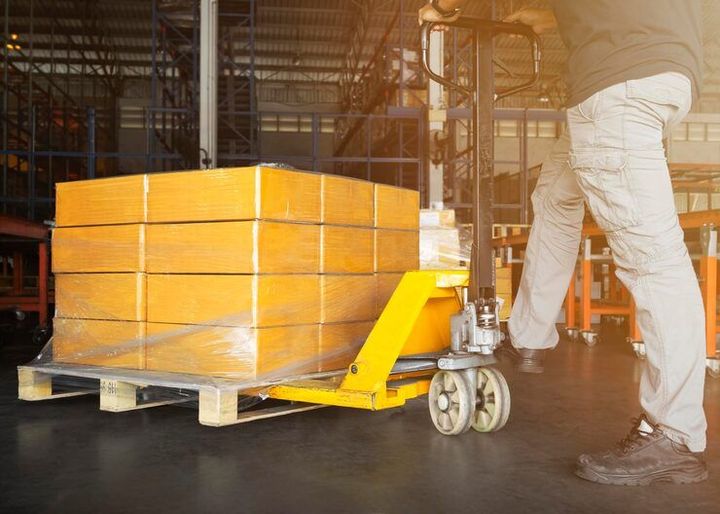
Explore Pallet Weighing Scales With Warehouse Management and Load Monitoring Details
Pallet weighing scales are industrial weighing systems designed to determine the mass of goods placed on pallets, skids, containers, or other load platforms. They are commonly used in warehouses, manufacturing facilities, distribution centers, logistics operations, agricultural facilities, and production environments where accurate weight information is part of material handling and inventory control.
Traditional weighing activities often required products to be moved to a separate weighing station. Modern pallet weighing scales can be positioned within warehouse workflows so that weighing becomes part of receiving, storage, picking, dispatch, or production processes. Depending on the design, the scale may use a platform, floor-mounted structure, pallet truck, forklift attachment, or integrated conveyor weighing system.
A pallet weighing system normally includes load cells, a weighing platform or lifting mechanism, a digital indicator, and supporting software or communication equipment. Load cells detect changes in force and convert them into an electrical signal that can be processed into a weight reading.
Warehouse management systems can connect weighing information with inventory records. When properly integrated, weight data can be associated with product codes, pallet identification numbers, storage locations, shipment records, or production batches. This creates a connection between physical material handling and digital inventory information.
Main Types of Pallet Weighing Scales
Different warehouse environments require different weighing arrangements. A floor pallet scale provides a platform onto which a pallet can be positioned using a pallet truck or forklift. A low-profile design can make loading easier where floor-level access is important.
Other configurations include:
Pallet truck scales for weighing during pallet movement
Forklift scales for weighing loads during lifting
Platform scales for stationary pallet measurement
Conveyor scales for weighing products while they move
Portable pallet scales for flexible warehouse applications
Heavy-duty floor scales for larger industrial loads
Counting scales for combining weight measurements with quantity information
The appropriate configuration depends on pallet dimensions, load range, movement patterns, available floor space, required accuracy, environmental conditions, and the warehouse management system.
Importance
Pallet weighing scales can play an important role in warehouse management because weight information supports inventory records, shipping documentation, production control, and load monitoring. A warehouse may handle thousands of pallets containing products with different quantities and packaging configurations, making systematic weight records useful for operational control.
Weight information can also help identify discrepancies. If a recorded pallet weight differs significantly from an expected value, staff can investigate possible causes such as incorrect quantities, missing products, packaging differences, or data-entry errors.
Warehouse Management Applications
A pallet weighing scale can be used at several points in a warehouse workflow. During receiving, staff can record the weight of incoming pallets and compare the information with associated documentation or inventory records.
During storage and picking, weight information can support stock verification. At dispatch, the recorded pallet weight can become part of shipment documentation or load planning.
Common applications include:
Receiving and inbound verification
Inventory recording
Pallet identification
Order picking checks
Production material tracking
Shipment preparation
Load monitoring
Warehouse documentation
Batch and lot tracking
The usefulness of weighing data depends on how consistently it is recorded and connected to the relevant warehouse records.
Load Monitoring
Load monitoring involves observing the weight and distribution of material handled by warehouse equipment. For example, forklift-mounted weighing equipment can provide weight information while a pallet is lifted, while a stationary platform scale can provide a measurement before the pallet enters storage.
Weight information can also support vehicle loading activities. A facility may use recorded pallet weights to understand the combined load being prepared for transportation. However, applicable vehicle limits and transportation requirements must be assessed separately according to the relevant jurisdiction.
Inventory Accuracy
Warehouse inventory is often measured through quantities, units, cases, or pallets. Weight can provide an additional data point when products have predictable mass characteristics.
For bulk materials, weight may be particularly useful because individual pieces may be difficult to count efficiently. In other applications, weight can supplement barcode, RFID, or manual identification systems.
Recent Updates
From 2024 through 2026, pallet weighing technology has increasingly developed around digital connectivity, wireless communication, automated data collection, and integration with warehouse software. The broader trend is toward reducing isolated weighing activities and connecting measurements with operational records.
Connected Weighing Systems
Modern digital weighing equipment can communicate with warehouse computers, tablets, industrial controllers, and inventory platforms. Depending on the equipment, communication may use wired connections, wireless networks, serial communication, Ethernet-based protocols, or other industrial interfaces.
Connected systems can reduce repeated manual entry when the weight measurement is automatically transferred into the appropriate record. Data validation rules can also be configured to identify measurements outside expected ranges.
Automated Data Capture
Barcode scanners, RFID readers, cameras, and weighing systems can work together to identify pallets and associate weight information with the correct inventory record.
For example, a pallet identification number can be scanned before a weight measurement is recorded. The resulting data can then be associated with the product, location, batch, or shipment information in the warehouse system.
This type of integration can help reduce confusion when several pallets are being processed in the same area.
Mobile and Forklift Weighing
Mobile weighing systems are increasingly used where moving a pallet to a fixed scale would interrupt workflow. Pallet truck scales can measure loads during movement, while forklift scales can provide measurements during lifting.
These systems require careful installation and calibration because movement, vibration, uneven surfaces, and mechanical loading can affect measurement behavior.
Data Analytics and Monitoring
Warehouse platforms can use accumulated weight information for operational analysis. Data may be examined by product, warehouse area, shipment, batch, or time period.
Weight records can also contribute to exception monitoring. If a pallet falls outside an expected weight range, the warehouse system may flag the record for review before the shipment progresses.
Laws or Policies
Pallet weighing scales can be affected by rules concerning measurement accuracy, commercial transactions, workplace safety, equipment calibration, transportation, and recordkeeping. The exact requirements depend on the country and intended use of the weighing equipment.
Measurement Requirements
Where a weighing scale is used for regulated commercial transactions, specific metrology requirements may apply. These can address scale accuracy, verification, calibration, markings, documentation, and approved equipment configurations.
A scale used only for internal warehouse monitoring may be subject to different requirements from equipment used to determine a charge, invoice quantity, or legally relevant measurement.
Calibration and Verification
Industrial weighing equipment requires appropriate calibration and verification procedures to maintain reliable measurements. Calibration involves comparing the scale's readings against known reference values using suitable procedures.
Environmental conditions can influence weighing performance. Temperature changes, vibration, uneven installation, mechanical obstruction, accumulated debris, and overloading can affect readings.
Facilities may therefore maintain records covering calibration activities, inspections, repairs, and equipment status.
Workplace Safety
Pallet scales and weighing platforms must also be considered within the broader workplace environment. Forklifts, pallet trucks, conveyors, and pedestrians may operate around weighing areas.
Clear pathways, suitable platform positioning, equipment guarding where applicable, and appropriate operating procedures can help manage workplace risks. Specific requirements depend on the facility and local safety framework.
Tools and Resources
Several tools can support pallet weighing scale planning and warehouse integration. Scale configuration software can help define measurement units, communication settings, product records, and other operational parameters.
Warehouse management platforms can connect weight data with inventory records, pallet identification, storage locations, and shipment information. Barcode and RFID systems can provide identification information that accompanies the weight measurement.
Useful resources include:
Pallet weight records
Load monitoring worksheets
Scale calibration schedules
Warehouse layout drawings
Inventory management platforms
Barcode scanning systems
RFID identification systems
Shipping documentation templates
Load planning worksheets
Data dashboards
Equipment inspection checklists
Maintenance management platforms
A simplified comparison of pallet weighing technologies is shown below:
| Weighing System | Main Application | Key Consideration |
|---|---|---|
| Floor Pallet Scale | Stationary pallet weighing | Platform dimensions |
| Pallet Truck Scale | Mobile weighing | Movement conditions |
| Forklift Scale | Weighing during lifting | Forklift compatibility |
| Conveyor Scale | Continuous material weighing | Conveyor integration |
| Portable Platform Scale | Flexible weighing locations | Mobility and setup |
| Heavy-Duty Floor Scale | Large industrial loads | Load capacity |
| Counting Scale | Quantity and weight measurement | Product characteristics |
Software integration can also help organizations establish automatic data flows between weighing equipment and warehouse records. System designers generally need to consider communication protocols, identification methods, data storage, user permissions, and error handling.
FAQs
What are pallet weighing scales used for?
Pallet weighing scales measure the weight of goods placed on pallets or other load platforms. They can support receiving, inventory control, production tracking, shipment preparation, and load monitoring.
How do pallet weighing scales connect with warehouse management systems?
Digital scales can transmit measurement data to computers, warehouse management systems, industrial controllers, or other software through supported communication interfaces. Pallet identification can then be linked with the recorded weight.
What is load monitoring with pallet weighing scales?
Load monitoring involves measuring and recording the weight of pallets or materials during warehouse handling. It can be performed using stationary platforms, pallet truck scales, forklift scales, or other weighing equipment.
Are pallet weighing scales required to be calibrated?
Calibration requirements depend on how the equipment is used and the applicable measurement rules. Scales used for regulated commercial measurements may have specific verification and calibration requirements, while internal monitoring applications can follow different procedures.
How do pallet weighing scales improve warehouse management?
Weight data can provide an additional measurement for receiving, inventory verification, shipment preparation, and exception checking. When integrated with warehouse software, the information can be associated with pallet identification, product records, locations, or shipment data.
Conclusion
Pallet weighing scales connect physical weight measurement with warehouse management, inventory control, and load monitoring activities. Modern systems increasingly use digital communication, automated identification, mobile weighing, and software integration to connect measurements with operational records. Accuracy depends on suitable equipment configuration, installation, calibration, environmental conditions, and appropriate operating procedures. The overall weighing arrangement varies according to pallet dimensions, load characteristics, warehouse workflow, regulatory requirements, and the level of digital integration.