Crystal Encrusted Bracelets Basics With Popular Styles, Crystal Details, and Jewelry Trends
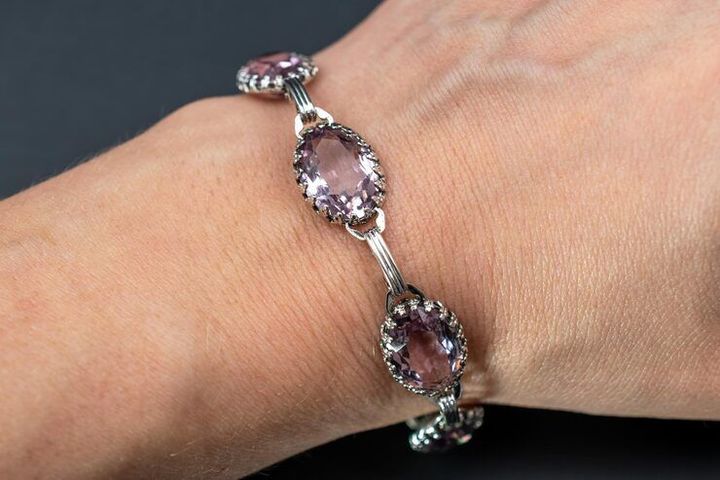
Crystal encrusted bracelets are jewelry pieces designed with multiple crystals arranged across part or most of a bracelet surface. The crystals may be natural stones, laboratory-created crystals, glass-based stones, or other decorative materials.
They are commonly positioned in rows, clusters, geometric patterns, or repeating arrangements to create a reflective appearance.
The basic structure usually combines a bracelet base with settings that hold individual decorative stones. Depending on the design, the base can be made from materials such as sterling silver, stainless steel, gold, platinum, brass, or other jewelry metals. Some designs use a flexible chain, while others have a solid band or cuff structure.
Historical Background
Decorative bracelets have existed across many cultures for centuries. Early examples used materials such as shells, beads, carved stones, metals, and colored minerals. As jewelry-making techniques developed, artisans developed more precise methods for attaching small stones to metal surfaces.
The development of faceted glass and laboratory-created crystals expanded the range of decorative jewelry. Crystal encrusted bracelets became associated with formal accessories as well as everyday fashion. Modern manufacturing techniques allow stones to be arranged with consistent spacing and repeated patterns.
How Crystal Settings Work
A crystal setting is the part of the bracelet that keeps a stone in position. Common setting approaches include prongs, bezels, channels, and adhesive-based construction. Each method affects the appearance, security, cleaning requirements, and overall structure of the bracelet.
The arrangement can also influence how light interacts with the crystals. Faceted surfaces reflect light in multiple directions, while smooth or cabochon-style surfaces produce a softer visual effect.
Importance
Why These Bracelets Matter in Modern Jewelry
Crystal encrusted bracelets occupy a broad category within contemporary jewelry. They can function as decorative accessories for everyday clothing, formal occasions, celebrations, or coordinated jewelry collections. Their visual variety allows designs to range from subtle single-row bracelets to elaborate multi-row pieces.
Understanding the construction of these bracelets is useful because appearance alone does not reveal the materials used. Two bracelets may have similar designs while differing significantly in their crystal type, metal composition, setting technique, and maintenance requirements.
Factors That Affect Everyday Use
Several characteristics influence how a crystal bracelet performs during normal wear:
Crystal type affects appearance, hardness, transparency, and light reflection.
Metal composition influences durability, weight, color, and possible skin sensitivity.
Setting construction determines how securely individual crystals are held.
Bracelet structure affects flexibility and comfort.
Surface treatment can influence resistance to scratches, discoloration, and moisture.
Crystal arrangement determines whether the design appears delicate, geometric, bold, or layered.
These factors can help readers understand why jewelry descriptions often include technical material information rather than relying only on visual terminology.
Common Design Categories
Popular crystal bracelet styles can generally be grouped into several categories.
A tennis-style bracelet usually contains a continuous line of similarly sized stones. A crystal cuff uses a wider metal structure and may contain crystals across a substantial surface area. A charm bracelet combines crystals with hanging decorative elements, while a layered bracelet design uses several bands or chains together.
Minimalist designs may contain a single narrow row of small stones. Cluster designs arrange several crystals close together to create a larger visual pattern. Geometric designs use squares, circles, rectangles, or repeating motifs.
Recent Updates
Current Jewelry Design Trends
Recent jewelry trends have increasingly included combinations of traditional metalwork and decorative crystals. Designers are using mixed textures, asymmetrical layouts, colored crystals, and combinations of polished and matte surfaces.
Layering has also become an important styling approach. Instead of relying on one large bracelet, people may combine several narrow bracelets with different textures and crystal arrangements. This creates visual variation while keeping individual pieces relatively simple.
Crystal Variety and Color
Clear crystals remain common because they coordinate with many metal colors and clothing styles. Colored crystal bracelets can create a different appearance by using shades such as blue, green, pink, purple, champagne, or black.
Laboratory-created crystal materials have also become more visible in contemporary jewelry. These materials can be manufactured with controlled characteristics and consistent dimensions, making them suitable for repeated patterns and symmetrical settings.
Digital Jewelry Research
Online jewelry catalogs and visual search tools have changed how people research bracelets. Product comparison tools, material guides, jewelry measurement charts, and digital sizing calculators can help users understand dimensions and construction before examining a piece physically.
Three-dimensional modeling is also used within jewelry design workflows. Designers can create digital representations of bracelet structures before manufacturing, allowing stone placement and proportions to be examined during the development process.
Crystal Bracelet Style Comparison
| Bracelet Style | Typical Crystal Arrangement | General Appearance | Common Use |
|---|---|---|---|
| Tennis-style | Continuous single row | Refined and symmetrical | Everyday or formal wear |
| Crystal cuff | Wide surface arrangement | Structured and noticeable | Fashion styling |
| Cluster bracelet | Grouped crystals | Decorative and detailed | Occasional wear |
| Minimalist bracelet | Small single stones | Simple and understated | Everyday styling |
| Layered bracelet | Multiple bands or rows | Textured and varied | Contemporary styling |
| Geometric bracelet | Repeating shapes | Modern and structured | Fashion-focused outfits |
Laws or Policies
Jewelry Material Rules
Jewelry is subject to different material disclosure and consumer protection requirements depending on the country or market where it is manufactured, distributed, or displayed. Rules can address metal purity, product descriptions, gemstone identification, labeling, safety, and consumer information.
For example, regulations in some markets require specific markings or documentation when jewelry is described as containing particular precious metals. Requirements can vary according to the material, product category, and jurisdiction.
Crystal and Gemstone Descriptions
Terminology used to describe crystals and gemstones can also be regulated. A material should not be described as a particular natural gemstone if it does not meet the applicable definition. Laboratory-created, synthetic, imitation, and treated materials may have different disclosure requirements.
Readers should therefore distinguish between terms such as natural crystal, laboratory-created crystal, glass, synthetic material, imitation stone, and treated stone. Exact legal definitions vary across jurisdictions.
Product Safety Considerations
Jewelry regulations can also address physical safety. Small components may present risks for young children, while certain metals or surface coatings may cause skin reactions in sensitive individuals.
Manufacturers and distributors are generally responsible for following applicable product safety and labeling requirements in the markets where their products are placed. The specific rules depend on jurisdiction and product characteristics.
Tools and Resources
Jewelry Measurement Tools
A bracelet sizing guide or flexible measuring tape can help determine wrist circumference. Digital jewelry sizing calculators may also convert measurements into recommended bracelet dimensions.
For crystal bracelets, measurements should consider both wrist circumference and the bracelet's internal dimensions. A rigid cuff and a flexible chain bracelet may require different measurement approaches.
Material Reference Guides
Gemstone and jewelry reference databases can help readers learn about crystal hardness, refractive characteristics, treatments, and common identification terms. Hallmark reference guides can also explain common markings used on precious-metal jewelry.
Jewelry Design Software
Computer-aided jewelry design software is used to develop bracelet shapes, stone arrangements, settings, and dimensional specifications. These tools can display how individual crystals fit into a planned structure before physical production.
Care and Inspection Resources
Basic inspection tools such as a jewelry loupe can help users examine settings and crystal surfaces. A soft jewelry cloth is commonly used for removing surface dust and fingerprints.
For maintenance, jewelry care instructions should be based on the actual materials involved. Some crystals and metals can react differently to moisture, chemicals, heat, or abrasive cleaning methods.
FAQs
What are crystal encrusted bracelets?
Crystal encrusted bracelets are bracelets decorated with multiple crystals arranged across a band, chain, cuff, or other jewelry structure. The crystals may be natural, laboratory-created, glass-based, or made from other decorative materials.
Which crystal bracelet styles are commonly used?
Common styles include tennis-style bracelets, crystal cuffs, minimalist bands, cluster bracelets, geometric designs, and layered crystal bracelets. Their appearance depends on crystal size, arrangement, color, metal structure, and setting technique.
Are crystal encrusted bracelets made from real crystals?
Not necessarily. The term crystal can refer to several different materials depending on the jewelry description. Some pieces use natural minerals, while others use laboratory-created crystals, glass, or imitation materials.
How should a crystal encrusted bracelet be maintained?
Maintenance depends on the crystal and metal materials. A soft cloth can remove ordinary surface residue, while harsh chemicals and abrasive materials may damage certain finishes or stones. Manufacturer-provided material information should be followed when available.
What should be checked when examining a crystal bracelet?
Important details include the crystal material, metal composition, bracelet dimensions, setting method, clasp or closure, surface finish, and any relevant material markings. These details provide a clearer understanding of the bracelet than appearance alone.
Conclusion
Crystal encrusted bracelets combine decorative crystals with metal bands, chains, cuffs, or other jewelry structures. Their appearance can vary considerably according to crystal material, setting technique, color, arrangement, and bracelet construction. Current jewelry trends include minimalist designs, layered combinations, geometric patterns, mixed materials, and colored crystals. Understanding these characteristics helps readers interpret jewelry descriptions and distinguish between different bracelet styles and material types.