Princess Cut Diamonds Information With Diamond Grading and Jewelry Knowledge
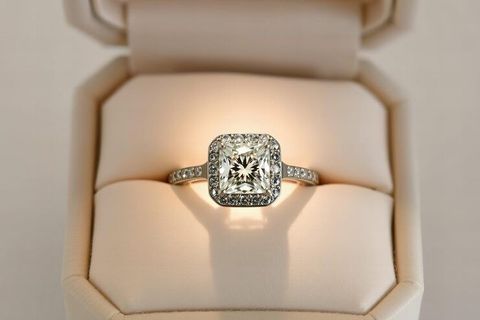
Princess cut diamonds are square or rectangular diamonds with a modern geometric shape and a faceted design created to reflect light through the stone. The shape became widely recognized during the late twentieth century and developed into an important option for engagement rings, earrings, pendants, bracelets, and other jewelry.
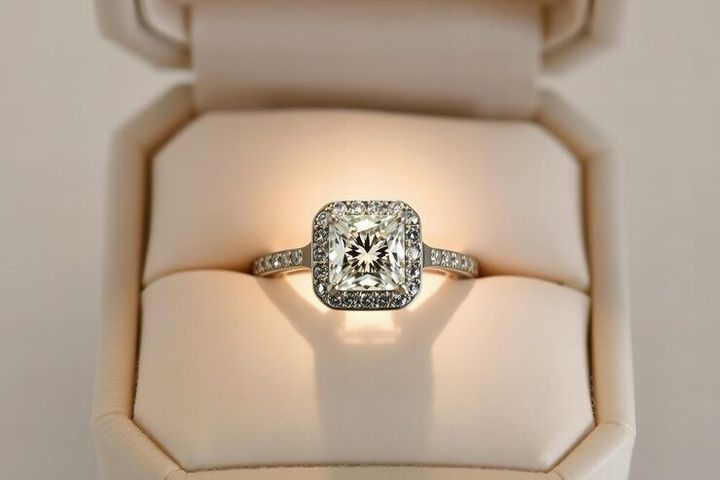
Unlike round diamonds, which have a circular outline, princess cut diamonds generally have four sides and a pointed or clipped corner structure. Their faceting arrangement is designed to create brightness and visual contrast when light enters the stone. The appearance can vary considerably depending on the proportions, symmetry, facet arrangement, and quality characteristics of an individual diamond.
Diamond grading provides a standardized way to describe important characteristics. The commonly discussed 4Cs are carat weight, color, clarity, and cut. For a princess cut diamond, these characteristics need to be considered together because a difference in proportions or clarity can influence how the stone appears.
The shape is also associated with efficient use of a rough diamond during cutting. However, the amount of rough material retained depends on the original crystal and the cutter's design decisions. A princess cut is therefore not simply a square version of a round diamond; it has its own structural and optical characteristics.
Understanding the Princess Cut Shape
Princess cut diamonds are usually classified as a fancy shape rather than a round brilliant. Their outline may be nearly square or somewhat rectangular, depending on the length-to-width ratio.
The corners are particularly important. Some princess cut diamonds have relatively sharp corners, while others use protective settings or design features that reduce exposure around these areas. Because corners can be more vulnerable to impact, jewelry design and setting choice are relevant considerations.
The face-up appearance can also change according to the ratio between length and width. A ratio close to 1:1 produces a more square appearance, while a higher ratio creates a more rectangular outline.
Diamond Grading Basics
Diamond grading examines several characteristics that influence a stone's appearance and classification. The 4Cs provide a useful framework:
Carat weight describes the diamond's mass.
Color describes how much body color is visible in a white diamond.
Clarity describes internal characteristics and surface features.
Cut relates to proportions, symmetry, and finishing characteristics that influence optical performance.
For fancy-shaped diamonds, including princess cuts, cut assessment requires additional attention to shape, proportions, symmetry, and overall appearance. The grading terminology and methods can vary between grading laboratories.
Importance
Princess cut diamonds are important within jewelry knowledge because they illustrate how diamond shape, grading, setting design, and visual appearance interact. Two diamonds with the same carat weight can look different because their dimensions, proportions, clarity characteristics, and cutting styles are not identical.
Understanding these differences can help readers interpret diamond information more accurately. It can also make jewelry descriptions easier to understand when comparing stones with different specifications.
Why Shape Matters
The shape determines the basic outline of a diamond and influences how it fits within a jewelry design. Princess cut diamonds work naturally with geometric settings because their straight sides can align with other stones or with the edges of a ring.
The square form can also create a substantial face-up appearance relative to its dimensions. However, visual size should not be judged from carat weight alone because length, width, depth, and cutting proportions all affect what is visible from above.
Clarity and Inclusions
Clarity refers to characteristics found inside or on the surface of a diamond. Internal characteristics are often called inclusions, while surface characteristics are commonly described as blemishes.
In princess cut diamonds, the visibility of clarity characteristics can vary depending on their location, size, contrast, and the diamond's overall appearance. A grading report can identify the assigned clarity grade, but viewing the actual stone remains relevant when assessing its visual characteristics.
Color Considerations
Diamond color grading commonly considers how much noticeable body color a stone displays. In traditional grading systems for colorless diamonds, grades are arranged along a scale that progresses from very little color toward more visible coloration.
Princess cut diamonds can display color differently from round diamonds because their faceting and shape influence how light travels through the stone. The setting material and surrounding jewelry can also affect how the diamond's color is perceived.
Carat Weight and Dimensions
Carat is a measurement of weight rather than visual size. A one-carat princess cut diamond can have different length, width, and depth measurements from another one-carat stone.
A useful way to understand this distinction is through a basic comparison:
| Diamond Characteristic | What It Describes | Why It Matters |
|---|---|---|
| Carat | Diamond weight | Indicates mass |
| Length | Longest face-up dimension | Helps describe shape |
| Width | Side-to-side face-up dimension | Helps determine proportions |
| Depth | Vertical measurement | Influences overall proportions |
| Color | Degree of visible body color | Affects appearance |
| Clarity | Internal and surface characteristics | Describes visual features |
| Cut | Proportions, symmetry, and finish | Influences light behavior |
Recent Updates
From 2024 through 2026, diamond and jewelry discussions have increasingly included laboratory-grown diamonds, digital grading information, online viewing tools, and greater attention to origin and documentation. These developments affect how consumers and industry participants understand diamond characteristics without changing the basic principles of the 4Cs.
Laboratory-Grown Diamonds
Laboratory-grown diamonds have become a more visible part of the wider diamond market. They have essentially the same crystal structure and many of the same physical and optical properties as diamonds formed naturally, but their origins are different.
Grading documentation should clearly identify whether a diamond is laboratory-grown or naturally formed. This distinction is separate from the diamond's shape, color, clarity, and carat characteristics.
Digital Diamond Information
Digital records and online grading-report systems have made diamond information easier to access. Depending on the grading organization, a report may include measurements, clarity characteristics, proportions, and other identifying information.
Some systems also use report numbers or digital verification tools. These resources can help connect a physical diamond with its documented grading information.
Greater Attention to Origin
Diamond provenance and responsible sourcing remain subjects of discussion within the jewelry industry. Documentation can include information about origin, supply-chain practices, laboratory-grown status, or other characteristics depending on the stone and applicable system.
Consumers and industry participants may encounter different terminology across suppliers and grading organizations. Understanding the exact meaning of each term is important because similar-sounding descriptions may refer to different characteristics.
Jewelry Design Trends
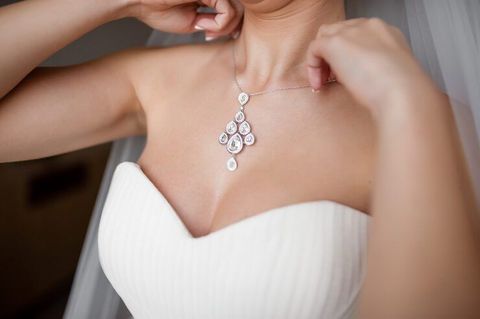
Princess cut diamonds continue to appear in contemporary jewelry designs, including solitaire rings, halo settings, three-stone arrangements, earrings, and geometric pendant designs.
Design trends can change over time, but the structural considerations of a princess cut remain relevant. Corner protection, setting security, symmetry, and compatibility with surrounding stones continue to influence jewelry design.
Laws or Policies
Diamond jewelry is affected by rules concerning trade, disclosure, consumer protection, precious-metal marking, taxation, import procedures, and responsible sourcing. The exact requirements vary by jurisdiction and by whether a stone is natural, laboratory-grown, treated, or incorporated into finished jewelry.
Diamond Disclosure
Clear disclosure is important when describing a diamond's characteristics. A natural diamond and a laboratory-grown diamond are distinct products and should not be presented as having the same origin.
Treatments can also affect disclosure requirements. Certain diamonds may undergo processes intended to alter their apparent color or clarity, and applicable rules may require these treatments to be identified.
Grading Reports
A diamond grading report provides information about characteristics assessed by a grading laboratory. Reports can contain measurements, shape, color, clarity, carat weight, proportions, and other identifying details.
A grading report is not the same as a valuation. Grading describes characteristics according to the laboratory's methodology, while monetary valuation is a separate process.
Responsible Trade
International diamond trade has been influenced by initiatives designed to reduce the movement of rough diamonds associated with armed conflict. The Kimberley Process is one internationally recognized framework addressing conflict diamonds in rough-diamond trade.
National customs, trade, consumer-protection, and jewelry-marking requirements can add further rules. Requirements should therefore be understood according to the jurisdiction involved.
Tools and Resources
Several tools can help readers understand princess cut diamonds and diamond grading. Diamond measurement charts can explain the relationship between length, width, and depth, while proportion calculators can help illustrate differences between square and rectangular shapes.
Diamond viewing tools can provide magnified images or videos that allow users to examine facets, inclusions, symmetry, and overall appearance. These tools should be treated as educational aids because digital images can differ from direct observation.
Useful resources include:
Diamond grading reports
Diamond measurement charts
Length-to-width ratio calculators
Jewelry setting diagrams
Diamond proportion references
Magnification tools
Digital report verification systems
Jewelry design software
Gemological reference materials
Diamond identification equipment
A length-to-width ratio can be calculated by dividing the diamond's length by its width. For example, a stone measuring 5.20 millimeters by 5.10 millimeters has a ratio close to 1.02, indicating a nearly square outline.
FAQs
What is a princess cut diamond?
A princess cut diamond is a square or rectangular fancy-shaped diamond with a geometric outline and a faceted design intended to produce brightness and contrast. Its appearance depends on proportions, symmetry, clarity, color, and cutting characteristics.
How are princess cut diamonds graded?
Princess cut diamonds are evaluated using characteristics such as carat weight, color, clarity, and cut-related factors. Because princess cuts are fancy shapes, their proportions, symmetry, shape, and overall visual appearance also receive attention.
Is a square princess cut diamond always exactly square?
No. Princess cut diamonds can range from nearly square to moderately rectangular. The length-to-width ratio helps describe the shape, with ratios close to 1:1 indicating a more square appearance.
What should be considered when choosing a princess cut jewelry setting?
Important considerations include corner protection, stone dimensions, setting structure, surrounding stones, metal design, and the way the diamond is secured. The setting should be compatible with the physical characteristics of the individual diamond.
What is the difference between natural and laboratory-grown princess cut diamonds?
Both can have the same diamond crystal structure and can be graded for characteristics such as carat, color, clarity, and cut. Their primary distinction is origin: natural diamonds form through geological processes, while laboratory-grown diamonds are produced using controlled technological processes.
Conclusion
Princess cut diamonds have a distinctive square or rectangular geometry that makes them an important category within diamond and jewelry knowledge. Understanding carat, color, clarity, cut, proportions, symmetry, and length-to-width ratio provides a useful foundation for interpreting their characteristics. Recent developments in laboratory-grown diamonds, digital documentation, and diamond-origin information have added new considerations to the wider jewelry landscape. Grading reports and technical references can help explain a diamond's documented characteristics, while jewelry design determines how those characteristics are presented and protected.