Air Quality Monitoring Systems Guide With Smart Monitoring Technology and Environmental Insights
Air quality monitoring systems are technologies used to measure pollutants and environmental conditions in indoor and outdoor air. These systems help identify changes in air composition, track pollution levels, and provide information about environmental conditions.
An air quality monitoring system may measure particulate matter, gases, temperature, humidity, and other indicators depending on its design.
Air pollution monitoring developed from traditional laboratory sampling and manually operated measuring instruments. As industrial activity, urban development, transportation, and energy consumption increased, the need for continuous environmental observation became more important. Modern monitoring technology combines electronic sensors, digital communication, and data analysis to make environmental measurements easier to collect and interpret.
Today, air quality monitoring systems are used in manufacturing facilities, commercial buildings, schools, hospitals, research laboratories, and residential environments. Some systems operate independently, while others connect to centralized monitoring platforms. Smart air quality monitoring technology can automatically collect measurements and transmit information to dashboards, helping users understand environmental changes without examining every instrument manually.
How air quality monitoring systems work
An air quality monitoring system uses sensors or sampling equipment to detect selected substances and environmental conditions. The collected measurements are processed by an internal controller or connected software platform.
The system may display real-time readings, store historical records, or generate alerts when measurements cross configured thresholds. More advanced installations can combine multiple monitoring points to provide a broader view of air quality across a building or industrial site.
Common measurement categories include:
Particulate matter, including PM2.5 and PM10, which represent particles of different sizes suspended in the air.
Gaseous pollutants, such as carbon monoxide, nitrogen dioxide, ozone, and sulfur dioxide, when supported by the instrument.
Environmental conditions, including temperature and relative humidity, which can influence sensor readings and indoor comfort.
Volatile organic compounds, which are chemicals that can enter the air from certain materials, fuels, coatings, and industrial processes.
Different instruments measure different pollutants. A compact indoor monitor may focus on particulate matter and humidity, whereas an industrial monitoring station may use specialized analyzers for several gases.
Importance
Air quality monitoring matters because air pollution can affect human health, environmental conditions, and the operation of buildings and industrial facilities. Exposure to certain pollutants is associated with respiratory and cardiovascular problems, while some gases can create immediate safety concerns at elevated concentrations. Monitoring provides information that helps people recognize changing conditions and understand potential environmental risks.
The effects of poor air quality are not limited to heavily industrialized areas. Indoor air can be influenced by cooking, cleaning products, building materials, ventilation performance, and outdoor pollution entering through doors, windows, or air intake systems. Outdoor pollution may also vary with traffic, weather, construction activity, and industrial emissions.
Who uses air quality monitoring technology
Air quality monitoring systems serve different purposes depending on the environment.
Industrial facilities use monitoring equipment to observe emissions, investigate process-related pollution, and assess workplace environmental conditions.
Commercial buildings use indoor air quality sensors to understand ventilation performance and changes in occupied spaces.
Schools and healthcare facilities monitor selected environmental indicators to support building management and indoor environmental assessments.
Environmental agencies collect outdoor measurements to evaluate pollution patterns and inform public reporting.
Researchers use specialized instruments to study atmospheric chemistry, pollution sources, and environmental changes.
Households use compact monitors to observe indoor particulate matter, humidity, and other supported indicators.
Common challenges addressed by monitoring
Air pollution is not always visible or detectable through smell. A room can contain elevated concentrations of certain pollutants without obvious visual signs, and different pollutants require different measurement methods.
Monitoring systems help address several challenges, including inconsistent manual measurements, delayed identification of changing conditions, limited historical records, and difficulty comparing readings across locations. However, monitoring alone does not remove pollutants or establish that an environment is safe. Measurements must be interpreted according to the pollutant, instrument capabilities, exposure context, and applicable guidance.
Main air quality monitoring system types
System type | Primary purpose | Typical application |
|---|---|---|
Indoor air quality monitor | Measures selected indoor pollutants and conditions | Offices, schools, homes |
Outdoor air monitoring station | Tracks ambient pollution levels | Urban and regional monitoring |
Industrial emissions monitoring system | Measures specified pollutants from industrial sources | Manufacturing and processing facilities |
Portable air quality monitor | Supports measurements at different locations | Inspections and field studies |
Smart networked monitoring system | Connects multiple sensors to a shared platform | Large buildings and distributed sites |
Recent Updates
Air quality monitoring technology continues to develop through improvements in sensor design, wireless connectivity, data processing, and environmental analytics. Recent developments emphasize continuous observation, more accessible reporting, and the integration of measurements from several locations. These trends are particularly relevant to smart buildings, industrial environmental management, and community pollution monitoring.
Smart sensors and connected platforms
Modern systems increasingly use wireless communication and cloud-connected dashboards to make readings available across multiple devices. Depending on the platform, users can review current measurements, compare historical trends, and receive notifications when readings exceed configured limits.
Internet-connected monitoring can also combine data from indoor sensors, outdoor stations, and building management systems. This integration may help identify relationships between ventilation activity, outdoor pollution, and indoor conditions. Network reliability, data security, and appropriate sensor placement remain important considerations.
Artificial intelligence and environmental analytics
Some platforms apply statistical analysis or artificial intelligence to identify unusual patterns, detect possible sensor faults, and examine relationships among environmental variables. For example, software may flag a sudden increase in particulate matter or identify repeated changes associated with specific operating conditions.
These capabilities depend on data quality and the analytical method used. An automated alert is not necessarily proof of a pollution source, and predictive results should not be treated as direct measurements. Human review and appropriate validation remain important for interpreting significant findings.
Greater attention to sensor accuracy
Compact sensors have become increasingly useful for observing local conditions, but their performance differs across pollutants and environmental settings. Humidity, temperature, cross-sensitivity to other gases, contamination, and sensor aging can affect readings.
Consequently, current monitoring practices place importance on calibration, periodic performance checks, comparison with reference instruments, and clear documentation of measurement limitations. Low-cost sensors can complement established monitoring networks, although they may not be suitable for every regulatory or compliance purpose.
Laws or Policies
Air quality monitoring is shaped by environmental laws, public health policies, industrial requirements, and technical measurement standards. The exact requirements depend on the country, the pollutant being measured, the type of facility, and whether the monitoring is intended for public information, workplace assessment, or regulatory reporting.
Environmental standards and monitoring requirements
Many jurisdictions establish ambient air quality standards that specify acceptable concentrations for selected pollutants over defined averaging periods. Regulatory authorities may operate monitoring networks, publish pollution information, and require certain industrial facilities to measure emissions or report environmental performance.
Some facilities must use approved measurement methods, maintain monitoring records, or submit reports to the relevant authority. Requirements may differ between continuous emissions monitoring, periodic stack testing, workplace exposure assessment, and general indoor air monitoring.
International technical guidance can also support the selection and evaluation of monitoring equipment. However, an international guideline does not automatically become a legally binding requirement in every jurisdiction.
Indoor environments and industrial compliance
Indoor air quality policies may address ventilation, building operation, workplace exposure, or specific hazardous substances. A general-purpose air quality monitor does not necessarily meet the technical requirements for occupational exposure monitoring or legal emissions reporting.
Before interpreting readings for compliance purposes, it is important to understand which pollutants must be measured, the required averaging period, the approved instrument method, and the applicable reporting procedure. Legal thresholds and measurement requirements should be verified against the relevant authority's current rules.
Tools and Resources
Air quality monitoring involves more than selecting a sensor. Suitable tools help users collect reliable measurements, organize records, compare results, and understand the limits of the information being reported.
Monitoring equipment and software
Useful tools include:
Indoor air quality monitors for observing selected pollutants and environmental conditions within occupied spaces.
Reference-grade monitoring instruments for applications requiring higher measurement accuracy and documented performance.
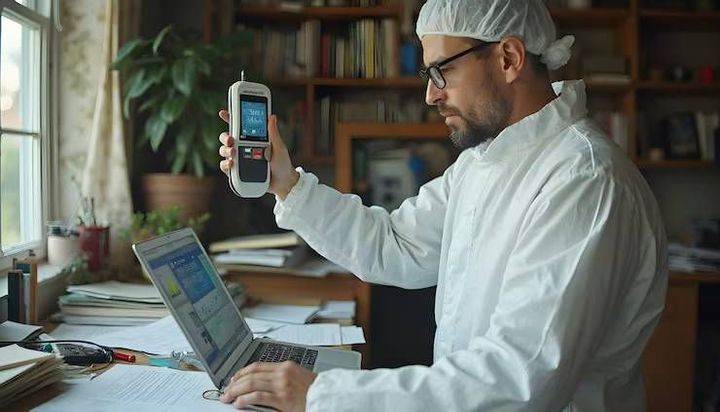
Portable measurement devices for field assessments and investigations across multiple locations.
Data logging platforms for storing readings, reviewing historical patterns, and exporting records.
Environmental dashboards for displaying measurements from several monitoring stations.
Calibration and maintenance records for documenting instrument checks, servicing intervals, and sensor replacement.
Interpreting air quality data
Air quality indexes simplify pollution measurements into categories that are easier for the public to understand. The calculation method and category definitions vary by jurisdiction, so values from different systems may not be directly comparable.
For a meaningful assessment, users should examine the pollutant being measured, the units, the averaging period, and the instrument's stated accuracy. A particulate matter reading, for example, cannot independently establish the concentration of every gaseous pollutant.
A basic monitoring record can contain the following fields:
Data field | Purpose |
|---|---|
Measurement location | Identifies where the reading was collected |
Date and time | Establishes when the measurement occurred |
Pollutant or indicator | Specifies the substance or condition measured |
Reading and unit | Records the observed value |
Averaging period | Explains the time interval represented |
Instrument identification | Supports equipment tracking and review |
Calibration status | Records relevant instrument verification information |
Public environmental dashboards, technical documentation from instrument manufacturers, recognized measurement standards, and guidance published by environmental authorities can provide additional context. The suitability of each resource depends on the intended application and the measurement method.
FAQs
What is an air quality monitoring system?
An air quality monitoring system measures selected pollutants or environmental conditions in indoor or outdoor air. It may use sensors, specialized analyzers, data logging, and digital reporting to show changes over time.
How does smart air quality monitoring technology work?
Smart air quality monitoring technology collects sensor readings and transmits them to connected software or dashboards. Depending on the system, it can display trends, store historical data, and generate alerts when configured thresholds are exceeded.
Which pollutants can an air quality monitoring system detect?
Depending on its sensors, a system may detect particulate matter, carbon monoxide, nitrogen dioxide, ozone, sulfur dioxide, or certain volatile organic compounds. No single monitor necessarily detects all pollutants, and sensor specifications determine its measurement capabilities.
How accurate are indoor air quality monitoring systems?
Accuracy varies according to sensor type, calibration, environmental conditions, and the pollutant being measured. Some compact monitors are intended for general awareness, while regulatory applications may require approved instruments and documented measurement procedures.
What factors affect air quality monitoring system selection?
Important factors include the target pollutants, measurement range, required accuracy, installation environment, data storage, connectivity, maintenance requirements, and applicable regulations. The intended use determines which features and measurement methods are appropriate.
Conclusion
Air quality monitoring systems provide information about indoor and outdoor pollution through sensors, specialized instruments, and data analysis. Smart monitoring technology improves access to measurements and supports the identification of environmental trends, although accuracy depends on equipment quality and appropriate maintenance. Environmental rules determine how monitoring data must be collected and reported in specific applications. Understanding measurement limits, pollutant types, and relevant standards is essential for interpreting air quality information correctly.