Explore Factory Automation Systems With Robotics, Sensors, and Smart Factory Solutions
Factory automation systems use machines, robotics, sensors, control software, and connected equipment to perform manufacturing activities with limited manual intervention.
These systems help coordinate production tasks such as material handling, assembly, inspection, packaging, and equipment monitoring. Smart factory solutions extend this approach by connecting machines and collecting operational information that helps manufacturers understand how their production processes function.
The development of factory automation began with mechanical equipment designed to reduce repetitive manual work. Electrical controls, programmable logic controllers, industrial robots, and computer-based monitoring gradually expanded automation across manufacturing environments. Modern industrial automation combines these technologies with digital communication, data analysis, and intelligent control systems.
Factory automation systems are used in industries such as automotive manufacturing, electronics, food processing, pharmaceuticals, metalworking, and consumer goods production. Each industry has different requirements for production speed, accuracy, hygiene, traceability, and workplace safety. The equipment and software selected for a factory depend on its products, production methods, facility layout, and operating conditions.
Main Components of Factory Automation Systems
A factory automation system typically combines several components that work together to control production activities. These components may operate independently or communicate through a shared industrial network.
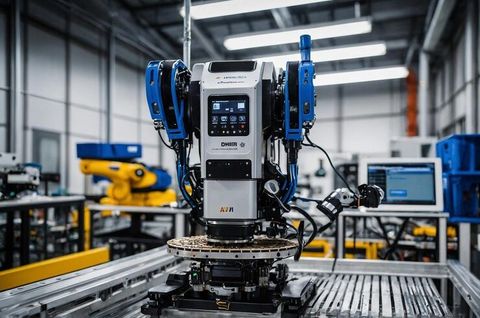
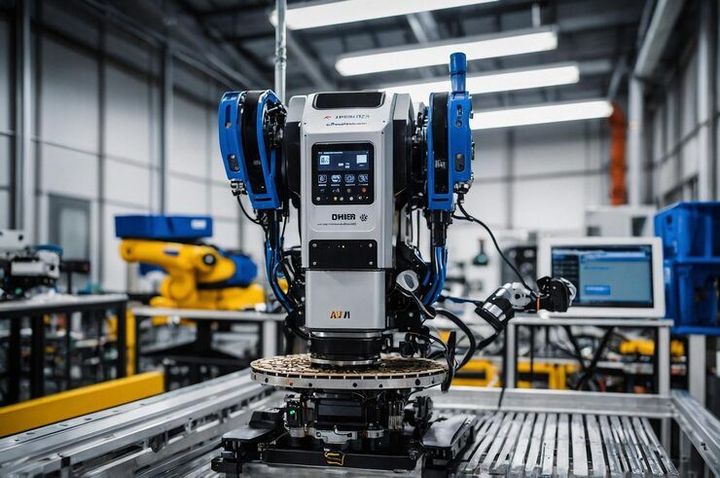
Industrial robots: Perform tasks such as welding, component assembly, painting, and palletizing.
Sensors: Detect temperature, pressure, distance, vibration, position, and the presence of materials.
Programmable logic controllers (PLCs): Execute programmed instructions to control machinery, motors, and production sequences.
Human-machine interfaces (HMIs): Allow operators to view machine conditions, adjust permitted settings, and respond to alerts.
Industrial control systems: Coordinate equipment operation and maintain process conditions within defined limits.
Manufacturing execution systems (MES): Track production orders, materials, work progress, and quality information.
Industrial communication networks: Transfer information between controllers, machines, sensors, and monitoring platforms.
Together, these technologies create a coordinated production environment in which machines can perform specific tasks while operators supervise overall operations.
Types of Factory Automation
Factory automation generally includes fixed, programmable, flexible, and integrated automation. Fixed automation is designed for repetitive production activities with a relatively stable process. Programmable automation allows equipment instructions to change between production batches, while flexible automation supports product variations with less manual reconfiguration.
Integrated automation connects different production activities through shared controls and information systems. A smart factory may combine all these approaches, using conventional machinery for some processes and robotic or digitally connected equipment for others.
Importance
Factory automation systems matter because manufacturers must manage product quality, production consistency, equipment reliability, and workplace risks. Manual processes can involve repetitive movements, difficult handling tasks, and variations between operators. Automation can reduce some of these challenges by applying programmed procedures and monitoring operating conditions.
These systems also affect everyday consumers. Automated inspection can help identify manufacturing defects, while production tracking can help manufacturers investigate quality problems. More consistent manufacturing processes can support the reliable production of household appliances, vehicles, electronic devices, packaged goods, and industrial components.
Who Uses Factory Automation?
Factory automation serves organizations of different sizes and across many sectors. Large manufacturing facilities may use connected production lines with several robots, while smaller facilities may automate a single inspection, packaging, or material-handling operation.
Typical users include:
Production managers responsible for output and workflow coordination.
Manufacturing engineers who design and improve production processes.
Maintenance teams that monitor equipment condition and investigate faults.
Quality control teams that inspect products and document production results.
System integrators who connect robots, sensors, controllers, and software.
Operators who supervise machinery and respond to system alerts.
The benefits depend on the process being automated, the reliability of the equipment, and the effectiveness of employee training.
Problems Addressed by Smart Factory Solutions
Smart factory solutions can help manufacturers identify production interruptions, track recurring equipment faults, and understand differences between planned and actual output. Sensors can provide information about machine temperature, vibration, pressure, and operating cycles, helping maintenance teams investigate unusual conditions.
Automation can also improve traceability by recording production settings, inspection results, material movements, and equipment events. However, automation does not eliminate every production problem. Poorly configured sensors, software errors, network interruptions, and inadequate maintenance can introduce new challenges.
Common Applications Across Industries
Industry | Automation application | Main operational purpose |
|---|---|---|
Automotive | Robotic welding and assembly | Repeatable joining and component handling |
Electronics | Precision placement and inspection | Accurate component positioning |
Food processing | Sorting, filling, and packaging | Consistent product handling |
Metalworking | CNC machining and robotic loading | Controlled machining operations |
Pharmaceuticals | Process monitoring and packaging | Process consistency and traceability |
Warehousing | Automated conveyors and palletizing | Organized material movement |
The level of automation varies according to production volume, product complexity, material characteristics, and quality requirements.
Recent Updates
Factory automation continues to develop through greater connectivity, artificial intelligence, collaborative robotics, and industrial data analysis. Recent developments have focused on making production systems more adaptable, easier to monitor, and better able to identify unusual operating conditions. Adoption differs across industries because existing machinery, technical skills, cybersecurity requirements, and available infrastructure influence implementation.
Artificial Intelligence in Industrial Automation
Artificial intelligence is increasingly used to analyze equipment data, recognize visual defects, and identify patterns that may indicate process problems. Machine vision systems can compare product images against defined inspection criteria, while analytical models can help identify unusual vibration or temperature patterns.
These applications generally support existing control systems rather than replace every control function. Their accuracy depends on data quality, model validation, operating conditions, and appropriate human oversight.
Collaborative Robots and Flexible Production
Collaborative robots are designed for applications in which people and robotic equipment may work in shared areas under specified safety conditions. They can assist with component handling, inspection, assembly, and other repetitive activities.
Flexible robotic systems can also accommodate changes in product dimensions or production sequences. Actual flexibility depends on the robot's tooling, programming, sensing capabilities, and integration with other equipment.
Industrial Internet of Things and Predictive Maintenance
The Industrial Internet of Things (IIoT) connects industrial devices so they can exchange information about machine conditions and production activity. Sensors and monitoring platforms can help maintenance teams recognize developing problems before they cause major interruptions.
Predictive maintenance uses historical and current operating data to estimate when equipment may require attention. These estimates are not always accurate, so inspections, maintenance schedules, and engineering judgment remain important.
Digital Twins and Connected Manufacturing
A digital twin is a digital representation of a physical machine, production line, or industrial process. Depending on its design, it may use operating data to support simulation, process analysis, and equipment planning.
Manufacturers are also connecting operational technology with enterprise software to improve production visibility. Such integration can make information easier to access, but it requires careful management of access permissions, data quality, network security, and system compatibility.
Laws or Policies
Factory automation is influenced by workplace safety requirements, machinery regulations, electrical safety provisions, environmental rules, and data security obligations. The exact requirements depend on the country, the industry, the type of machinery, and the activities performed at the facility. Because no target country has been specified, the following overview describes common regulatory areas rather than the requirements of a particular jurisdiction.
Machinery and Workplace Safety
Manufacturers and factory operators may need to follow requirements covering machine guarding, emergency stops, electrical hazards, hazardous energy, and worker exposure to moving equipment. Industrial robots and automated production lines require risk assessments that consider their operating environment and interaction with people.
Safety measures may include physical barriers, interlocked access doors, presence-sensing devices, warning systems, and documented operating procedures. The correct measures depend on the hazards identified for each application.
Industrial Standards and Technical Compliance
International standards can provide frameworks for machinery safety, robot integration, functional safety, and industrial control systems. Relevant standards may include ISO 10218 for industrial robot safety and IEC 61508 for functional safety principles.
Standards are not automatically laws in every jurisdiction. Their legal status depends on local legislation, contractual requirements, and whether a regulator or other authority has adopted or referenced them.
Cybersecurity and Environmental Considerations
Connected factory equipment can introduce cybersecurity risks, including unauthorized access, production disruption, and exposure of sensitive operational data. Manufacturers may use network segmentation, access controls, software updates, backups, and incident response procedures to reduce these risks.
Environmental requirements may also address energy consumption, emissions, waste handling, and the safe disposal of electronic equipment. Applicable obligations should be assessed against the rules governing the facility and its industrial activities.
Tools and Resources
Factory automation planning involves selecting compatible equipment, understanding production requirements, evaluating system performance, and maintaining safe operating conditions. Different tools support different stages, from initial process analysis to ongoing production monitoring.
Automation Design and Simulation Tools
Computer-aided design (CAD) software helps engineers develop equipment layouts and examine how machinery fits within a production area. Robot simulation software can model movement paths, cycle sequences, and potential interference before a physical system is commissioned.
Programmable logic controller development environments allow engineers to create and test control logic. Manufacturing execution systems and supervisory control and data acquisition (SCADA) platforms provide information about production status, process conditions, alarms, and equipment activity.
Monitoring and Evaluation Resources
Several measurements can help manufacturers assess factory automation performance:
Overall equipment effectiveness (OEE): Combines availability, performance, and quality into an operational measure.
Cycle time: Measures how long a production operation takes to complete.
Defect rate: Tracks the proportion of output that fails defined quality criteria.
Unplanned downtime: Records production interruptions caused by unexpected events.
Energy consumption: Measures electricity or other energy used by equipment and processes.
These measurements should be interpreted together because improving one indicator may affect another. For example, increasing machine speed without appropriate quality controls may increase defects.
Questions to Evaluate Automation Systems
Before selecting factory automation equipment, organizations commonly examine several factors:
Production requirements: Determine the tasks, output levels, and product variations the system must handle.
Equipment compatibility: Check whether robots, sensors, controllers, and software can communicate reliably.
Safety provisions: Assess machine hazards, protective equipment, and operator access.
Maintenance requirements: Review spare parts, technical documentation, and inspection procedures.
Data management: Establish how operating information will be collected, stored, and protected.
Workforce preparation: Identify the training needed for operators, technicians, and engineers.
A structured evaluation helps clarify the technical requirements and operational responsibilities associated with an automation project.
FAQs
What are factory automation systems?
Factory automation systems use machines, controllers, sensors, robotics, and software to perform or coordinate manufacturing activities. They can automate individual tasks or connect several production stages into one coordinated process.
How do robotics and sensors work together in smart factories?
Sensors detect conditions such as position, temperature, pressure, or the presence of an object. Controllers process these signals and coordinate equipment actions, while robots perform programmed physical tasks. Connected software can collect operational data for monitoring and analysis.
What are the main benefits of industrial automation?
Industrial automation can improve process consistency, reduce repetitive manual handling, support product inspection, and provide better visibility into production activity. Results depend on system design, maintenance, employee training, and the suitability of automation for the process.
What is the difference between factory automation and smart factory solutions?
Factory automation focuses on controlling machines and production tasks. Smart factory solutions add connected devices, shared operational data, analytics, and sometimes artificial intelligence to help monitor and coordinate manufacturing activities.
What should manufacturers consider when implementing factory automation systems?
Manufacturers should evaluate production requirements, equipment compatibility, worker safety, cybersecurity, maintenance needs, and employee training. They should also assess whether the proposed system can accommodate expected changes in products and production processes.
Conclusion
Factory automation systems combine robotics, sensors, controllers, and software to coordinate manufacturing activities. Smart factory solutions extend these capabilities through connected equipment, production data, and analytical tools. Their applications span numerous industries, although the appropriate technology depends on operational requirements, safety considerations, and system compatibility. Effective implementation also requires maintenance planning, workforce preparation, and compliance with applicable technical and regulatory requirements.

You May Also Like