Explore Electric Vehicle Manufacturing With Modern Factory Technology and Production Methods
Electric vehicle manufacturing combines mechanical engineering, electrical systems, battery technology, software, automation, and advanced factory processes. Unlike conventional vehicles that rely on internal combustion engines and fuel systems, electric vehicles use electric motors, battery packs, power electronics, thermal management systems, sensors, and digital control systems.
The growth of electric mobility has created new approaches to vehicle production. Modern factories are designed around connected production lines where machines, robots, sensors, software, and workers coordinate different stages of assembly. Electric vehicle manufacturing therefore involves much more than assembling a vehicle body. It includes battery cell handling, module and pack assembly, motor production, electronic testing, software integration, body construction, painting, final assembly, and quality inspection.
How the Manufacturing Process Developed
Traditional vehicle factories were organized around mechanical components such as engines, transmissions, exhaust systems, and fuel tanks. Electric vehicle manufacturing changes this structure because the battery pack and electrical architecture become major parts of the vehicle platform.
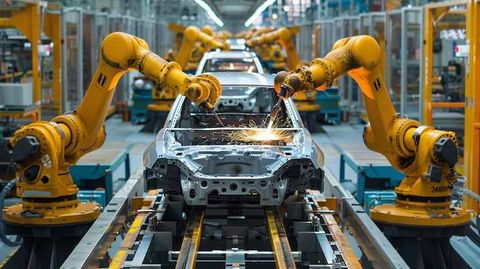
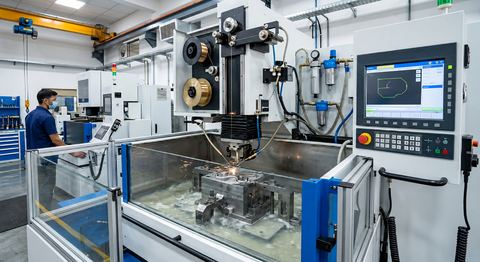
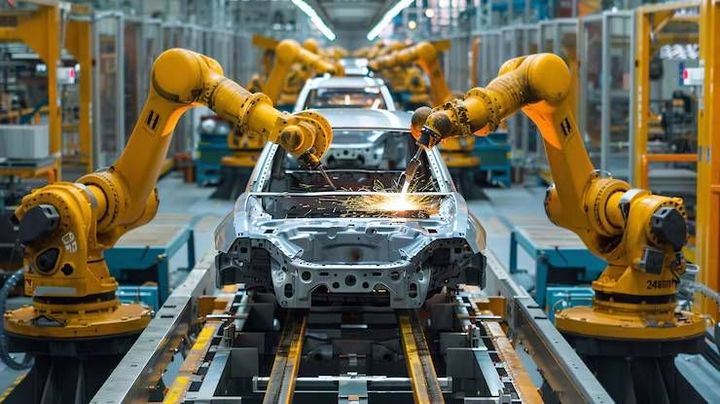
Modern production methods use automation to perform repetitive and highly precise operations. Industrial robots can handle welding, material movement, adhesive application, painting, and component installation. Automated inspection systems can use cameras and sensors to identify dimensional or assembly issues during production.
The general manufacturing sequence can include:
- Raw material preparation
- Battery component production
- Electric motor manufacturing
- Vehicle body construction
- Surface treatment and painting
- Battery pack installation
- Electrical and electronic assembly
- Software integration
- Final inspection and testing
Main Components in an Electric Vehicle Factory
A modern facility can contain several specialized production areas. Battery manufacturing requires controlled environments and equipment for cell handling, formation, testing, module assembly, and pack construction. Motor production includes rotor and stator assembly, winding, balancing, and electrical testing.
Vehicle body production commonly uses robotic welding and automated material handling. Electronics production involves control units, sensors, wiring systems, charging components, and power electronics.
| Production Area | Main Function | Common Technology |
|---|---|---|
| Battery production | Cell, module, and pack preparation | Automation, testing systems |
| Motor production | Electric motor assembly | Winding machines, balancing equipment |
| Body production | Vehicle structure assembly | Robotic welding |
| Paint production | Surface preparation and coating | Automated spray systems |
| Final assembly | Component integration | Conveyor systems, robotics |
| Quality inspection | Detecting production variations | Cameras, sensors, testing software |
| Software integration | Vehicle electronic configuration | Diagnostic and programming systems |
Importance
Why Electric Vehicle Manufacturing Matters
Electric vehicle manufacturing affects transportation, industrial production, energy systems, electronics, and supply chains. As electric vehicles become more common, factories need production methods capable of handling complex electrical and mechanical systems together.
Battery production is particularly important because the battery influences vehicle range, weight, charging characteristics, and overall architecture. Manufacturing consistency is necessary because battery cells and electrical connections must meet defined technical specifications.
Factory automation also addresses production challenges involving precision, repeatability, material handling, and inspection. Automated equipment can perform repetitive movements consistently while digital monitoring systems collect production information for analysis.
Impact on Modern Industry
The transition toward electric mobility is also changing industrial machinery requirements. Manufacturers need equipment capable of processing lightweight materials, joining battery components, producing electrical parts, and inspecting electronic systems.
Digital manufacturing systems connect production equipment with software platforms. These systems can monitor machine conditions, track production stages, identify process variations, and provide information for maintenance planning.
Environmental and Resource Considerations
Electric vehicle manufacturing involves energy-intensive processes, particularly battery production and material processing. Manufacturers therefore examine energy consumption, material efficiency, production waste, water usage, and recycling processes.
Battery recycling is becoming an important part of the wider electric mobility ecosystem. Recovering useful materials from used battery packs can reduce dependence on newly processed resources and create additional material streams for future manufacturing.
Recent Updates
Expansion of Factory Automation
Recent developments in electric vehicle manufacturing increasingly involve robotics, artificial intelligence, machine vision, digital twins, and connected production systems. These technologies can work together to monitor production conditions and identify variations earlier in the manufacturing process.
Machine vision systems can inspect welds, components, surfaces, connectors, and assembly positions. Artificial intelligence can analyze large amounts of production information to identify patterns that may be difficult to detect through manual inspection alone.
Battery Production Technology
Battery manufacturing continues to evolve through improvements in cell design, electrode processing, module construction, thermal management, and automated testing. Different battery chemistries are used for different vehicle requirements, with manufacturers balancing energy density, durability, safety characteristics, material availability, and production complexity.
Cell-to-pack and related structural battery approaches can reduce the number of intermediate components between battery cells and the vehicle structure. These designs can change both battery assembly processes and vehicle engineering.
Software-Connected Production
Modern electric vehicles contain numerous electronic control systems. As a result, production lines increasingly include software configuration and diagnostic procedures alongside mechanical assembly.
Connected factories can use industrial Internet of Things systems to collect information from machines and production stations. Digital twins can also represent manufacturing processes virtually, helping engineers examine equipment behavior, production layouts, and process changes before physical implementation.
Quality Inspection Developments
Automated inspection is becoming more important as factories integrate electrical, mechanical, and software components. Inspection systems may examine dimensions, torque values, electrical connections, battery characteristics, surface conditions, and electronic communication.
The increasing use of automated inspection does not eliminate the need for human oversight. Engineers and trained personnel remain important for interpreting results, investigating unusual conditions, maintaining equipment, and managing production processes.
Laws or Policies
Vehicle Manufacturing Requirements
Electric vehicle factories operate within regulatory frameworks covering vehicle safety, electrical systems, battery handling, environmental protection, workplace conditions, and transportation requirements. The exact requirements differ between countries and regions.
Manufacturers generally need to demonstrate that vehicles meet applicable technical and safety requirements before they can enter their intended markets. Battery systems can be subject to additional requirements because they contain high-energy electrical components.
Battery Safety and Transportation
Battery production and transportation involve procedures related to electrical safety, thermal events, storage, packaging, and handling. Manufacturing facilities establish controlled processes for inspecting battery cells and assemblies.
Battery transport rules can also address packaging, labeling, testing, and handling procedures. These requirements are particularly relevant when batteries or battery components move between manufacturing facilities.
Environmental Policies
Environmental policies can influence factory energy use, waste management, emissions, water consumption, and material recovery. Some regions also use programs intended to encourage lower-emission transportation and domestic manufacturing capacity.
Recycling policies may increasingly address the treatment of batteries at the end of their useful vehicle life. These policies can influence how manufacturers design battery packs and manage material recovery.
Tools and Resources
Manufacturing Software
Manufacturing execution systems help factories monitor production activities, equipment status, quality information, and material movement. Enterprise resource planning platforms can coordinate manufacturing information with purchasing, inventory, logistics, and production planning.
Computer-aided design tools are widely used to create vehicle components and factory equipment layouts. Computer-aided manufacturing systems can translate engineering designs into production instructions for appropriate machinery.
Factory Monitoring Tools
Industrial Internet of Things platforms connect sensors, controllers, machines, and analytical software. Production dashboards can display information such as equipment status, cycle times, energy use, production quantities, and inspection results.
Digital twin platforms can create virtual representations of production equipment or factory processes. Engineers can use these models to examine layouts, production flows, and potential process changes.
Battery and Vehicle Testing Equipment
Battery testing systems measure electrical characteristics and monitor battery behavior under controlled conditions. Diagnostic tools can communicate with vehicle control units and identify electronic or software-related conditions.
Other factory resources can include:
- Machine vision inspection systems
- Robotic welding systems
- Torque monitoring equipment
- Battery formation equipment
- Electrical safety testers
- Thermal management test systems
- Production tracking software
- Digital maintenance platforms
FAQs
What is electric vehicle manufacturing?
Electric vehicle manufacturing is the industrial process of producing vehicles powered primarily by electric motors and battery systems. It combines battery production, motor assembly, vehicle body construction, electronics integration, software configuration, and final testing.
What technology is used in electric vehicle manufacturing?
Electric vehicle manufacturing uses robotics, machine vision, automated material handling, industrial sensors, battery testing equipment, digital production software, and connected factory systems. These technologies support precision, monitoring, assembly, and inspection.
How are electric vehicle batteries manufactured?
Battery manufacturing generally involves preparing battery cells, testing them, arranging cells into modules or packs, connecting electrical systems, adding thermal management components, and performing controlled testing. Specific processes depend on the battery chemistry and pack architecture.
What role does automation play in electric vehicle manufacturing?
Automation performs repetitive and precision-oriented activities such as welding, component movement, fastening, inspection, and material handling. Connected systems can also collect production information and help identify process variations.
How is electric vehicle factory technology changing?
Electric vehicle factory technology is moving toward greater automation, connected equipment, artificial intelligence-assisted inspection, digital twins, flexible production systems, and increasingly integrated battery and vehicle assembly processes.
Conclusion
Electric vehicle manufacturing combines battery technology, electric motors, electronics, software, robotics, and conventional vehicle production methods. Modern factories use connected machinery and automated inspection to manage increasingly complex production requirements. Recent developments include advanced battery architectures, digital manufacturing systems, machine vision, artificial intelligence-assisted analysis, and greater factory connectivity. Regulations covering vehicle safety, batteries, transportation, environmental management, and manufacturing conditions continue to shape how electric vehicle factories operate.