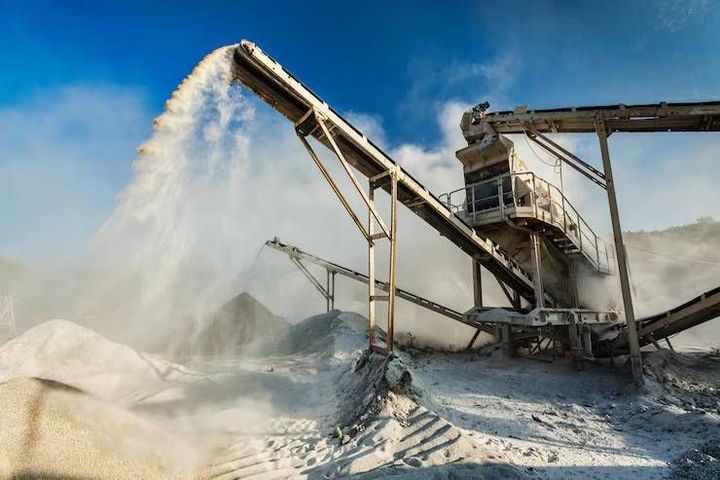
Explore Crushing Machines With Modern Material Processing and Production Techniques
Crushing machines are industrial systems used to reduce large pieces of rock, minerals, construction materials, recycled products, and other solid materials into smaller sizes. They are an important part of modern material processing because many raw materials cannot be transported, screened, mixed, or processed efficiently until their size has been reduced.
The basic idea behind crushing is mechanical size reduction. A machine applies force to a material through compression, impact, or a combination of mechanical actions. The resulting material can then move to screening, washing, grinding, conveying, sorting, or another processing stage.
Crushing technology has developed from relatively simple mechanical equipment into integrated processing systems. Modern plants can combine feeders, crushers, screens, conveyors, sensors, control systems, dust-management equipment, and monitoring technologies into a coordinated production line.
The type of crushing machine used depends on the characteristics of the incoming material and the required output. Hard rock may require compression-based equipment, while softer or more brittle materials may be processed through impact mechanisms.
Main Types of Crushing Machines
Several crusher designs are used across material-processing industries. Jaw crushers use a moving jaw and a fixed surface to compress material. They are commonly associated with primary crushing, where large pieces are reduced before additional processing.
Cone crushers use a rotating crushing surface within a chamber to apply compression. They are frequently incorporated into secondary or tertiary processing stages where controlled particle sizes are required.
Impact crushers use mechanical impact to break material. They can be configured for different applications and are used for materials where impact-based reduction is appropriate.
Other systems include roll crushers, hammer crushers, and specialized crushing equipment designed for particular materials or processing conditions.
Crushing Process Stages
A modern crushing plant can contain several stages rather than relying on one machine. A typical process may include:
Feeding, where raw material enters the processing line
Primary crushing, where large pieces are initially reduced
Secondary crushing, where material is reduced further
Screening, where particles are separated by size
Tertiary crushing, where additional size reduction is required
Conveying, where processed material moves between stages
Stockpiling, where finished material is stored temporarily
The actual arrangement depends on the material, required particle size, plant capacity, and downstream process.
Importance
Crushing machines are important in construction, mining, recycling, aggregates processing, quarrying, and several manufacturing activities. They allow large or irregular materials to be transformed into sizes that can be screened, transported, mixed, or incorporated into another production process.
The technology also supports the use of recycled materials. Concrete, asphalt, masonry, glass, and selected industrial materials can be processed into smaller fractions for further sorting or reuse where appropriate.
Material Processing Applications
Crushing equipment is used for many types of materials. Common examples include:
Natural rock
Gravel and aggregates
Construction and demolition materials
Concrete
Asphalt
Selected mineral ores
Recycled masonry
Glass
Industrial materials
Each material behaves differently under mechanical force. Hardness, moisture, abrasiveness, shape, density, and feed size can all affect equipment selection and operating conditions.
Particle Size and Production Flow
Particle size is one of the main considerations in crushing. A processing plant may need material within a defined size range for a later stage. Screening equipment separates particles according to size, while material outside the desired range can be returned for additional crushing.
This arrangement is often called a closed-loop process. Material repeatedly moves between crushing and screening stages until it reaches the required size range.
A well-organized material flow can reduce unnecessary movement and help coordinate feeders, crushers, screens, and conveyors. Plant layout also needs to provide access for inspection, maintenance, cleaning, and equipment replacement.
Safety and Environmental Considerations
Crushing plants contain moving mechanical components and can generate dust, noise, vibration, and flying particles. Safety planning therefore forms an important part of plant design and operation.
Dust-control approaches can include water sprays, enclosed transfer points, extraction systems, and appropriate ventilation. Noise and vibration can be managed through equipment design, isolation methods, operating procedures, and appropriate workplace controls.
Recent Updates
From 2024 through 2026, crushing technology has continued moving toward automation, digital monitoring, improved energy management, mobile processing, and more integrated plant control. The general trend is toward combining mechanical crushing equipment with sensors and software that provide more information about operating conditions.
Automated Crushing Systems
Modern crushing plants can use programmable controllers to coordinate feeders, crushers, screens, conveyors, and other equipment. Sensors can detect material flow, equipment conditions, motor status, pressure, temperature, and other operating variables.
Automated controls can also coordinate equipment starts and stops according to predefined sequences. This helps connect separate machines into a unified material-processing system.
Human operators remain important because automated systems require supervision, inspection, maintenance, process adjustments, and responses to unusual operating conditions.
Digital Monitoring
Industrial monitoring systems can collect information from crusher motors, bearings, hydraulic systems, feeders, conveyors, and screens. Data can be displayed through control-room dashboards or equipment interfaces.
Historical data can also help maintenance teams identify recurring alarms, operating patterns, and changes in equipment conditions. Digital monitoring is increasingly integrated with broader plant-management systems.
Energy Management
Crushing requires mechanical energy to break material. Electricity is consumed by motors, conveyors, feeders, pumps, fans, and other supporting equipment.
Modern plant planning can include energy monitoring, variable-speed drives, motor controls, optimized conveyor operation, and process coordination. The objective is to understand energy use across the processing line and manage equipment according to actual operating requirements.
Mobile Crushing Equipment
Mobile crushers have become increasingly important for applications where material needs to be processed close to the extraction, construction, demolition, or recycling location. Mobile systems can combine crushing, screening, and conveying functions within transportable equipment arrangements.
This approach can reduce the need to move large quantities of unprocessed material over long internal distances, depending on the site layout and project requirements.
Automation and Predictive Maintenance
Sensors can provide information about vibration, temperature, hydraulic pressure, lubrication conditions, and motor behavior. These measurements can support condition-based maintenance programs.
Predictive maintenance systems use historical and current equipment data to identify patterns that may require inspection. Such systems complement physical inspection rather than replacing it.
Laws or Policies
Crushing machines are affected by machinery safety requirements, workplace regulations, environmental rules, mining or quarrying requirements, construction regulations, and waste-management policies. The exact requirements vary according to the country, industry, material, facility, and location.
Machinery Safety
Crushing equipment contains moving parts, rotating components, conveyors, electrical systems, hydraulic mechanisms, and areas where material can become trapped. Safety requirements may therefore address machine guarding, emergency stops, access controls, warning systems, electrical protection, and maintenance isolation.
Risk assessments can examine hazards associated with material feeding, blockages, conveyor movement, crusher access, falling material, and unexpected machine startup.
Environmental Requirements
Crushing and screening can generate airborne dust, noise, vibration, and material runoff. Environmental rules may establish requirements for emissions, water management, noise levels, waste handling, and site operation.
Facilities may use dust suppression, enclosed transfer points, water management systems, noise controls, and designated material-storage areas according to site requirements.
Mining, Quarrying, and Recycling Rules
Where crushing equipment is used in mining or quarrying, additional requirements may apply to extraction activities, land use, blasting, material handling, worker protection, and environmental management.
Recycling facilities can also be subject to rules covering waste classification, material storage, contamination control, transportation, and processed-material handling. The applicable rules depend on the material and jurisdiction.
Tools and Resources
Crushing plant planning involves mechanical calculations, material-flow analysis, equipment specifications, and facility-layout studies. Engineers and operators can use equipment datasheets to understand feed-size ranges, output characteristics, motor requirements, machine dimensions, and operating limitations.
Material-processing simulations can help evaluate different plant configurations. Flow diagrams can show how feeders, crushers, screens, conveyors, and stockpiles interact.
Useful planning resources include:
Crusher specification sheets
Particle-size distribution data
Material-flow diagrams
Production-capacity calculations
Conveyor calculations
Motor-load assessments
Equipment-layout drawings
Dust-management plans
Maintenance schedules
Inspection checklists
Process-control dashboards
Plant simulation software
A simplified comparison of common crushing machines is shown below:
| Crushing Machine | Main Crushing Action | Common Processing Role | Key Consideration |
|---|---|---|---|
| Jaw Crusher | Compression | Primary crushing | Feed size |
| Cone Crusher | Compression | Secondary or tertiary crushing | Product size |
| Impact Crusher | Impact | Primary or secondary processing | Material characteristics |
| Roll Crusher | Compression | Controlled size reduction | Feed consistency |
| Hammer Crusher | Impact | Size reduction | Material properties |
| Mobile Crusher | Varies | On-site processing | Mobility and site layout |
Particle-size analysis is particularly useful when evaluating crushing performance. A sample can be measured to determine the distribution of particle sizes before and after processing.
FAQs
What are crushing machines used for?
Crushing machines reduce large pieces of rock, minerals, construction materials, and selected recycled materials into smaller particles. The processed material can then move to screening, washing, grinding, sorting, or another production stage.
What are the main types of crushing machines?
Common types include jaw crushers, cone crushers, impact crushers, roll crushers, and hammer crushers. Each design applies mechanical force differently and is suited to particular material-processing conditions.
How does automation affect modern crushing machines?
Automation can coordinate feeders, crushers, screens, and conveyors while monitoring selected operating conditions. Sensors and control systems can provide information about equipment status, material flow, and process conditions.
What factors affect crushing machine selection?
Important factors include feed size, material hardness, abrasiveness, moisture, required output size, production volume, plant layout, energy requirements, and the type of downstream processing.
Are crushing machines used for recycling?
Yes. Crushing systems can process selected construction and demolition materials, concrete, asphalt, masonry, glass, and other recyclable materials. The appropriate equipment depends on material composition, contamination, size, and the intended processed output.
Conclusion
Crushing machines are central to many material-processing operations because they reduce large or irregular materials into controlled particle sizes. Modern systems increasingly combine crushers with screens, conveyors, sensors, automated controls, and digital monitoring. Recent developments include mobile processing, energy monitoring, condition-based maintenance, and integrated plant automation. Equipment configuration depends on material characteristics, production requirements, environmental conditions, safety considerations, and applicable regulations.