Dubai Skyline Photography Guide With Modern Architecture, City Views, and Travel Photography Tips
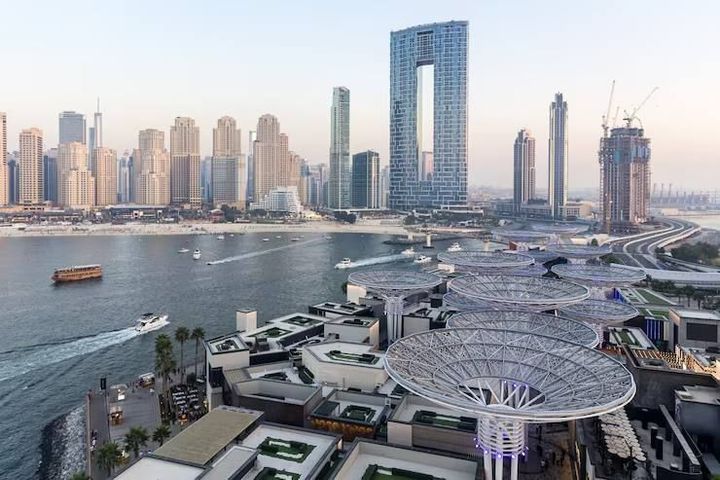
Dubai skyline photography combines modern architecture, dramatic city views, waterfront landscapes, desert surroundings, and changing natural light. The city is particularly suitable for architectural photography because its urban landscape contains very tall towers, geometric structures, observation decks, bridges, canals, and distinctive buildings.
Official Dubai tourism material currently highlights locations such as Burj Khalifa, Dubai Frame, Dubai Creek Harbour, Dubai Water Canal, Palm Jumeirah, and Expo City Dubai as photography-oriented destinations.
Modern Dubai developed from a relatively compact trading settlement into a major urban center with a highly recognizable skyline. Its architecture includes skyscrapers along Sheikh Zayed Road, waterfront towers around Dubai Marina, contemporary structures in Downtown Dubai, and newer developments across areas such as Business Bay and Dubai Creek Harbour.
Travel photography in Dubai can therefore involve several visual approaches. A photographer may focus on a single building, capture a wide city panorama, use reflections from water, photograph streets and bridges, or combine architecture with people and transportation.
The type of camera is not the only factor affecting a photograph. Composition, timing, weather, perspective, exposure, lens selection, and awareness of local photography rules all influence the resulting image.
Major Photography Subjects
Dubai provides several broad categories of photographic subjects:
Tall skyscrapers and architectural facades
Waterfront skylines
Roads, bridges, and urban infrastructure
Observation decks and elevated viewpoints
Traditional areas contrasting with modern buildings
Desert landscapes surrounding the city
Reflections in canals and waterfronts
Nighttime illuminated architecture
Geometric interiors and public spaces
The contrast between historic and contemporary environments is also significant. Dubai Creek, traditional neighborhoods, and heritage architecture can provide a visual counterpoint to the newer high-rise districts.
Understanding Light and Perspective
Light changes the appearance of buildings throughout the day. Morning light can create softer shadows, while late afternoon can produce longer shadows and warmer tones. After sunset, illuminated buildings create a different photographic environment.
Perspective is equally important. A wide-angle lens can emphasize the height of a tower when photographed from nearby, while a longer focal length can compress distant buildings into a denser skyline composition.
Importance
Dubai skyline photography matters to travelers because photographs often become a visual record of a trip. The city's architecture provides opportunities to document both individual landmarks and the broader relationship between buildings, roads, water, and surrounding landscapes.
Photography also helps travelers understand urban design. Looking carefully at facades, structural patterns, bridges, plazas, and public spaces can reveal how different parts of the city were planned and developed.
City Views and Architecture
Modern architecture is one of the central subjects of Dubai travel photography. Downtown Dubai provides views of Burj Khalifa and surrounding structures, while Sheikh Zayed Road creates long perspectives through a corridor of high-rise buildings.
Official tourism guidance describes an architectural walking route that includes Emirates Towers, Dubai International Financial Centre, Dubai Opera, Burj Khalifa, Dubai Mall, and Dubai Water Canal.
Each environment creates different composition possibilities. A photographer standing close to a tower may emphasize vertical lines, while a distant waterfront position can place multiple buildings into one frame.
Photography From Elevated Locations
Elevated viewpoints can provide a broader understanding of Dubai's urban form. Burj Khalifa has observation areas on the 124th and 125th floors, while its higher At the Top Sky experience reaches the 148th floor.
Dubai Frame provides another elevated perspective, with views toward both older and newer parts of the city. The official Dubai city guide also identifies The View at The Palm as an observation location overlooking Palm Jumeirah, the Arabian Gulf, and the skyline.
When photographing through glass at observation decks, reflections can become a technical challenge. Keeping the lens close to the glass, avoiding bright objects behind the camera, and selecting an appropriate angle can reduce unwanted reflections.
Waterfront Photography
Water can add reflections, leading lines, and separation between the photographer and the skyline. Dubai Creek Harbour, Dubai Water Canal, and other waterfront areas provide different perspectives on modern buildings. Official tourism material specifically highlights Dubai Creek Harbour and Dubai Water Canal among locations associated with skyline photography.
A calm water surface can create a reflection of buildings, while moving water introduces texture. Bridges can also act as foreground elements that guide the viewer toward the skyline.
Recent Updates
From 2024 through 2026, Dubai's photography landscape has continued to evolve alongside new buildings, attractions, public spaces, and changing tourism patterns. Official tourism publications have continued to feature skyline viewpoints, architectural locations, and photography-focused destinations.
New Architectural Subjects
Dubai's skyline continues to change as new buildings and developments are completed. This means familiar viewpoints can produce different compositions over time as towers, hotels, public spaces, and waterfront developments become part of the cityscape.
New observation locations can also change the range of available perspectives. For example, current tourism material highlights elevated locations and newer skyline viewpoints alongside established landmarks.
Expo City Photography
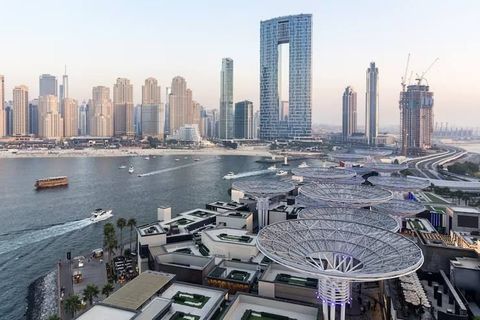
Expo City Dubai has become another architectural photography environment. Its structures include Terra – The Sustainability Pavilion, Al Wasl Plaza, and the Garden in the Sky observation tower. The area combines large-scale architecture, open spaces, lighting, and geometric forms.
These environments can be photographed during daylight or, where permitted, after dark when architectural lighting changes the appearance of the structures.
Changing Skyline Composition
Dubai's skyline is not a fixed photographic subject. Construction, new developments, seasonal haze, weather conditions, and changing public spaces can alter how familiar landmarks appear.
This makes location scouting useful. A viewpoint that works for a daytime panorama may produce a completely different composition during sunset or after dark.
Mobile Photography
Smartphones have also become important tools for travel photography. Modern phones can combine multiple exposures, use computational photography, capture wide-angle images, and process nighttime scenes automatically.
For travelers carrying minimal equipment, these capabilities can be sufficient for many city-view photographs. Dedicated cameras still provide additional control over lenses, exposure, depth of field, and image files.
Laws or Policies
Photography in Dubai is influenced by privacy rules, public conduct requirements, security considerations, location-specific restrictions, and rules concerning commercial photography. Requirements can differ according to where the photograph is taken and what or who appears in the image.
Photographing People
Privacy is an important consideration. Photographing identifiable individuals without appropriate permission can create legal concerns, particularly when images are used or distributed in ways that affect a person's privacy.
Travel photographers should avoid deliberately photographing strangers in sensitive situations. When a person is the main subject of a planned portrait, obtaining appropriate permission is a practical way to respect privacy.
Sensitive Locations
Certain government, military, security-related, airport, infrastructure, or other restricted locations may have photography limitations. A location that appears visually interesting should not automatically be assumed to permit unrestricted photography.
Signs, staff instructions, security notices, and venue rules should be followed. Photography restrictions can also apply inside attractions, private buildings, transportation facilities, and cultural locations.
Commercial Photography
Photography intended for advertising, professional campaigns, commercial productions, or organized shoots can involve additional permissions. Requirements may depend on the location, equipment, production scale, and intended use.
Travel photography for personal documentation is different from organized commercial production. Photographers should check the rules of a specific venue when professional equipment or a planned production is involved.
Tools and Resources
Dubai skyline photography can involve relatively simple equipment or a more advanced camera system. The appropriate setup depends on the photographer's experience, travel plans, lighting conditions, and intended image format.
A wide-angle lens can be useful for architecture and large city scenes. A standard zoom provides flexibility, while a telephoto lens can isolate distant buildings and compress layers of the skyline.
Useful photography resources include:
Camera exposure guides
Smartphone photography applications
Digital maps
Weather and visibility applications
Sunrise and sunset calculators
Lens field-of-view calculators
Trip-planning applications
Image metadata tools
RAW-processing software
Architectural photography tutorials
Tripod and stabilization guides
Digital storage management tools
A simplified equipment guide is shown below:
| Photography Situation | Useful Equipment | Main Consideration |
|---|---|---|
| Wide Skyline | Wide-angle lens | Field of view |
| Tall Buildings | Wide or standard lens | Vertical perspective |
| Distant Towers | Telephoto lens | Compression and framing |
| Night Skyline | Tripod or stabilization | Camera movement |
| Observation Deck | Wide or standard lens | Glass reflections |
| Waterfront | Wide or standard lens | Reflections and foreground |
| Mobile Travel Photography | Smartphone | Computational exposure |
| Architectural Detail | Standard or telephoto lens | Patterns and textures |
Composition Techniques
Leading lines created by roads, bridges, railings, canals, and building edges can guide attention toward a central subject. Symmetry can also work well when architectural structures are viewed from a centered position.
Negative space can make a tall building appear more isolated and prominent. Conversely, filling the frame with multiple buildings can emphasize density and urban scale.
Vertical photography can be particularly useful for skyscrapers, while horizontal framing is often suitable for broad skyline panoramas. The choice depends on the subject and intended use of the photograph.
Timing and Weather
Light and atmospheric conditions strongly affect skyline photography. Clear conditions can reveal distant structures, while haze can create softer layers between buildings.
Early morning and late afternoon provide changing shadows and lower-angle light. Night photography introduces illuminated windows, roads, bridges, and building facades as additional visual elements.
Weather applications can help photographers understand cloud cover, visibility, wind, and expected light conditions. However, actual conditions can change, particularly around coastal and desert environments.
Travel Photography Preparation
A practical photography itinerary can group nearby locations together rather than crossing the city repeatedly. Downtown Dubai, Sheikh Zayed Road, Dubai Water Canal, Dubai Creek Harbour, and other districts each provide distinct photographic environments.
Official tourism information also identifies Dubai's neighborhoods and transportation connections, which can help travelers understand the relationship between photography locations.
Equipment should be selected according to the itinerary. Carrying multiple heavy lenses may be unnecessary for a sightseeing-focused trip, while a dedicated architectural photography session may justify additional equipment.
FAQs
What are the main subjects for Dubai skyline photography?
Common subjects include Burj Khalifa, Emirates Towers, Dubai Marina, Dubai Creek Harbour, Dubai Water Canal, Dubai Frame, Palm Jumeirah, and modern architectural structures. Different viewpoints provide different relationships between buildings, water, roads, and surrounding landscapes.
What camera settings are useful for Dubai city views?
There is no single setting for every situation. Lower ISO values can be useful in bright conditions, while night scenes may require longer shutter speeds, wider apertures, or stabilization. Exposure should be adjusted according to available light and the desired visual effect.
When is a suitable time for Dubai skyline photography?
Morning, late afternoon, sunset, blue hour, and nighttime each produce different results. Late-day photography can produce longer shadows and changing colors, while nighttime emphasizes illuminated buildings and roads.
Can tourists photograph modern architecture in Dubai?
Photography is generally possible at many public tourism locations, but restrictions can apply to particular buildings, venues, sensitive locations, and private spaces. Photographers should follow posted rules, staff instructions, and applicable privacy requirements.
What equipment is useful for Dubai travel photography?
A smartphone can handle many travel scenes, while a camera with a wide-angle or standard lens provides additional control. A telephoto lens can help isolate distant buildings, and stabilization can be useful for low-light scenes.
Conclusion
Dubai skyline photography combines modern architecture, waterfront environments, elevated viewpoints, urban infrastructure, and changing natural light. Locations such as Downtown Dubai, Dubai Creek Harbour, Dubai Water Canal, Dubai Frame, and Expo City provide different perspectives for architectural and travel photography. Technical choices involving lenses, composition, timing, stabilization, and exposure can significantly change the resulting images. Privacy, venue restrictions, sensitive locations, and applicable photography permissions are also important considerations when photographing in Dubai.