Powering Progress : Electric Fork Truck Innovations for Future Warehouses Guide
Modern warehousing and logistics are undergoing a profound transformation, driven by an imperative for greater efficiency, sustainability, and safety. At the heart of this evolution lies advanced material handling equipment, particularly the electric fork truck.
Unlike conventional internal-combustion forklifts, electric fork trucks use rechargeable battery systems to power their traction and lifting functions. This design can support indoor operation where reduced exhaust emissions, controlled noise levels, and maneuverability are important considerations. Modern electric fork truck technology can also connect with warehouse management systems, charging infrastructure, fleet-monitoring platforms, and automated material-handling processes.
Context
What Electric Fork Trucks Mean
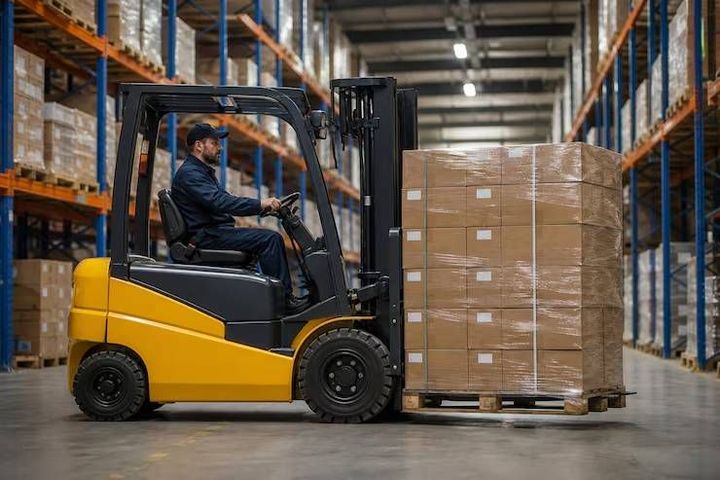
An electric fork truck is a powered industrial vehicle that uses an electric motor and rechargeable battery system for movement and lifting. The machine generally includes a mast, forks, drive wheels, steering system, hydraulic or electric lifting components, operator controls, and a battery pack.
Electric fork trucks are available in different configurations for various warehouse applications. Compact models can operate in narrow aisles, while larger machines can handle heavier palletized loads and higher lifting requirements.
Main Components of an Electric Fork Truck
An electric fork truck contains several interconnected systems that determine how it moves, lifts, and operates. Important components can include:
- Electric traction motor for vehicle movement
- Battery pack for stored electrical energy
- Mast assembly for vertical lifting
- Fork carriage and forks for load handling
- Hydraulic or electric lifting system
- Steering and braking system
- Operator controls and display
- Safety sensors and warning systems
- Battery charging equipment
- Electronic control unit
The capacity of an electric fork truck is normally specified according to its rated load capacity and lifting configuration. The actual capacity can change according to lift height, load center, attachments, and operating conditions.
How Electric Fork Truck Capacity Works
Selecting an electric fork truck begins with understanding the loads that need to be moved. Pallet dimensions, load weight, lifting height, aisle width, floor conditions, operating hours, and travel distance all influence equipment selection.
A simple planning assessment can be organized as follows:
| Warehouse Requirement | Main Consideration | Equipment Planning Factor |
|---|---|---|
| Pallet loads | Weight and dimensions | Rated capacity |
| High storage racks | Required lift height | Mast configuration |
| Narrow aisles | Available operating space | Truck dimensions |
| Long operating shifts | Energy consumption | Battery capacity |
| Frequent acceleration | Travel patterns | Motor performance |
| Cold environments | Temperature conditions | Battery and equipment design |
| Mixed applications | Different load types | Attachments and flexibility |
Actual equipment selection requires the specifications of the facility and loads rather than relying only on general capacity figures.
Importance
Why Electric Fork Trucks Matter
Warehouses increasingly depend on reliable material movement to transfer pallets and products between receiving areas, storage racks, picking zones, production areas, and shipping locations. Fork trucks provide a practical method for handling loads that are difficult or unsafe to move manually.
Electric models are particularly relevant to indoor environments because they do not produce direct tailpipe exhaust during normal battery-powered operation. Their relatively quiet operation can also be useful in facilities where noise levels are an important workplace consideration.
Where Electric Fork Trucks Are Used
Electric fork trucks can be found across many material-handling environments. Examples include:
- Warehouses requiring pallet movement and rack storage
- Distribution centers handling packaged goods
- Manufacturing plants moving components and finished products
- Retail storage facilities handling inventory
- Cold-storage environments using specialized equipment
- Food and beverage facilities with controlled indoor environments
- Logistics facilities requiring repeated loading and unloading
Each facility has different requirements, so electric fork truck selection depends on the type of material, operating space, working schedule, and storage configuration.
Battery and Operating Considerations
Battery technology is one of the most important elements of an electric fork truck. Common battery configurations include lead-acid and lithium-ion systems, with different charging, maintenance, energy-density, and operating characteristics.
Lithium-ion batteries can support opportunity charging in suitable applications, allowing equipment to receive shorter charging periods during scheduled breaks. Lead-acid batteries may require longer charging periods and dedicated charging arrangements.
Battery selection should consider operating hours, charging schedules, ambient temperature, electrical infrastructure, and the manufacturer's specified operating conditions.
Warehouse Layout
The warehouse environment directly affects electric fork truck performance. Aisle width, rack height, floor condition, turning radius, door openings, ramps, pedestrian areas, and charging locations all influence equipment planning.
Narrow-aisle operations may require specialized trucks with compact dimensions and appropriate mast configurations. Facilities with high racks may require equipment designed for elevated load handling.
Recent Updates
Lithium-Ion Battery Technology
Lithium-ion batteries are becoming increasingly visible in electric fork truck applications. Compared with conventional lead-acid systems, lithium-ion designs can provide different charging characteristics, energy density, and maintenance requirements.
Some warehouse operations use opportunity charging, where batteries are charged during planned pauses rather than waiting for a complete charging cycle. The suitability of this approach depends on the battery system, truck design, charging equipment, and operating schedule.
Regenerative Braking
Modern electric drive systems can incorporate regenerative braking. During deceleration, some of the vehicle's kinetic energy can be converted into electrical energy and returned to the battery.
Regenerative systems can also contribute to controlled vehicle movement and reduced mechanical brake use under appropriate operating conditions.
Intelligent Fleet Monitoring
Digital fleet-management systems are becoming more common in material-handling environments. These platforms can collect information about operating hours, battery status, usage patterns, impact events, maintenance indicators, and equipment location.
Fleet data can help warehouse teams understand how equipment is being used and identify patterns such as excessive idle time, frequent impacts, or uneven utilization between machines.
Automation and Warehouse Integration
Electric fork trucks are increasingly being considered alongside automated guided vehicles and autonomous mobile robots. Some modern warehouses use a combination of manually operated and automated equipment depending on the material flow.
Automation can involve sensors, navigation systems, warehouse-management software, cameras, and communication networks. Electric powertrains are well suited to these environments because electronic controls can integrate with digital operating systems.
Laws or Policies
Workplace Safety Requirements
Electric fork truck operations are generally subject to workplace safety requirements established by the relevant authority in the operating jurisdiction. These requirements may address operator training, load handling, pedestrian interaction, equipment inspection, workplace layout, and safe operating procedures.
The exact requirements vary between countries and regions, so warehouse operators need to identify the rules applicable to their facility.
Battery Charging Requirements
Battery charging areas may be subject to electrical, fire, ventilation, and workplace safety requirements. Charging equipment should be compatible with the battery system and installed according to applicable electrical requirements.
Different battery chemistries can have different charging characteristics, so charging procedures should follow the equipment manufacturer's specifications.
Load Capacity and Safe Operation
Fork truck operators need to understand the rated capacity of the equipment and how load center, lift height, attachments, and load dimensions affect stability.
Loads should remain within the specified operating limits of the truck. Safety procedures can also address speed, turning, ramps, visibility, pedestrian traffic, and elevated loads.
Equipment Inspection
Workplace rules may require regular inspections of powered industrial trucks. Inspection areas can include tires, forks, mast components, brakes, steering, battery condition, warning devices, controls, and visible structural damage.
The frequency and documentation requirements depend on applicable workplace regulations and facility procedures.
Tools and Resources
Fork Truck Capacity Calculators
Fork truck capacity calculators can help organize load weight, load center, lifting height, and equipment specifications. These tools can support preliminary planning when evaluating warehouse requirements.
Final equipment selection should use the manufacturer's rated capacity information and the actual operating conditions of the facility.
Warehouse Layout Planning Tools
Warehouse layout software can help visualize rack locations, aisle widths, travel paths, storage positions, charging areas, and pedestrian routes.
Digital layouts can make it easier to evaluate whether an electric fork truck has sufficient maneuvering space for the intended application.
Battery Monitoring Systems
Battery monitoring platforms can provide information about charge levels, charging cycles, temperature, usage patterns, and battery condition where supported by the equipment.
Such information can help warehouse teams understand energy use and organize charging schedules.
Fleet Management Platforms
Fleet management systems can collect operational information from multiple electric fork trucks. Depending on the equipment, available information may include operating hours, utilization, impact events, location, battery status, and maintenance alerts.
Inspection Records
A structured inspection record can document the condition of forks, tires, brakes, steering, mast assemblies, batteries, controls, warning devices, and other important components.
Keeping organized records can help facility teams maintain a clear history of equipment condition and inspection activity.
FAQs
What is an electric fork truck?
An electric fork truck is a powered material-handling vehicle that uses an electric motor and rechargeable battery system for movement and lifting. It can be used for pallet handling, rack storage, loading, unloading, and internal warehouse transportation.
How does an electric fork truck work?
An electric fork truck uses stored electrical energy from its battery to power traction and lifting systems. Electronic controls regulate movement, acceleration, braking, and other vehicle functions, while the mast and forks handle vertical load movement.
What are electric fork truck innovations?
Current electric fork truck innovations include lithium-ion batteries, regenerative braking, digital fleet monitoring, improved operator displays, advanced sensors, energy-management systems, and integration with warehouse automation technologies.
How long does an electric fork truck battery last?
Battery operating time depends on battery capacity, truck size, load weight, travel distance, lifting activity, operating temperature, and usage patterns. Charging requirements also vary according to battery chemistry and equipment configuration.
Where are electric fork trucks commonly used?
Electric fork trucks are commonly used in warehouses, distribution centers, manufacturing facilities, retail storage areas, food and beverage facilities, and other indoor material-handling environments where battery-powered equipment is appropriate.
Conclusion
Electric fork trucks are becoming an important part of modern warehouse material handling as facilities adopt battery technology, digital controls, fleet monitoring, and automation. Their performance depends on factors such as load capacity, lifting height, aisle dimensions, battery configuration, operating schedule, and warehouse layout. Recent developments include lithium-ion batteries, regenerative braking, intelligent monitoring, and integration with automated warehouse systems. Workplace safety rules, charging requirements, equipment inspections, and manufacturer specifications remain important considerations for electric fork truck operation.