Industrial Machinery Tools Guide With Modern Manufacturing and Engineering Insights
Industrial machinery tools are essential parts of modern manufacturing, construction, engineering, processing, and production environments. They include equipment used for cutting, forming, drilling, grinding, shaping, joining, measuring, moving, and controlling materials.
The development of industrial machinery tools has been closely connected with the growth of engineering. Early mechanical equipment relied heavily on manual control, while modern systems combine mechanical structures with electronics, sensors, software, automation, and data analysis. This evolution allows production processes to become more controlled, repeatable, and adaptable.
Context
What Are Industrial Machinery Tools?
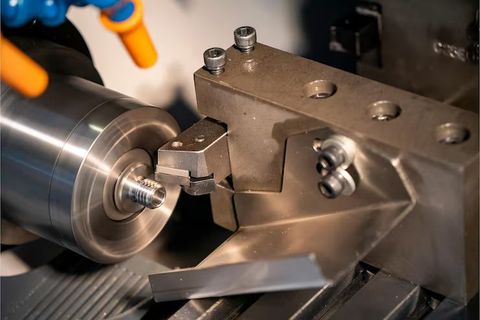
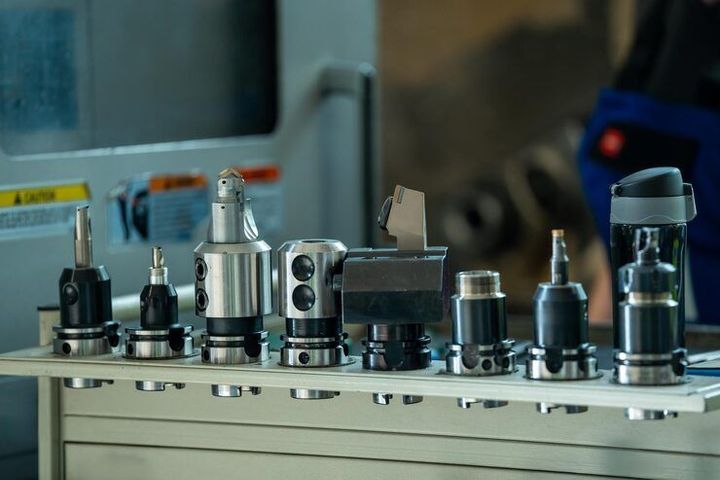
Industrial machinery tools are machines and supporting equipment designed to perform specific physical or technical operations. A machine tool may remove material from a workpiece, change its shape, join components, or measure dimensions.
Common categories include:
- Cutting machines for separating or shaping materials
- CNC machines for computer-controlled machining
- Drilling and milling machines for precision material removal
- Grinding machines for surface finishing
- Press machines for forming and shaping
- Laser machines for cutting, marking, or processing
- Industrial robots for automated handling and production tasks
- Measuring equipment for checking dimensions and surface characteristics
- Conveying and handling equipment for moving materials
- Control systems for monitoring machine operation
Each category serves a different purpose, although many modern production lines combine several technologies.
How Industrial Machinery Developed
Industrial machinery developed from basic mechanical devices into increasingly automated systems. Improvements in electric motors, hydraulics, pneumatics, electronics, computer control, and materials engineering changed how machines were designed and operated.
Computer numerical control became an important development because machines could follow programmed instructions with limited manual intervention. More recent systems combine CNC equipment with sensors, industrial networks, machine vision, robotics, and software.
The result is a manufacturing environment in which physical equipment and digital systems increasingly operate together.
Importance
Why Industrial Machinery Matters
Industrial machinery tools influence how products, components, structures, and materials are manufactured. They are used across sectors such as automotive production, aerospace, electronics, construction, packaging, metalworking, food processing, energy equipment, medical equipment, and general engineering.
For everyday users, the effects may not always be visible. Machinery is often involved in producing household appliances, transportation components, construction materials, electronic devices, packaging, and many other products.
Modern machinery also addresses several practical production challenges. These include:
- Maintaining consistent dimensions
- Reducing repetitive manual operations
- Handling difficult or heavy materials
- Producing complex component shapes
- Improving process monitoring
- Supporting repeatable production
- Recording operational data
- Managing increasingly complex manufacturing processes
Precision and Process Control
Precision is particularly important in engineering applications. A small dimensional variation can affect how components fit together or operate.
Modern machinery uses digital controls, measurement systems, sensors, and automated feedback to monitor selected operating conditions. However, actual performance depends on machine design, tooling, calibration, materials, operating procedures, and maintenance practices.
Machinery Selection Factors
Different industrial machinery tools are suited to different production requirements. Important factors include:
- Material type
- Component dimensions
- Required accuracy
- Production volume
- Machine capacity
- Automation level
- Available workspace
- Energy requirements
- Operator training
- Safety requirements
A machine designed for high-speed cutting may not be appropriate for delicate finishing work. Similarly, equipment designed for large components may not suit small precision parts.
Recent Updates
Automation and Intelligent Manufacturing
Between 2024 and 2026, industrial manufacturing has continued moving toward connected machinery, robotics, machine vision, digital monitoring, and artificial intelligence. Recent industrial discussions have increasingly focused on physical AI, where robots combine perception, software reasoning, and physical movement in production environments.
Digital twins are another developing area. A digital twin creates a digital representation of a physical machine, production line, or process. Depending on the system, it can be used to study operating conditions, simulate changes, or support monitoring.
Sensors and Predictive Monitoring
Sensors are becoming increasingly important in modern machinery. Temperature, vibration, pressure, speed, position, current, and other measurements can be collected during operation.
When these measurements are analyzed over time, manufacturers can identify changes in machine behavior. This supports condition monitoring and can help identify potential maintenance requirements before a noticeable production problem develops.
Robotics and Flexible Production
Industrial robots are also becoming more adaptable. Traditional robotic systems generally perform programmed repetitive movements, while newer systems increasingly incorporate machine vision, improved motion control, artificial intelligence, and collaborative operating concepts.
Industry discussions in recent years have highlighted the combination of robotics, artificial intelligence, digital twins, and other technologies as part of broader manufacturing transformation.
Energy and Resource Efficiency
Modern machinery development also places greater attention on energy use and resource efficiency. Variable-speed drives, improved motors, optimized control systems, heat recovery, process monitoring, and efficient machine designs can reduce unnecessary energy consumption in suitable applications.
Efficiency depends on the machine, workload, operating conditions, and production process, so results vary between applications.
Laws or Policies
Safety Requirements
Industrial machinery is generally subject to workplace safety, electrical safety, environmental, and product-specific requirements. The exact rules depend on the country, machine category, operating environment, and intended use.
Typical regulatory areas include:
- Machine guarding
- Emergency stopping systems
- Electrical protection
- Noise and vibration controls
- Operator safety
- Risk assessment
- Equipment inspection
- Installation requirements
- Documentation and technical information
Manufacturers and industrial operators generally need to identify which requirements apply to their particular equipment and operating environment.
Regulatory Developments in India
India has been updating its framework for machinery and electrical equipment safety. The Machinery and Electrical Equipment Safety framework introduced in 2024 was subsequently amended during 2025, while the Ministry of Heavy Industries records a withdrawal of the 2024 principal order in January 2026. This means the regulatory position should be checked against the latest official notification rather than relying on earlier implementation schedules.
India has also maintained quality-control requirements for selected electrical equipment, with implementation timelines and amendments continuing to change during 2024 and 2025.
Workplace safety requirements also address responsibilities associated with the design, manufacture, import, installation, and use of equipment in industrial environments.
Because machinery regulations can change, technical teams should use the current requirements applicable to the specific equipment and location.
Tools and Resources
Machine Selection and Planning Tools
Several digital tools can help people understand industrial machinery before a technical decision is made. These include machine-selection calculators, machining calculators, material databases, dimensional calculators, engineering drawing tools, and production-planning software.
Machining calculators may help estimate parameters such as cutting speed, feed rate, spindle speed, or machining time. The appropriate calculation depends on the machine, tool, material, and operation.
Engineering Software
Computer-aided design and manufacturing software is widely used to create digital component models and prepare manufacturing instructions. Simulation software can also help examine tool paths, machine movements, thermal behavior, structural conditions, or production sequences.
Common resource categories include:
- CAD software
- CAM software
- CNC programming tools
- Digital twin platforms
- Machine monitoring systems
- Industrial automation software
- Equipment manuals
- Engineering standards databases
- Technical training platforms
- Maintenance planning templates
Data Tables for Machinery Comparison
A basic comparison table can help explain the role of different equipment categories:
| Machinery Tool | Main Function | Common Materials | Typical Application |
|---|---|---|---|
| CNC Milling Machine | Cutting and shaping | Metals, plastics | Component machining |
| CNC Lathe | Rotational machining | Metals, plastics | Shafts and cylindrical parts |
| Laser Cutting Machine | Precision cutting | Metal, plastic, composites | Sheet and component processing |
| Hydraulic Press | Forming and compression | Metals, composites | Forming and pressing |
| Grinding Machine | Surface finishing | Metals, ceramics | Precision finishing |
| Industrial Robot | Automated movement | Various | Handling and assembly |
| Coordinate Measuring Machine | Dimensional inspection | Various components | Quality measurement |
| Drilling Machine | Hole creation | Metals, wood, plastics | Fabrication and machining |
The table provides general categories rather than fixed specifications because machinery capabilities differ considerably between models and configurations.
FAQs
What Are Industrial Machinery Tools?
Industrial machinery tools are equipment used for manufacturing, processing, shaping, cutting, forming, measuring, handling, or controlling materials. They range from basic mechanical machines to computer-controlled and automated systems.
How Do CNC Machines Work?
CNC machines use programmed digital instructions to control movements such as cutting, drilling, turning, or milling. The machine follows programmed coordinates and operating parameters while tools perform the selected manufacturing operation.
What Are the Main Types of Industrial Machinery Tools?
Common types include CNC machines, milling machines, lathes, grinding machines, drilling machines, hydraulic presses, laser machines, industrial robots, measuring equipment, conveyors, and automated control systems.
How Is Artificial Intelligence Used in Industrial Machinery?
Artificial intelligence can be applied to machine vision, process monitoring, predictive analysis, anomaly detection, production planning, and robotic control. Its usefulness depends on data quality, system design, and the specific industrial application.
Why Are Machinery Safety Rules Important?
Machinery safety rules help address hazards associated with moving parts, electrical systems, pressure, heat, noise, materials, and automated movement. Requirements vary according to the equipment and operating environment.
Conclusion
Industrial machinery tools have developed from mechanical equipment into connected systems combining machinery, electronics, software, sensors, and automation. CNC equipment, robotics, machining systems, forming machines, measurement tools, and digital technologies now support a wide range of manufacturing and engineering activities. Recent developments are placing greater attention on intelligent automation, connected equipment, machine monitoring, digital twins, and energy efficiency. Safety requirements and technical standards remain important because machinery must be considered within its specific operating environment and regulatory framework.