Explore Rome Heritage With Renaissance Art, Ancient Ruins, and Cultural Details
Rome heritage brings together several layers of European history, including ancient Roman architecture, Renaissance art, Baroque buildings, religious traditions, archaeological sites, museums, public squares, and everyday cultural practices.
The city developed over many centuries, leaving monuments and artworks from different historical periods within a relatively compact urban environment.
Ancient Rome grew from a settlement into the center of a large Mediterranean empire. Its political institutions, engineering methods, architecture, roads, aqueducts, public buildings, and artistic traditions influenced many later societies. After the ancient period, Rome continued to develop as an important religious and cultural center.
The Renaissance introduced another important period in Rome's cultural history. Artists, architects, scholars, and patrons contributed to churches, palaces, courtyards, paintings, sculptures, and urban spaces. Later Baroque developments further changed the appearance of the city through elaborate churches, fountains, streets, and public squares.
Today, exploring Rome heritage can involve walking through archaeological areas, visiting museums, studying Renaissance art, viewing ancient ruins, and experiencing contemporary Roman culture. The city's heritage is therefore not limited to one historical period.
Major Layers of Rome Heritage
Visitors can encounter several historical layers within the same journey:
Ancient Roman ruins and archaeological remains
Renaissance paintings, sculptures, and architecture
Baroque churches and public spaces
Religious and ecclesiastical heritage
Historic streets and urban neighborhoods
Museums and archaeological collections
Traditional food and everyday cultural practices
Modern cultural institutions and events
The relationship between these periods is one of the distinctive features of Rome. An ancient structure may stand close to a Renaissance building, while a later church or public square may incorporate elements from earlier periods.
Ancient Rome and Its Legacy
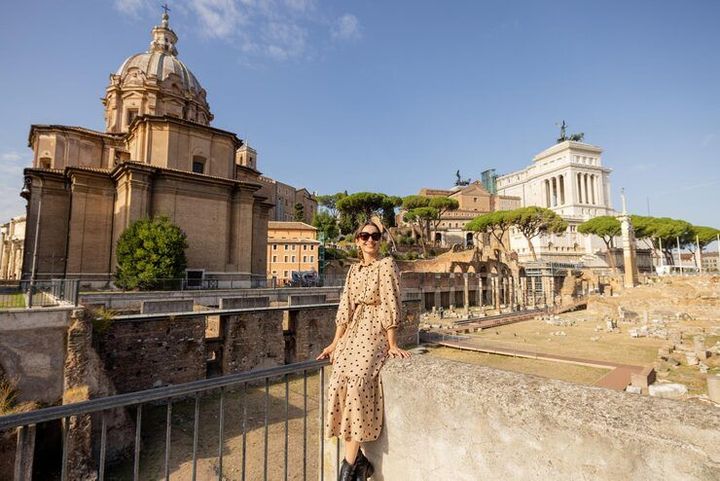
Ancient Roman architecture remains visible through monuments, roads, forums, amphitheaters, temples, baths, and infrastructure. The Colosseum is one of the most recognizable examples, while the Roman Forum provides evidence of political, religious, and commercial activities from the ancient city.
The Pantheon demonstrates Roman architectural experimentation, particularly through its large interior space and dome. Aqueduct remains and ancient roads also illustrate how engineering supported urban life.
These sites are important not only as individual monuments but also as evidence of how ancient Rome was organized. Archaeological research continues to reveal information about construction methods, social life, religion, trade, and urban development.
Importance
Rome heritage matters because it provides a connection between different periods of history and shows how architecture, art, religion, politics, engineering, and daily life have interacted over centuries. The city also provides an accessible setting for learning about the transition from ancient civilization to later European cultural movements.
Heritage tourism affects museums, archaeological institutions, conservation professionals, cultural organizations, accommodation providers, transportation systems, restaurants, local communities, and visitors. Managing large numbers of visitors while protecting historic structures is an ongoing consideration.
Renaissance Art in Rome
Renaissance art changed Rome's cultural landscape through painting, sculpture, architecture, and urban planning. Artists worked under religious and civic patrons, contributing to churches, chapels, palaces, and public spaces.
Michelangelo's work is associated with several major Roman landmarks, while Raphael contributed to important Vatican interiors. Renaissance architecture also influenced the development of palaces, courtyards, churches, and urban perspectives.
The Renaissance period can be understood through several artistic characteristics:
Interest in human anatomy and proportion
Study of classical Greek and Roman art
Development of perspective in painting
Increased attention to architectural symmetry
Detailed sculpture and realistic representation
Renewed study of classical literature and philosophy
Rome's Renaissance heritage is particularly interesting because artists worked among ancient Roman remains. Classical architecture and sculpture provided models that Renaissance artists studied, interpreted, and incorporated into new artistic ideas.
Ancient Ruins and Archaeology
Ancient ruins provide physical evidence of Roman urban life. The Roman Forum, Palatine Hill, Colosseum, Baths of Caracalla, and other archaeological areas demonstrate different aspects of ancient society.
Archaeological sites are not simply collections of old buildings. Researchers use structures, inscriptions, artifacts, coins, pottery, tools, and other evidence to reconstruct historical events and everyday activities.
Visitors may notice that many ruins appear incomplete. This reflects centuries of natural deterioration, rebuilding, earthquakes, material reuse, and changes in urban development. Archaeology often involves interpreting fragments rather than viewing complete original structures.
Cultural Details
Rome's heritage also extends beyond major monuments. Neighborhood streets, fountains, markets, churches, cafés, public squares, traditional foods, festivals, and local customs contribute to the city's cultural identity.
Historic neighborhoods can reveal how Rome developed as a living city rather than only as an archaeological destination. Trastevere, for example, contains narrow streets, historic buildings, churches, and contemporary urban life within an older neighborhood framework.
Food is another part of cultural exploration. Traditional Roman dishes and local food customs reflect agricultural products, regional history, household cooking practices, and changes in urban life.
Recent Updates
From 2024 through 2026, Rome's heritage environment has continued to focus on archaeological conservation, visitor management, cultural accessibility, restoration, and digital interpretation. The city has also experienced substantial tourism activity, increasing attention to how historic areas can accommodate visitors while protecting monuments.
Conservation and Restoration
Historic buildings and archaeological sites require continuous monitoring and maintenance. Conservation work can involve structural assessment, stone cleaning, surface protection, archaeological research, and restoration of artistic elements.
Modern conservation generally attempts to distinguish new intervention from original material while preserving the historical character of the structure. Techniques can include digital documentation, high-resolution imaging, structural monitoring, and detailed archaeological recording.
Digital Heritage
Digital technology is increasingly used to document and interpret cultural heritage. Three-dimensional scanning, digital mapping, virtual reconstruction, geographic information systems, and interactive museum displays can help researchers and visitors understand historical environments.
Digital models can also document fragile structures. If physical access is restricted, digital resources can provide additional ways to study architecture, artworks, and archaeological remains.
Visitor Management
Popular heritage sites face challenges associated with large visitor numbers. Crowd management, timed entry systems, pedestrian planning, conservation restrictions, and controlled access can help protect sensitive locations.
Some archaeological areas may limit access to particular sections during restoration or research activities. These changes can occur as conservation programs develop.
Sustainable Cultural Tourism
Heritage management increasingly considers environmental effects, transportation patterns, waste management, water use, and the relationship between tourism and local communities.
Walking and public transportation can form part of heritage exploration because many major sites are located within connected historic areas. However, pedestrian routes, accessibility requirements, seasonal conditions, and individual mobility needs can affect how visitors experience the city.
Laws or Policies
Rome's cultural heritage is shaped by Italian national legislation, municipal rules, archaeological regulations, conservation requirements, museum policies, and international heritage frameworks. The protection of monuments and archaeological areas involves public authorities, cultural institutions, and specialized conservation professionals.
Cultural Heritage Protection
Italian cultural heritage rules provide legal protection for archaeological remains, historic buildings, artworks, and other culturally significant assets. Activities affecting protected structures may require authorization and professional assessment.
Archaeological discoveries are also subject to legal requirements. Excavation, removal, alteration, or unauthorized collection of archaeological materials can be restricted or prohibited.
Museum and Monument Rules
Individual museums and archaeological sites can establish rules concerning photography, bags, food, touching artworks, visitor routes, accessibility, and security. These rules vary according to the location and type of collection.
Visitors may encounter restrictions around fragile artworks, archaeological remains, religious spaces, and conservation areas. Following site-specific instructions helps protect historic materials.
Religious Heritage
Rome contains numerous churches and religious buildings that function as both cultural heritage locations and active places of worship. Visitors may need to follow expectations concerning clothing, photography, silence, access, and behavior.
Religious ceremonies can also affect access to certain spaces. Cultural tourism therefore requires awareness that many historic buildings continue to have active religious functions.
Tools and Resources
Several tools can help visitors understand Rome heritage before and during a trip. Digital maps can show the relationship between archaeological sites, museums, churches, public squares, and historic neighborhoods.
Museum catalogs and archaeological databases can provide background information about artworks, artifacts, artists, historical periods, and excavation sites. Audio guides and digital interpretation platforms can provide additional context while visiting individual locations.
Useful planning resources include:
Digital city maps
Museum collection databases
Archaeological site maps
Public transportation planners
Walking-route planners
Museum calendars
Cultural event schedules
Accessibility information
Architecture guides
Art-history references
Digital heritage archives
Travel itinerary planners
A simplified historical overview can help organize the major cultural periods:
| Historical Period | Main Heritage Elements | Examples of Cultural Evidence |
|---|---|---|
| Ancient Rome | Forums, roads, temples, amphitheaters | Ruins, inscriptions, sculptures |
| Late Antiquity | Religious buildings and changing urban spaces | Churches, mosaics, archaeological remains |
| Medieval Period | Churches, fortifications, urban neighborhoods | Religious art and historic structures |
| Renaissance | Painting, sculpture, architecture | Palaces, chapels, artworks |
| Baroque Period | Fountains, churches, urban design | Squares, facades, sculptures |
| Modern Rome | Museums, conservation, contemporary culture | Exhibitions, restored sites, cultural programs |
Planning a Heritage Visit
A heritage-focused itinerary can be organized by geographical area or historical period. Grouping nearby sites can reduce unnecessary travel and provide a clearer understanding of how different landmarks relate to one another.
For example, an itinerary may focus on ancient Rome, Renaissance and Vatican heritage, Baroque Rome, or historic neighborhoods. Combining these themes can also show how different periods overlap within the modern city.
Opening schedules, entry arrangements, temporary closures, religious ceremonies, and conservation work can change. Checking current information before visiting a particular site is therefore part of practical heritage planning.
FAQs
What is Rome heritage known for?
Rome heritage includes ancient Roman ruins, Renaissance art, Baroque architecture, religious buildings, archaeological sites, museums, historic neighborhoods, fountains, public squares, and traditional cultural practices.
Where can visitors explore Renaissance art in Rome?
Renaissance art can be encountered in museums, churches, palaces, chapels, and historic collections across Rome. Vatican collections and several historic churches contain important works associated with the Renaissance period.
Which ancient ruins are associated with Rome heritage?
Major archaeological locations include the Roman Forum, Colosseum, Palatine Hill, Baths of Caracalla, Pantheon, and remains of ancient roads and infrastructure. Each location provides different evidence about Roman architecture and society.
How does Rome protect its cultural heritage?
Heritage protection involves Italian cultural heritage legislation, archaeological regulations, conservation programs, museum policies, and site-specific access controls. Restoration and research activities are carried out according to applicable preservation requirements.
What tools help with exploring Rome heritage?
Digital maps, museum databases, archaeological site maps, transportation planners, walking-route applications, cultural calendars, accessibility information, and art-history references can help organize a heritage-focused visit.
Conclusion
Rome heritage combines ancient ruins, Renaissance art, Baroque architecture, religious traditions, archaeology, historic neighborhoods, and contemporary cultural life. Its significance comes partly from the way different historical periods remain visible within the same urban environment. Conservation, digital documentation, visitor management, and cultural policies continue to shape how these places are preserved and experienced. Exploring Rome heritage therefore provides a way to understand architecture, art, archaeology, and cultural change across many centuries.