Explore Factory Automation Equipment With Smart Factory Technology and Process Insights
Factory automation equipment refers to machines, control systems, sensors, robots, software, and connected devices that help industrial facilities carry out production activities with limited manual intervention. The idea developed from traditional mechanized production, then expanded through programmable controllers, industrial robotics, computer-based monitoring, and connected manufacturing systems.
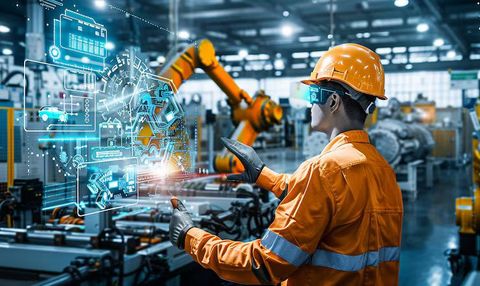
Today, factory automation equipment can form part of a wider smart factory environment where physical production and digital information work together.
Smart factory technology connects equipment with data systems so that operators can observe production conditions, identify process changes, and coordinate activities across different stages. A typical setup may include programmable logic controllers, industrial sensors, variable frequency drives, robotic arms, machine vision systems, conveyors, human-machine interfaces, supervisory control and data acquisition platforms, manufacturing execution systems, and industrial networks.
Process insights are an important part of this approach. Instead of looking only at the finished output, connected equipment can provide information about machine status, cycle times, temperature, pressure, vibration, energy use, material movement, and production interruptions. This creates a more detailed view of how a process behaves.
How Factory Automation Developed
Early industrial automation focused mainly on mechanical repetition and fixed control sequences. Later, programmable systems made it easier to change production instructions without rebuilding an entire machine. The growth of industrial networking then allowed multiple machines and controllers to exchange information.
The current stage combines automation with sensors, cloud and edge computing, analytics, artificial intelligence, digital twins, and connected production software. Digital twins are increasingly studied for representing robot systems in virtual environments for design, testing, commissioning, and operational changes.
Main Equipment Categories
Factory automation equipment can be grouped according to its role in a production process.
- Motion equipment includes motors, drives, actuators, and positioning systems.
- Control equipment includes PLCs, industrial PCs, controllers, and safety systems.
- Robotic equipment includes articulated robots, collaborative robots, autonomous mobile robots, and robotic cells.
- Detection equipment includes machine vision, proximity sensors, temperature sensors, pressure sensors, and vibration sensors.
- Material-handling equipment includes conveyors, automated storage systems, lifts, and guided vehicles.
- Information systems include HMI platforms, SCADA systems, manufacturing execution systems, historians, and analytics software.
Importance
Factory automation matters because modern production environments must coordinate machines, materials, information, and people across increasingly connected processes. Automation can address repetitive activities, inconsistent process conditions, difficult inspection tasks, and limited visibility into machine performance.
For operators, connected systems can make process information easier to interpret. A control screen may show whether a machine is running, waiting, stopped, or experiencing an abnormal condition. Maintenance teams can also examine sensor information to understand changes in equipment behavior.
Manufacturers, engineers, technicians, and plant managers are not the only groups affected. Consumers can encounter the results through product consistency, availability, traceability, and manufacturing quality. Students and technology researchers also use smart manufacturing concepts to understand how physical systems interact with digital technologies.
Why Process Insights Matter
Raw machine data has limited practical value unless it can be organized into useful information. Process insights turn measurements into patterns that can help explain what is happening within a production line.
For example, repeated increases in vibration may indicate a change in machine behavior. A longer cycle time may point to a process adjustment, material issue, or equipment condition. A rise in temperature can provide an additional signal for investigation. These observations do not automatically identify a cause, but they can provide evidence for further analysis.
Common Smart Factory Applications
Smart factory technology appears across many industrial activities, including:
- Automated assembly and fastening
- Robotic welding and material handling
- Machine vision inspection
- Packaging and labeling
- Warehouse and internal material movement
- Process control in continuous production
- Energy monitoring
- Equipment condition monitoring
- Production scheduling and traceability
| Automation area | Typical equipment | Common information produced |
|---|---|---|
| Motion control | Motors, drives, actuators | Speed, position, load |
| Machine inspection | Cameras, vision systems | Defects, dimensions, images |
| Process control | PLCs, sensors, controllers | Temperature, pressure, flow |
| Robotics | Robot arms, end effectors | Cycle time, position, status |
| Material handling | Conveyors, guided vehicles | Movement, location, throughput |
| Plant monitoring | SCADA, HMI, historians | Alarms, trends, operating states |
Recent Updates
From 2024 through 2026, factory automation has continued moving toward more connected, data-driven production environments. Several developments are particularly relevant to factory automation equipment and smart factory technology.
Digital Twins and Virtual Testing
Digital twins are receiving increased attention in manufacturing because they can represent physical systems in a virtual environment. For robot systems, the approach can support analysis related to design, testing, commissioning, reconfiguration, and operation. NIST has described digital twins as an emerging area within manufacturing robotics.
Artificial Intelligence and Machine Vision
Artificial intelligence is increasingly being applied to inspection, anomaly detection, forecasting, image analysis, and process monitoring. Machine vision systems can capture images while production is running, while analytical models can help identify patterns that may require human review.
The practical role of AI depends on data quality, model validation, system integration, and appropriate human oversight. AI output should be treated as analytical information rather than an automatic substitute for safety controls or engineering judgment.
Robot Safety Standards
Industrial robot safety guidance has also developed. ISO 10218-1:2025 addresses safety requirements for industrial robots, while ISO 10218-2:2025 addresses robot applications and robot cells, including integration, commissioning, operation, maintenance, and decommissioning.
Cybersecurity and Connected Equipment
As more factory automation equipment becomes networked, cybersecurity has become a core part of smart manufacturing planning. Manufacturing cybersecurity frameworks address risks involving industrial control systems, operational technology, networks, authentication, monitoring, and system integrity. A revised Manufacturing Profile aligned with the NIST Cybersecurity Framework 2.0 was published as an initial public draft during this period.
Laws or Policies
Factory automation is affected by several types of rules, but requirements vary by country, industry, machine category, and intended use. Because no specific target country is identified, the following overview focuses on widely recognized frameworks rather than one national legal system.
Machine Safety Requirements
Machine safety rules generally address hazards created by moving components, electrical systems, pressure, heat, automated motion, unexpected startup, and interaction between people and machines. Risk assessment, guarding, emergency controls, instructions, and protective systems are common elements.
The European Union Machinery Regulation is an example of a regional legal framework. Regulation (EU) 2023/1230 establishes machinery requirements and states that its main application begins in 2027, with certain provisions applying earlier.
Robot and Control System Safety
Industrial robot installations may need to consider requirements covering the robot, its cell, end effectors, protective devices, control functions, and interaction with nearby equipment. ISO 10218 provides internationally recognized safety guidance for industrial robots and robot applications.
Cybersecurity Policies
Connected manufacturing systems may also fall under cybersecurity requirements, critical infrastructure rules, data protection requirements, or organizational security policies depending on the location and industry. NIST's Manufacturing Profile provides a voluntary risk-based framework for managing cybersecurity risks in manufacturing environments.
Tools and Resources
Several tools help readers understand or plan factory automation equipment and smart factory technology. PLC programming environments are used to configure industrial controllers, while HMI and SCADA platforms provide interfaces for observing processes and alarms.
Manufacturing execution systems can organize production information between shop-floor equipment and higher-level business systems. Industrial historians store time-based process data, while analytics platforms can help identify patterns in machine and production information.
Other useful resources include:
- Automation architecture diagrams for mapping equipment and communication paths
- Risk assessment templates for identifying machine hazards
- Sensor selection guides for temperature, pressure, vibration, and position measurement
- Production KPI templates for tracking cycle time, downtime, throughput, and quality indicators
- Digital twin platforms for virtual representation and testing
- Cybersecurity assessment frameworks for connected industrial systems
- Maintenance records and equipment history logs for tracking recurring conditions
A useful planning approach is to separate physical equipment, control functions, communication networks, data storage, analytics, and human interaction. This makes it easier to understand where each technology fits within a larger smart factory system.
FAQs
What is factory automation equipment?
Factory automation equipment includes machines and control technologies that perform or coordinate production activities. Examples include robots, PLCs, sensors, drives, conveyors, vision systems, and industrial control interfaces.
How does smart factory technology work?
Smart factory technology connects production equipment with communication, monitoring, and data systems. Information from machines and sensors can then be organized for process monitoring, analysis, traceability, and operational decision-making.
What types of equipment are used in factory automation?
Common categories include industrial robots, PLCs, sensors, machine vision systems, motors, drives, actuators, conveyors, HMI systems, SCADA platforms, and manufacturing execution systems.
What are process insights in manufacturing?
Process insights are useful observations derived from production data. They can relate to cycle time, machine condition, quality indicators, energy use, temperature, pressure, vibration, or production interruptions.
Is factory automation affected by safety regulations?
Yes. Automated machinery can be subject to machine safety, electrical, workplace, and industry-specific requirements. The exact rules depend on the country, equipment category, application, and operating environment.
Conclusion
Factory automation equipment combines physical machinery, control systems, sensors, robotics, and digital technologies to coordinate industrial processes. Smart factory technology extends this approach by connecting equipment and data so that production conditions can be observed and analyzed more clearly. Recent developments include digital twins, AI-assisted analysis, connected robotics, and stronger attention to cybersecurity and safety. Process insights provide a structured way to understand machine behavior, production conditions, and operational information.