CO2 Laser Cutting Machines Guide With Precision Cutting and Manufacturing Insights
CO2 laser cutting machines are industrial systems that use a carbon dioxide laser beam to cut, engrave, or process selected materials. The laser is generated inside a gas-filled tube and directed through optical components toward the workpiece. A focused beam creates concentrated heat that melts, vaporizes, or thermally separates material along a programmed path.
The technology developed from early laser-processing research into a practical manufacturing method for sheet materials, plastics, wood, textiles, acrylic, and several other nonmetallic materials. CO2 laser cutting machines became widely associated with computer-controlled manufacturing because digital drawings can be converted into cutting paths with relatively little manual intervention.
A typical CO2 laser cutting system contains several major components. These include the laser source, mirrors or beam-delivery components, focusing lens, motion system, cutting head, worktable, cooling equipment, exhaust system, and computer numerical control system.
The cutting process depends on more than laser power. Material thickness, density, optical properties, focal position, cutting speed, gas pressure, nozzle design, and beam alignment can all influence the final result.
How CO2 Laser Cutting Works
The basic process starts with a digital drawing or computer-aided design file. Software converts the design into machine instructions that control movement and cutting parameters.
The laser beam travels toward the cutting head, where an optical lens focuses it into a small area. Assist gas may be directed through the nozzle to remove molten material and help maintain the cutting zone.
During operation, the machine moves the cutting head or worktable along programmed coordinates. This controlled movement allows the beam to follow straight lines, curves, holes, slots, and complex profiles.
Common Materials
CO2 laser cutting machines can process a broad range of materials, although suitability depends on the machine configuration and material characteristics.
Common applications include:
- Acrylic and other selected plastics
- Wood and engineered wood products
- Paper and cardboard
- Textiles and fabrics
- Rubber and selected polymer materials
- Glass and certain coated materials for specialized processing
- Nonmetallic sheets and composite materials
Some CO2 systems can also process certain metals, particularly with appropriate power levels and configurations. Material compatibility should always be established from the machine documentation and the specific material characteristics.
Importance
CO2 laser cutting machines matter because manufacturing frequently requires repeatable shapes, detailed profiles, openings, and customized components. Conventional cutting methods may involve mechanical contact, dedicated tooling, or several processing stages, while laser systems can create many shapes directly from digital designs.
The technology is used across fabrication, signage, packaging, furniture components, electronics-related materials, decorative products, prototyping, and industrial manufacturing.
Precision and Repeatability
One important characteristic of laser cutting is controlled beam movement. Computer-controlled positioning allows the same digital design to be reproduced across multiple workpieces when appropriate machine settings and material conditions are maintained.
Precision does not depend on the laser alone. Mechanical rigidity, lens condition, beam alignment, software settings, material flatness, and thermal effects can all influence dimensional accuracy.
Production Flexibility
A CO2 laser cutting machine can switch between different digital patterns without requiring a new physical cutting die for every design. This can be useful when production involves different shapes, prototypes, short production runs, or frequently changing designs.
The same machine may process relatively simple geometric profiles as well as intricate patterns, depending on its software and mechanical configuration.
Factors That Influence Cutting Results
| Factor | General Effect |
|---|---|
| Laser power | Influences the material thickness and processing capability |
| Cutting speed | Affects heat input, edge appearance, and processing time |
| Focal position | Influences beam concentration and cut quality |
| Assist gas | Helps remove material from the cutting zone |
| Lens condition | Can influence beam focus and consistency |
| Material thickness | Changes the required processing parameters |
| Machine rigidity | Influences positioning accuracy |
| Ventilation | Helps manage smoke and airborne byproducts |
Understanding these factors is important because increasing one parameter does not automatically improve every cutting result. Laser processing generally requires balanced settings based on the material and desired geometry.
Recent Updates
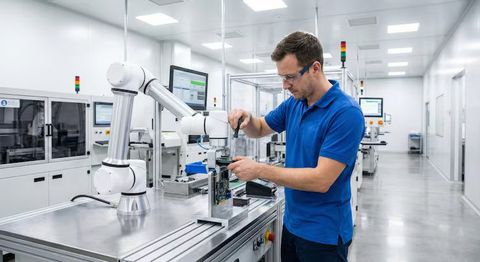
CO2 laser cutting technology continues to develop alongside broader manufacturing automation. During 2024–2026, attention across laser processing has increasingly focused on automated parameter adjustment, digital monitoring, material optimization, energy efficiency, and integration with production software.
One notable direction is the use of cameras and machine-learning systems for monitoring the cutting process. Recent research has examined vision-based systems that can identify process conditions and adjust cutting parameters during operation, demonstrating how real-time quality monitoring is becoming more technically practical.
Another area of development involves beam control and assist-gas optimization. Research during 2026 has examined dynamic beam shaping combined with mixed assist gases for improving cutting performance in thicker metal materials. These developments illustrate the broader movement toward controlling the laser beam and process environment more precisely rather than relying only on higher laser power.
Automation and Digital Manufacturing
Modern laser cutting equipment increasingly connects with digital manufacturing workflows. Common developments include:
- Automatic material positioning
- Computer-controlled nesting
- Production monitoring
- Digital cutting libraries
- Automatic parameter selection
- Camera-based process inspection
- Remote equipment diagnostics
- Integration with manufacturing software
These features can reduce repetitive manual adjustments and make production data easier to analyze.
CO2 Lasers and Other Laser Technologies
CO2 laser cutting machines remain relevant, but they operate alongside fiber and other laser technologies. Fiber lasers have expanded substantially in metal processing because of their suitability for many metal applications and their optical characteristics.
CO2 systems continue to have important applications involving nonmetallic materials and specialized cutting processes. The appropriate laser type depends on the material, thickness, wavelength interaction, required geometry, machine configuration, and production requirements.
Laws or Policies
Laser cutting machines are subject to workplace safety, electrical safety, machinery safety, fire prevention, environmental, and occupational requirements. Exact rules vary according to the country, industry, machine configuration, and workplace environment.
Internationally, ISO 11553-1 addresses laser processing machine safety and covers hazards associated with laser radiation and related processing equipment. The standard was reviewed and confirmed as current in 2025.
The IEC 60825 series also provides an important framework for laser product classification and safety. IEC 60825-4:2022 addresses laser guards, including protective housings, access control, interlocking, and labeling considerations for laser processing equipment.
Workplace authorities may impose additional requirements. For example, occupational safety rules in some jurisdictions address personal protective equipment, eye protection, machine guarding, training, and workplace controls. Requirements should therefore be checked against the applicable national and regional framework rather than assuming that one standard applies everywhere.
Safety Considerations
A CO2 laser cutting machine can involve several hazards beyond the laser beam itself. These can include heat, fire, electrical energy, fumes, moving machine components, compressed gases, and material-specific emissions.
Important safety controls may include:
- Enclosed laser-processing areas where appropriate
- Interlocked access panels
- Appropriate laser guards
- Exhaust and filtration systems
- Fire prevention measures
- Correct eye protection where required
- Electrical grounding and protection
- Operator training
- Written operating procedures
- Regular inspection of safety systems
Material selection is also important. Certain plastics, coatings, composites, and treated materials can produce hazardous gases or residues when heated. Materials should therefore be processed only when their compatibility and safety characteristics are understood.
Tools and Resources
Several digital and physical resources help users understand and operate CO2 laser cutting machines.
Design and CAD Software
Computer-aided design programs are commonly used to create cutting profiles. Vector-based drawings are particularly useful for defining lines, curves, holes, and other geometric paths.
CAM and Nesting Software
Computer-aided manufacturing software can translate designs into machine instructions. Nesting tools arrange multiple parts within a sheet to improve material utilization and organize cutting sequences.
Material Parameter Libraries
Machine documentation and parameter databases can provide starting points for laser power, speed, focal position, and assist-gas settings. These values should be treated as starting references because actual results vary with material composition, thickness, machine condition, and optics.
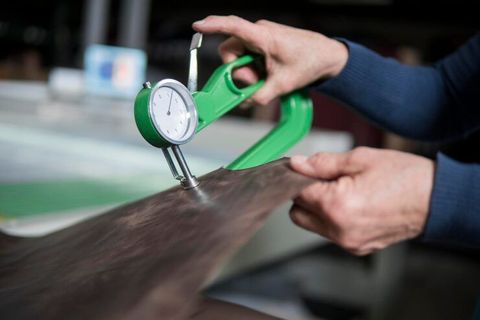
Measurement Tools
Calipers, gauges, rulers, optical inspection equipment, and other measurement tools can help verify finished dimensions. For higher-precision applications, coordinate measurement equipment may be used to compare finished parts with their digital designs.
Maintenance and Inspection Records
Digital or printed maintenance logs can record lens inspections, alignment checks, cooling-system conditions, exhaust-system inspections, and safety-device checks. Organized records can help identify changes in machine performance over time.
FAQs
What are CO2 laser cutting machines used for?
CO2 laser cutting machines are commonly used for cutting and engraving materials such as acrylic, wood, paper, cardboard, textiles, selected plastics, and other nonmetallic materials. Certain systems can also process selected metals under appropriate conditions.
How does a CO2 laser cutting machine work?
A CO2 laser generates a concentrated beam that is directed through optical components and focused onto a workpiece. Heat from the focused beam separates or removes material along a programmed cutting path.
What affects CO2 laser cutting accuracy?
Accuracy can be influenced by machine rigidity, beam alignment, lens condition, focal position, cutting speed, material thickness, thermal effects, software settings, and workpiece positioning.
Are CO2 laser cutting machines safe?
They can be operated safely when appropriate engineering controls, guarding, ventilation, operating procedures, training, and applicable safety requirements are followed. Laser radiation, heat, fumes, electricity, and moving components all require consideration.
Are CO2 laser cutting machines still relevant?
Yes. CO2 laser cutting machines remain useful for many nonmetallic materials and specialized applications. At the same time, fiber laser technology has expanded in many metal-cutting applications, so machine selection depends on the material and intended process.
Conclusion
CO2 laser cutting machines combine focused laser energy, computer-controlled movement, optics, and material-processing parameters to create precise profiles and patterns. Their applications extend across manufacturing, fabrication, prototyping, packaging, design, and material processing. Recent developments increasingly emphasize automation, process monitoring, beam control, and digital manufacturing integration. Safe operation depends on suitable machine guarding, ventilation, training, material assessment, and compliance with applicable safety requirements.