Advanced Manufacturing Cells Guide With Smart Automation and Production Insights
Advanced manufacturing cells are organized production areas where machines, tools, software, workers, and automated equipment operate together to complete specific manufacturing tasks. Instead of treating every machine as an isolated unit, a manufacturing cell connects several production activities into a coordinated workflow.
Traditional manufacturing often depends on separate machines arranged around a factory floor. Materials may move between multiple workstations before reaching the next production stage. Advanced manufacturing cells reduce unnecessary movement by grouping related processes into a structured production environment. A cell may include machining equipment, robotic arms, inspection devices, material handling systems, programmable controllers, and production software.
Smart manufacturing technology has expanded the capabilities of these cells. Sensors can collect information about machine operation, while industrial software can organize production data and identify changes in operating conditions. Manufacturing automation can also coordinate repetitive movements, material transfers, inspection activities, and machine sequences.
The concept is used across industries such as automotive production, electronics, aerospace manufacturing, medical equipment production, consumer products, metalworking, plastics processing, and industrial machinery. The exact configuration depends on the product, production volume, materials, equipment, and required quality standards.
Main Components
A modern manufacturing cell may contain several interconnected elements:
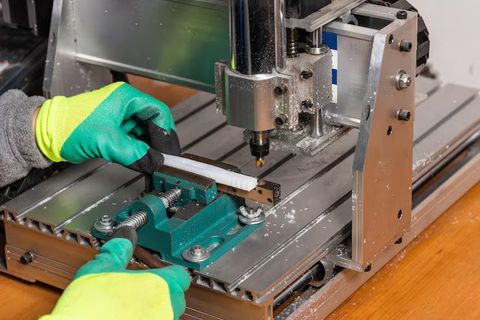
- CNC machines for controlled cutting, drilling, milling, or turning
- Industrial robots for handling, assembly, loading, and unloading
- Sensors for monitoring temperature, pressure, position, vibration, or other conditions
- Programmable logic controllers for coordinating equipment
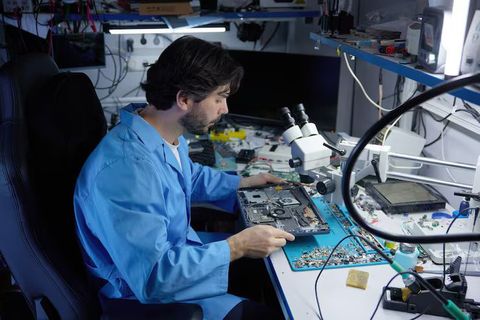
- Vision inspection systems for identifying physical characteristics
- Automated material handling equipment for transferring components
- Manufacturing execution software for organizing production information
These components work together through communication networks and control systems. The level of automation can range from partially automated workstations to highly integrated production cells.
How Manufacturing Cells Operate
A typical manufacturing cell begins when raw material or a component enters the production area. Machines and automated equipment perform assigned operations according to programmed instructions. Sensors and inspection equipment can then collect information about the process or finished component.
The information may be displayed through operator interfaces or stored within production software. This creates a connection between physical manufacturing activity and digital production information, which is an important part of modern smart factory environments.
Importance
Manufacturing cells matter because production environments increasingly need greater coordination between machines, people, materials, and information. Poorly organized production can create unnecessary movement, inconsistent processing, equipment interruptions, and difficulty tracking production conditions.
An advanced manufacturing cell addresses these challenges by organizing related activities around a defined production workflow. Automation can handle repetitive tasks while human workers remain involved in setup, supervision, quality assessment, maintenance, programming, and process decisions.
Who Uses Advanced Manufacturing Cells
Manufacturing organizations of different sizes and industries can use cell-based production concepts. Common applications include:
- Automotive component production
- Electronics assembly
- Precision metalworking
- Plastic component manufacturing
- Aerospace component processing
- Packaging equipment production
- Medical device manufacturing
- Industrial equipment assembly
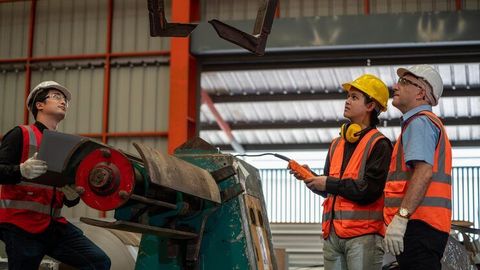
The design also affects workers who interact with production equipment. Operators may monitor multiple machines, interpret digital information, adjust processes, perform inspections, or coordinate maintenance activities.
Production Challenges Addressed
Advanced manufacturing cells can be designed to address several practical production challenges. One is excessive material movement between unrelated work areas. Another is limited visibility into machine conditions during production.
Automation also addresses repetitive handling tasks that require consistent positioning or sequencing. Digital inspection systems can support quality monitoring by collecting measurements at different stages of production.
However, automation does not remove every production challenge. Cells require appropriate programming, equipment integration, maintenance planning, worker training, cybersecurity controls, and periodic evaluation of production requirements.
Manufacturing Cell Performance Factors
Several factors influence how a cell performs:
| Factor | Role in Manufacturing Cell |
|---|---|
| Machine layout | Determines material and component movement |
| Automation level | Defines how many activities are handled automatically |
| Sensors | Provide information about operating conditions |
| Control systems | Coordinate machine sequences |
| Inspection | Helps identify process or product variations |
| Data systems | Organize production information |
| Worker involvement | Supports supervision, setup, maintenance, and decisions |
| Maintenance | Helps keep equipment operating within planned conditions |
A balanced approach considers the entire workflow rather than focusing on a single machine or robot.
Recent Updates
From 2024 through 2026, manufacturing automation has continued moving toward greater connectivity, data collection, and flexible production. Industrial companies have increasingly connected machinery with digital platforms that allow production information to be viewed across different stages of a manufacturing process.
Artificial intelligence is also becoming more visible within industrial environments. AI-supported systems can analyze production information, assist with visual inspection, identify unusual operating patterns, and support maintenance planning. These applications depend heavily on the quality and availability of production data.
Greater Use of Industrial Robotics
Industrial robotics continues to expand beyond traditional repetitive handling applications. Modern robotic systems can be integrated with cameras, force sensors, machine controllers, and software platforms. This allows robots to perform more adaptable tasks within manufacturing cells.
Collaborative robots are another area of development. These systems are designed for applications where people and robotic equipment may work within the same broader production environment, subject to appropriate safety measures and system design.
Digital Twins and Simulation
Digital twins and manufacturing simulation tools are being used to model production environments before physical changes are made. A digital representation can help engineers examine equipment placement, material movement, production sequences, and potential bottlenecks.
Simulation can also support training and process planning. It allows different production scenarios to be examined without immediately changing physical equipment.
Predictive Maintenance and Condition Monitoring
Connected sensors are increasingly used for equipment condition monitoring. Information such as vibration, temperature, pressure, electrical characteristics, and operating cycles can provide indicators of changing machine conditions.
Predictive maintenance systems use collected information to identify patterns that may require attention. These systems do not eliminate equipment failures, but they can provide additional information for maintenance planning.
Energy and Resource Monitoring
Manufacturers are also paying greater attention to energy consumption and resource efficiency. Smart meters, sensors, and production software can help track electricity, compressed air, water, materials, and other resources used within production environments.
This information can support process analysis and identify areas where resource use varies significantly between machines or production cycles.
Laws or Policies
Manufacturing cells are affected by several categories of laws, standards, and workplace policies. The exact requirements differ by country, industry, equipment type, and production environment, so organizations normally evaluate the rules applicable to their specific location and operations.
Machine Safety
Machine safety requirements commonly address guarding, emergency controls, electrical safety, operator access, maintenance procedures, and risk assessment. Automated cells may require additional safeguards because robots, moving machinery, conveyors, and other equipment can operate automatically.
Risk assessment is particularly important when equipment is integrated into a single production cell. A safety evaluation should consider normal operation, setup, cleaning, maintenance, troubleshooting, and unexpected machine movement.
Industrial Robots and Automation
Robotic manufacturing cells can be subject to specific requirements covering protective measures, access control, emergency stopping, and safe operating procedures. Collaborative robotic applications may also require assessment of contact risks and operating conditions.
Data and Cybersecurity
Connected manufacturing equipment creates digital information that may require protection. Industrial networks can contain machine configurations, production records, maintenance information, and operational data.
Cybersecurity policies may therefore address network segmentation, authentication, software updates, access permissions, backups, and monitoring. Requirements vary according to the industry and jurisdiction.
Environmental Requirements
Manufacturing facilities may also be affected by rules concerning emissions, waste handling, energy use, hazardous materials, noise, and industrial discharge. The relevance of each requirement depends on the processes used inside the manufacturing cell.
Tools and Resources
Several tools can help organizations understand, design, operate, and analyze advanced manufacturing cells. Computer-aided design software can be used to plan equipment layouts and examine physical relationships between machines.
Manufacturing simulation platforms can model production sequences, machine utilization, material movement, and potential bottlenecks. Programmable logic controller programming environments are used to configure automated machine sequences.
Production monitoring dashboards can display information such as machine status, cycle times, production quantities, alarms, and inspection results. Maintenance management platforms can organize equipment records, inspection schedules, maintenance histories, and spare-component information.
Useful resources may include:
- CAD and factory-layout software
- Manufacturing simulation platforms
- PLC programming environments
- Industrial robot programming tools
- Machine vision software
- Industrial data dashboards
- Condition-monitoring systems
- Digital twin platforms
- Maintenance management systems
- Production planning templates
The appropriate tool depends on the complexity of the manufacturing cell and the type of production information required.
FAQs
What is an advanced manufacturing cell?
An advanced manufacturing cell is a coordinated production area that combines machines, automation, controls, sensors, inspection equipment, and human activities to complete related manufacturing operations.
How does manufacturing automation work in a production cell?
Manufacturing automation uses programmed machines, robots, controllers, sensors, and software to perform or coordinate specific production activities. Human workers may remain responsible for setup, monitoring, maintenance, inspection, and process decisions.
What equipment is used in smart manufacturing cells?
Smart manufacturing cells can include CNC machines, industrial robots, conveyors, sensors, machine vision systems, programmable controllers, inspection equipment, and production monitoring software.
What are the advantages of advanced manufacturing cells?
Advanced manufacturing cells can improve workflow coordination, provide greater production visibility, support consistent repetitive operations, and reduce unnecessary movement between related production stages. Results depend on cell design, equipment integration, maintenance, and operating conditions.
Are manufacturing cells suitable for every factory?
No single manufacturing-cell design is appropriate for every production environment. Suitability depends on factors such as product characteristics, production volume, process requirements, equipment compatibility, available space, workforce capabilities, and required level of automation.
Conclusion
Advanced manufacturing cells combine machinery, automation, sensors, software, inspection systems, and human oversight within organized production environments. Smart manufacturing technology is increasing connectivity, data collection, robotics, simulation, condition monitoring, and digital production management. Safety, cybersecurity, environmental requirements, and equipment-specific rules remain important considerations when automated cells are designed and operated. The overall structure of a manufacturing cell depends on the production process, equipment, materials, workforce, and information requirements.