Hydraulic Machinery Units Guide With Modern Hydraulic Systems and Engineering Insights
Hydraulic machinery units are important parts of many industrial, construction, agricultural, transportation, and manufacturing systems. These units use pressurized fluid to transfer energy and create controlled movement. A typical hydraulic machinery unit can include a pump, reservoir, valves, filters, hoses, cylinders, motors, sensors, and control components.
Hydraulic systems exist because they can transmit substantial force through relatively compact components while allowing movement to be controlled with precision. Understanding hydraulic machinery units helps explain how equipment such as lifting platforms, presses, excavators, injection molding machines, agricultural equipment, and material handling systems operate.
Context
What Are Hydraulic Machinery Units?
A hydraulic machinery unit is a group of components designed to generate, control, and transmit hydraulic power. Instead of transferring mechanical power directly through gears or shafts, the system uses hydraulic fluid under pressure.
The hydraulic pump draws fluid from a reservoir and moves it through the system. Valves regulate the direction, pressure, and flow of the fluid, while cylinders or hydraulic motors convert fluid energy into mechanical movement.
Main Components
Modern hydraulic systems normally contain several connected elements, each with a specific role.
- Hydraulic pump: Creates fluid flow within the circuit.
- Reservoir: Stores hydraulic fluid and allows heat and contaminants to be managed.
- Valves: Control pressure, direction, and fluid flow.
- Hydraulic cylinders: Convert fluid pressure into linear movement.
- Hydraulic motors: Convert hydraulic energy into rotary movement.
- Filters: Help remove particles and contaminants from the fluid.
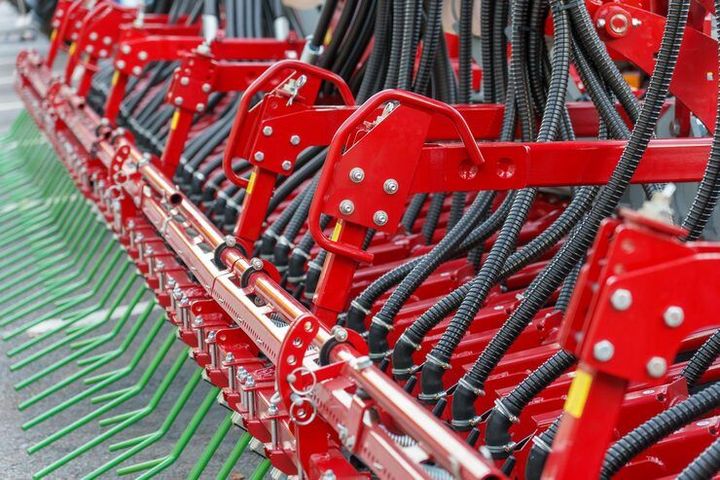
- Hoses and pipes: Transport hydraulic fluid between components.
- Sensors and controllers: Monitor operating conditions and support automated control.
The components must work together because a problem in one part can affect pressure, movement, efficiency, and system stability.
How Hydraulic Systems Developed
Early hydraulic equipment was based on basic principles of fluid pressure and mechanical force. As engineering developed, hydraulic machinery became more sophisticated through improved pumps, seals, valves, filtration systems, and control technologies.
Modern hydraulic machinery units combine traditional fluid-power principles with electronic monitoring and automated control. This combination allows hydraulic equipment to respond to changing loads and operating conditions with greater control.
Importance
Why Hydraulic Machinery Matters
Hydraulic systems are useful when equipment needs controlled force, movement, or lifting capability. Fluid pressure allows power to be transmitted through flexible hoses and compact components, which can simplify the movement of mechanical assemblies.
Hydraulic machinery units are used in many areas, including:
- Construction machinery
- Manufacturing equipment
- Agricultural machinery
- Material handling systems
- Industrial presses
- Mining equipment
- Marine machinery
- Waste processing equipment
- Transportation equipment
- Energy-related machinery
The technology affects operators, engineers, maintenance teams, equipment manufacturers, and organizations that depend on machinery for industrial processes.
Practical Problems Addressed by Hydraulic Systems
Hydraulic machinery can address several mechanical challenges. These include the need to generate controlled linear force, operate heavy mechanisms, adjust movement speed, and manage variable loads.
For example, a hydraulic cylinder can extend or retract to move a platform, machine component, or lifting mechanism. A hydraulic motor can provide rotational movement for equipment such as drives, conveyors, and mobile machinery.
Hydraulic Units and System Efficiency
System efficiency depends on several factors rather than a single component. Pump selection, fluid condition, pressure settings, leakage control, filtration, temperature management, and control methods can all influence hydraulic performance.
A simplified comparison of common hydraulic components is shown below.
| Component | Primary Function | Typical Movement or Role |
|---|---|---|
| Hydraulic Pump | Generates fluid flow | Continuous fluid movement |
| Hydraulic Cylinder | Converts pressure into mechanical force | Linear movement |
| Hydraulic Motor | Converts pressure into rotation | Rotary movement |
| Directional Valve | Controls fluid path | Movement direction |
| Pressure Valve | Controls system pressure | Pressure regulation |
| Reservoir | Holds hydraulic fluid | Fluid storage |
| Filter | Removes contaminants | Fluid cleanliness |
| Sensor | Measures operating conditions | Monitoring and control |
Recent Updates
Digital Hydraulic Monitoring
Recent hydraulic machinery development has increasingly connected fluid-power equipment with electronic monitoring. Sensors can track pressure, temperature, fluid condition, position, and other operating parameters.
Connected monitoring can help operators identify unusual operating conditions before they become larger mechanical problems. Data can also support equipment analysis and planned maintenance activities.
Electro-Hydraulic Control
Electro-hydraulic systems combine hydraulic power with electronic control. Electronic signals can regulate proportional valves, pressure controls, and movement functions.
This approach is increasingly relevant in automated manufacturing and mobile machinery because electronic controllers can coordinate hydraulic movement with other machine functions.
Energy-Efficient Hydraulic Systems
Another ongoing development is the use of hydraulic architectures designed to reduce unnecessary energy losses. Variable-displacement pumps, load-sensing systems, improved valve designs, and electronic control can help match hydraulic output more closely with actual machine requirements.
The exact efficiency improvement depends on equipment design, operating conditions, load patterns, fluid characteristics, and control settings.
Condition Monitoring
Modern hydraulic machinery units increasingly incorporate condition-monitoring techniques. Sensors and diagnostic systems can provide information about temperature, pressure, vibration, particle contamination, and component behavior.
This trend is particularly relevant to industrial environments where unexpected equipment interruptions can affect production schedules and operational planning.
Compact Hydraulic Power Units
Hydraulic power units are also becoming more compact through improved component integration. A compact hydraulic power unit can combine a pump, motor, reservoir, valves, filtration, and controls into a coordinated assembly.
Compact designs can help equipment manufacturers manage available installation space while maintaining the required hydraulic functions.
Laws or Policies
Hydraulic Equipment Safety Requirements
Hydraulic machinery is generally affected by workplace safety rules, machinery regulations, pressure-related requirements, electrical safety provisions, and environmental controls. The exact requirements depend on the country, industry, equipment category, and intended application.
Manufacturers and operators may need to consider requirements covering pressure-containing components, machine guarding, emergency controls, hydraulic hose protection, electrical systems, and safe operating procedures.
Pressure and Machine Safety
Hydraulic systems can operate at substantial pressures, so pressure-related hazards are an important safety consideration. Systems may use pressure-relief valves and other protective devices to control excessive pressure.
Safety requirements commonly address issues such as unexpected movement, stored hydraulic energy, leakage, component failure, and maintenance procedures. Lockout and isolation procedures may also be relevant when equipment is being inspected or repaired.
Environmental Considerations
Hydraulic fluids can have environmental implications when leaks or improper disposal occur. Regulations in many jurisdictions address the handling, storage, transport, and disposal of industrial fluids and contaminated materials.
Organizations operating hydraulic machinery should follow the environmental and workplace requirements applicable to their location and industry. Because regulations vary internationally, the applicable national or regional authority should be consulted for specific compliance requirements.
Tools and Resources
Hydraulic Calculators
Hydraulic calculators can help estimate relationships between pressure, force, flow rate, displacement, and cylinder dimensions. These calculations are useful for understanding how changes in one parameter can influence other parts of a hydraulic system.
Common calculations include:
- Hydraulic cylinder force
- Flow rate
- Hydraulic power
- Pressure relationships
- Motor displacement
- Cylinder speed
- Reservoir volume
Hydraulic Circuit Diagrams
Circuit diagrams provide a visual representation of hydraulic components and their connections. Standard symbols are used to represent pumps, valves, cylinders, motors, reservoirs, filters, and other components.
Learning to interpret these diagrams is useful for understanding how hydraulic machinery units operate without examining the physical machine directly.
Digital Monitoring Platforms
Industrial monitoring platforms can collect information from hydraulic sensors and controllers. Depending on the equipment, these platforms may display pressure, temperature, operating cycles, alarms, and other system information.
They are commonly integrated with industrial automation systems and machine-control environments.
Technical Documentation
Equipment manuals, hydraulic schematics, component specifications, training materials, and engineering references are useful resources for understanding a particular hydraulic system. Documentation can also identify operating limits, fluid requirements, inspection procedures, and component specifications.
FAQs
What are hydraulic machinery units?
Hydraulic machinery units are assemblies that use pressurized fluid to transmit energy and control mechanical movement. They commonly contain pumps, reservoirs, valves, cylinders or motors, filters, hoses, sensors, and control components.
How does a hydraulic power unit work?
A hydraulic power unit normally uses an electric motor or another mechanical power source to drive a hydraulic pump. The pump moves fluid from a reservoir into the hydraulic circuit, while valves regulate pressure and flow to the equipment.
What are hydraulic machinery units used for?
Hydraulic machinery units are used for lifting, pressing, clamping, rotating, positioning, and controlling mechanical equipment. They appear in construction machinery, industrial presses, agricultural equipment, manufacturing systems, and material handling machinery.
Why are hydraulic filters important?
Hydraulic filters help remove particles and contaminants from hydraulic fluid. Clean fluid can help reduce contamination-related wear and support reliable operation of hydraulic components.
What is the role of sensors in modern hydraulic systems?
Sensors can measure conditions such as pressure, temperature, position, and fluid characteristics. Their information can be processed by electronic controllers or monitoring systems to support machine control and condition assessment.
Conclusion
Hydraulic machinery units use pressurized fluid to transmit energy and control mechanical movement across many industrial applications. Modern hydraulic systems increasingly combine pumps, valves, cylinders, sensors, electronic controls, and monitoring technologies. Recent developments focus on digital monitoring, electro-hydraulic control, compact power units, and improved energy management. Understanding these components, operating principles, safety considerations, and regulatory requirements provides a useful foundation for interpreting modern hydraulic engineering systems.