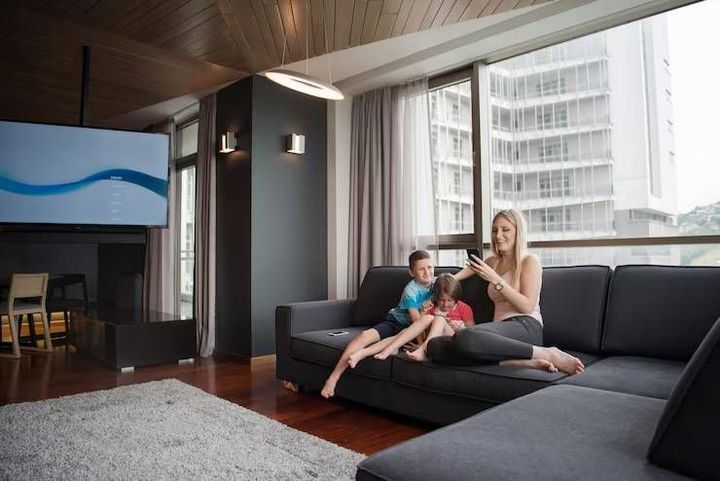
Family 3BHK Apartments in Singapore Explained With Layouts, Facilities, and Family Living Options
Family 3BHK apartments in Singapore are residential homes designed around three bedrooms, a shared living area, a kitchen, and bathrooms.
The term 3BHK is widely used in property discussions to describe a three-bedroom, hall, and kitchen arrangement, although Singapore's public housing system generally uses flat classifications such as 3-room, 4-room, and 5-room rather than the BHK terminology.
For families comparing 3BHK apartments in Singapore, the main difference is between private residential apartments and HDB flats. A private apartment may be described as a three-bedroom apartment, while an HDB home is classified according to its flat type and official housing framework.
Typical 3BHK Apartment Layout
A family-oriented three-bedroom apartment usually separates private sleeping areas from shared spaces. A common layout places the main bedroom and additional bedrooms along a corridor, with the living and dining areas closer to the entrance.
Typical areas include:
- Three bedrooms
- One main living and dining area
- A kitchen
- Two or more bathrooms in many developments
- Storage areas
- A balcony or outdoor space in some apartments
- Utility or household areas in selected layouts
The exact arrangement depends on the building, development, floor level, unit size, and architectural design.
Importance
Why Families Consider Three-Bedroom Homes
Three-bedroom apartments Singapore residents consider for family living can provide separate spaces for parents, children, guests, or study activities. The third bedroom can also support flexible household arrangements when family needs change over time.
For households with children, room separation can be particularly useful. Parents may use one bedroom as the primary bedroom, while children share another room and the third room becomes a study, guest room, or additional bedroom.
Space Planning for Everyday Living
The usefulness of a 3BHK apartment depends not only on the number of rooms but also on how efficiently those rooms connect. A compact apartment with a practical layout may feel more functional than a larger home with poorly arranged spaces.
Important layout considerations include:
- Bedroom placement away from high-traffic areas
- Adequate circulation between rooms
- Natural lighting and ventilation
- Kitchen connection with dining areas
- Storage capacity
- Bathroom accessibility
- Space for children's study or household activities
Family apartments Singapore households consider may therefore vary considerably even when both homes are described as three-bedroom properties.
Family Living and Location
Location also affects everyday household routines. Families may consider proximity to public transport, schools, parks, healthcare facilities, shopping areas, and community spaces.
In Singapore, the location-based classification of newer HDB flats has become an important part of the public housing landscape. Since October 2024, new BTO projects have been classified as Standard, Plus, or Prime, reflecting differences in location, connectivity, and nearby amenities. Housing & Development Board
Recent Updates
Changing HDB Classification
One significant development in Singapore housing has been the transition to the Standard, Plus, and Prime framework for new BTO projects. The system replaced the earlier broad town-based classification approach for new launches.
Standard flats generally represent the largest portion of new BTO supply. Plus flats are located in areas with stronger locational attributes, while Prime flats are associated with central locations and extensive connectivity.
The classifications also have different occupancy and resale conditions. Standard flats generally have a five-year Minimum Occupation Period, while Plus and Prime flats generally have a ten-year Minimum Occupation Period. Plus and Prime flats also have additional conditions related to resale and property ownership. Housing & Development Board
Family-Oriented Housing Policies
Housing policies have also continued to place attention on families and multi-generational households. HDB priority schemes can give certain family groups additional allocation opportunities when specific eligibility conditions are met.
The Family Care Scheme, for example, allows eligible parents and their children to jointly apply for two homes within the same BTO project where applicable. From the October 2025 sales exercise, this framework replaced the earlier Multi-Generation Priority Scheme for relevant applications. Housing & Development Board
Apartment Design Trends
Across private and public housing, family-oriented layouts increasingly emphasize flexible spaces. Open-plan living and dining areas, practical storage, balconies, study corners, and adaptable bedrooms are common considerations.
For families researching Singapore apartment layouts, this means comparing usable space rather than relying only on the advertised number of bedrooms.
Laws or Policies
HDB Eligibility
Families considering an HDB home must meet specific eligibility conditions. These can include citizenship requirements, age requirements, household composition, income conditions for certain applications, and rules concerning existing property ownership.
For eligible family households, HDB currently provides different income ceilings depending on flat type and application circumstances. For example, the general income ceiling shown for many 4-room and 5-room flat applications is S$16,000, with different conditions applying to certain extended or multi-generational family arrangements. Housing & Development Board
Eligibility should therefore be checked according to the specific housing exercise and household circumstances rather than assumed from the number of bedrooms.
Public Housing Occupation Rules
Public housing also includes occupation requirements that influence how households use their homes. Standard, Plus, and Prime flats have different Minimum Occupation Period arrangements, and additional conditions can apply to Plus and Prime properties.
These policies are designed to support owner-occupation and manage the long-term use of subsidized housing. Housing & Development Board
Private Residential Property Taxes
Private 3 bedroom apartments Singapore households consider are subject to property-related taxes and duties when applicable. Buyer’s Stamp Duty applies to qualifying residential property acquisitions, while Additional Buyer’s Stamp Duty depends on factors such as citizenship or residency status and the number of residential properties owned. Default
The Seller’s Stamp Duty framework was also revised for residential properties acquired from July 2025, including an extension of the applicable holding period from three years to four years and changes to the applicable rates. Default
These rules can affect the financial planning of households considering private residential apartments, so official eligibility and tax information should be checked before making a property decision.
Tools and Resources
Housing Eligibility Tools
Families researching apartments can use official housing-planning tools to understand eligibility, household requirements, and available housing pathways. HDB's housing information and eligibility resources can help applicants understand applicable conditions before comparing individual properties.
Property Comparison Platforms
Property search platforms can be useful for comparing apartment sizes, bedroom arrangements, locations, facilities, and nearby transport connections. Search filters can help families narrow results by three-bedroom configuration, district, floor area, and development type.
Layout and Space Planning Tools
Floor-plan tools can help households understand how furniture might fit into a three-bedroom apartment. Basic room measurements can be compared with furniture dimensions to estimate circulation space and storage requirements.
A simple comparison can include:
| Feature | Typical Family Consideration |
|---|---|
| Bedrooms | Three separate sleeping or flexible rooms |
| Living area | Space for seating and family activities |
| Dining area | Shared meals and household use |
| Kitchen | Closed or open-plan arrangement |
| Bathrooms | One or more depending on property |
| Storage | Built-in wardrobes and household storage |
| Outdoor area | Balcony or private outdoor space where available |
| Connectivity | Access to transport and daily amenities |
Household Budget Calculators
Mortgage and housing calculators can help households estimate monthly financial commitments based on different property values, loan periods, interest assumptions, and available funds. These calculations are estimates and do not replace formal financial or legal guidance.
FAQs
What is a 3BHK apartment in Singapore?
A 3BHK apartment generally means a home with three bedrooms, a hall or living area, and a kitchen. In Singapore, private properties are more commonly described as three-bedroom apartments, while HDB homes use official flat classifications such as 4-room or 5-room.
Are 3BHK apartments in Singapore suitable for families?
Three-bedroom apartments can accommodate families by providing separate bedrooms for parents and children while retaining shared living areas. The suitability depends on floor area, layout, household size, storage, and the intended use of each room.
What should families check in Singapore apartment layouts?
Families can examine bedroom dimensions, living-room proportions, kitchen arrangement, bathroom access, storage, ventilation, natural light, and circulation space. Proximity to transport, schools, parks, and everyday amenities can also influence household convenience.
How are HDB family apartments classified?
HDB family housing uses classifications such as 3-room, 4-room, and 5-room rather than the 3BHK terminology commonly used in broader property discussions. New BTO flats are also classified as Standard, Plus, or Prime under the location-based framework introduced from October 2024. Housing & Development Board
Do private apartments have the same rules as HDB flats?
No. Private residential properties and HDB flats are governed by different eligibility, ownership, occupation, and taxation frameworks. Families should examine the applicable rules for the specific type of property they are considering.
Conclusion
Family 3BHK apartments in Singapore generally combine three bedrooms with shared living, dining, and kitchen areas, making the layout relevant to households that need flexible residential space. Singapore's housing landscape includes both private three-bedroom apartments and HDB flats, with different terminology and eligibility frameworks. Recent housing changes have introduced Standard, Plus, and Prime classifications for newer BTO projects, alongside evolving family-priority arrangements. Layout efficiency, household needs, location, facilities, and applicable housing rules are important factors when understanding family living options.