Electric Vehicle Charging Infrastructure Information With EV Chargers, Networks, and Technical Details
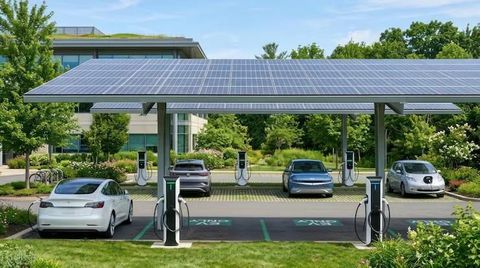
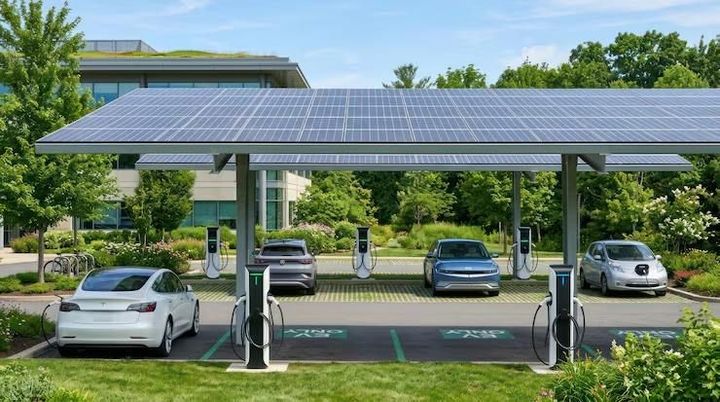
Electric vehicle charging infrastructure refers to the equipment, electrical systems, software, and networks used to recharge electric vehicles. It includes EV chargers, charging stations, power connections, communication systems, and digital platforms that help drivers locate charging points and manage charging sessions.
This infrastructure supports battery electric vehicles and plug-in hybrid vehicles, which rely on electricity for some or all of their driving.
The development of electric vehicle charging infrastructure is closely connected to advances in battery technology, electric mobility, renewable energy, and power distribution. As electric vehicles become more common, charging systems are needed in homes, workplaces, public parking areas, highways, and commercial facilities. Their purpose is to make electricity accessible for vehicle charging while maintaining safe and reliable operation.
Unlike conventional fuel stations, EV charging locations can be installed in places where vehicles remain parked for extended periods. Charging equipment can also communicate with vehicles, network operators, and energy management platforms. These capabilities allow charging schedules, energy consumption, access permissions, and equipment performance to be managed through connected systems.
Main Components of EV Charging Infrastructure
Electric vehicle charging infrastructure consists of several connected elements. Each component contributes to the delivery, control, or monitoring of electrical energy.
EV charging stations: Equipment that transfers electricity to a vehicle through a compatible connector.
Electrical distribution systems: Cables, circuit breakers, transformers, and protective devices that supply power safely.
Charging networks: Connected systems that manage station availability, access, payments, and operational information.
Communication software: Platforms that exchange information between chargers, vehicles, and network operators.
Energy management systems: Technologies that coordinate charging demand with available electrical capacity.
The design of a charging installation depends on vehicle compatibility, expected usage, electrical capacity, location, and the time available for charging.
Types of Electric Vehicle Chargers
EV chargers are commonly classified by their power delivery method and charging speed. Actual charging performance varies according to the vehicle battery, charger rating, battery temperature, and charging conditions.
Alternating current (AC) chargers supply AC electricity to the vehicle, where an onboard charger converts it into direct current (DC) for the battery. Direct current (DC) chargers perform this conversion within the charging equipment and deliver DC electricity to the battery.
Charger category | Typical power range | Common application |
|---|---|---|
AC Level 1 | Around 1–2 kW | Slow charging in residential settings |
AC Level 2 | Around 3–22 kW | Homes, workplaces, and public parking |
DC fast charging | Around 25–150 kW | Public charging hubs and travel corridors |
High-power DC charging | 150 kW and above | Highway locations and high-demand charging hubs |
These ranges are illustrative rather than universal standards. Regional electrical systems and equipment specifications can differ, and a vehicle may not accept the full rated output of a charger.
Importance
Electric vehicle charging infrastructure matters because charging access affects how people use electric transportation. Drivers need to understand where charging points are available, how long charging may take, and whether their vehicles are compatible with the equipment. Convenient access is particularly important for people who travel long distances or cannot install charging equipment at home.
Charging infrastructure also affects property owners, fleet operators, electricity providers, manufacturers, and urban planners. Residential buildings may need shared charging arrangements, while commercial fleets require systems that can support multiple vehicles without exceeding the available electrical capacity. Public authorities must also consider access, safety, parking arrangements, and the distribution of charging facilities.
Challenges for Everyday EV Users
Several practical challenges influence the charging experience.
Charging availability: A station may be occupied, temporarily unavailable, or unsuitable for a particular vehicle.
Charging duration: Battery capacity, charger output, and the vehicle's charging curve determine how long a session takes.
Connector compatibility: Vehicles and chargers must use compatible plugs and communication protocols.
Network access: Some stations require an application, account, access card, or another authentication method.
Electrical capacity: Older buildings and heavily used locations may require electrical upgrades before additional chargers can be installed.
These issues demonstrate why charging infrastructure involves more than installing charging equipment. Reliable operation depends on electrical planning, maintenance, clear information, and coordination between different technical systems.
Residential, Workplace, and Public Charging
Residential EV charging generally supports overnight charging or other extended parking periods. Dedicated home charging equipment can be connected to an appropriate electrical circuit, subject to the property's wiring capacity and applicable safety requirements.
Workplace charging allows vehicles to recharge while employees or visitors are parked. The number of chargers, expected parking duration, and simultaneous charging demand influence system design. Load management can distribute available power among several vehicles instead of allowing every charger to draw its maximum output continuously.
Public charging serves drivers who need access outside their homes or workplaces. These installations may be located at shopping areas, parking facilities, transport hubs, and highways. Their usefulness depends on location, operating condition, connector compatibility, and the accuracy of availability information.
Recent Updates
Electric vehicle charging infrastructure continues to develop through improvements in charging power, network interoperability, energy management, and installation design. Recent industry trends from 2024 through 2026 include greater attention to charging reliability, more integrated software platforms, and the coordination of vehicle charging with electricity networks.
Higher-Power Charging and Improved Hardware
High-power DC charging equipment is increasingly important for locations where vehicles need to recharge during shorter stops. Modern installations may include liquid-cooled cables, power-sharing cabinets, modular converters, and thermal monitoring systems. These features help equipment manage demanding electrical loads, although actual charging speed remains dependent on vehicle capability and battery conditions.
Manufacturers are also developing equipment that supports remote diagnostics and modular maintenance. Monitoring systems can identify communication failures, abnormal temperatures, or other faults, helping operators assess equipment performance.
Smart Charging and Energy Management
Smart charging systems adjust when or how much power a vehicle receives. They can respond to electricity demand, site capacity, charging schedules, and signals from an energy management platform.
Important developments include:
Dynamic load balancing across multiple charging points.
Integration with solar generation and stationary battery storage.
Charging schedules that respond to electricity network conditions.
Remote monitoring of station availability and equipment faults.
Greater attention to bidirectional charging, which can allow compatible vehicles to return electricity to a building or the grid.
Bidirectional charging requires compatible vehicles, suitable charging equipment, and appropriate electrical controls. It is not supported by every EV or charging station.
Network Interoperability and Payment Access
Charging networks are placing greater emphasis on compatibility between equipment and digital platforms. Open communication standards can help chargers and management software exchange information, while roaming arrangements can make stations accessible through different charging providers.
Payment and authentication methods vary by network and region. Some systems support contactless payment, while others use applications or network accounts. Clear pricing information, accurate station status, and dependable communication remain important factors in the overall charging experience.
Laws or Policies
Electric vehicle charging infrastructure is shaped by electrical safety requirements, building rules, transport policies, technical standards, and government programs. The exact requirements depend on the country, state, municipality, and type of installation. Because no target country has been specified, the following overview describes common regulatory approaches rather than the legal requirements of one jurisdiction.
Electrical Safety and Installation Requirements
Charging installations generally need suitable electrical protection, correctly rated wiring, grounding or earthing, and equipment designed for the intended environment. Depending on the location, permits, inspections, and work by qualified electrical professionals may be required.
Public charging installations may also need to meet requirements for accessibility, parking, signage, fire safety, and protection from weather or accidental impact. Commercial and multi-unit residential properties may face additional rules governing shared electrical systems and building modifications.
Technical Standards and Connector Compatibility
Technical standards help ensure that charging equipment and vehicles can communicate safely and transfer electricity within defined limits. Standards may address connector design, electrical protection, charging communication, electromagnetic compatibility, and equipment performance.
Different regions use different combinations of charging connectors and technical standards. An installation must therefore account for the vehicles expected to use it, rather than assuming that every charger can connect to every electric vehicle.
Government Programs and Grid Planning
Governments may support charging infrastructure through transport electrification plans, public procurement, grants, building requirements, or investment in highway charging corridors. Electricity regulators and network operators may also establish rules for grid connections, metering, demand management, and electricity supply.
Programs and eligibility conditions can change over time. Installation planning therefore requires checking the currently applicable rules for the relevant location. General information about charging technology should not be treated as confirmation that a particular project meets local legal requirements.
Tools and Resources
Digital tools and technical resources help drivers understand charging availability and help property owners plan installations. Their functions vary by network, vehicle, and region.
EV Charging Station Finders
Charging station maps display nearby locations, connector types, charging power, access arrangements, and reported availability. Some platforms also provide navigation, operating information, and user reports. Drivers should check the latest station information because network data can be delayed or incomplete.
EV Charging Time Calculators
Charging calculators estimate the time required to add a specified amount of energy to a battery. A simplified estimate can be calculated by dividing the energy required by the charging power.
For example, adding 30 kWh at an average charging rate of 10 kW would take approximately three hours under idealized assumptions. Real charging time may be longer because of conversion losses, power limitations, battery temperature, and charging-rate changes.
Charging Network Management Platforms
Network management software allows operators to monitor chargers, review energy consumption, manage user access, and identify equipment faults. Some platforms support remote configuration, session reporting, and payment processing.
These tools are particularly relevant to fleet depots, public charging hubs, workplaces, and properties with multiple charging points.
Electrical Load and Installation Planning Tools
Electrical load calculators help estimate the power demand created by several chargers operating at the same time. Installation planning may also involve site surveys, electrical drawings, cable sizing calculations, transformer assessments, and load-management simulations.
Useful technical information includes charger specifications, vehicle manuals, connector compatibility guides, applicable electrical codes, and equipment maintenance documentation. These resources help users understand the requirements before an installation or charging session.
FAQs
What Is Electric Vehicle Charging Infrastructure?
Electric vehicle charging infrastructure includes charging stations, electrical connections, communication software, network platforms, and supporting equipment used to recharge electric vehicles.
What Is the Difference Between AC and DC EV Chargers?
AC chargers supply alternating current that the vehicle converts for battery storage. DC chargers convert electricity within the charging equipment and supply direct current to the battery, often enabling higher charging power.
How Long Does EV Charging Take?
Charging time depends on battery capacity, the amount of energy needed, charger power, vehicle charging limits, and battery conditions. Charging can take several hours with lower-power AC equipment or substantially less time with compatible DC fast chargers.
How Do EV Charging Networks Work?
EV charging networks connect charging stations with software that manages access, station status, session information, and sometimes payments. Drivers may use applications, access cards, or supported payment methods to begin charging.
What Regulations Apply to EV Charging Station Installation?
Requirements may cover electrical safety, wiring, grounding, permits, inspections, accessibility, and technical compatibility. The applicable rules depend on the installation location and the type of charging equipment.
Conclusion
Electric vehicle charging infrastructure combines chargers, electrical distribution systems, network software, and energy management technologies to support electric transportation. AC charging commonly serves homes and workplaces, while DC charging supports locations where higher power is required. Recent developments emphasize smart charging, interoperability, equipment monitoring, and integration with electricity networks. Installation requirements and technical standards vary by location, making local regulations and equipment specifications important parts of infrastructure planning.