Explore Plastic Extrusion Machines With Advanced Extrusion Technology and Engineering Details
Plastic extrusion machines are industrial systems used to transform plastic materials into continuous products with a controlled shape. The process generally involves feeding plastic pellets, flakes, or other prepared materials into a heated barrel, melting the material, mixing it, and pushing it through a shaped opening called a die.
The development of plastic extrusion machines is closely connected with the growth of thermoplastic processing. Materials such as polyethylene (PE), polypropylene (PP), polyvinyl chloride (PVC), polystyrene, and engineering thermoplastics can be processed through different extrusion configurations. The exact machine design depends on the material characteristics and the required product.
Plastic extrusion technology is used for producing pipes, tubes, films, sheets, profiles, insulation layers, pellets, and other continuous plastic products. Modern systems combine mechanical components, temperature controls, sensors, motors, and digital control systems to maintain consistent processing conditions.
Basic Extrusion Process
A typical plastic extrusion machine follows several connected stages:
- Material feeding introduces prepared plastic into the machine.
- Conveying moves the material through a rotating screw.
- Heating raises the material to its processing range.
- Melting and mixing create a more uniform polymer melt.
- Pressure development pushes the melt toward the die.
- Die forming determines the basic cross-sectional shape.
- Cooling stabilizes the extruded product.
- Sizing controls dimensions where precise geometry is required.
- Pulling and cutting prepare the continuous product for further handling.
The screw is one of the central engineering components. Its geometry influences material movement, melting, mixing, pressure generation, and residence time inside the barrel.
Main Machine Types
Plastic extrusion machines can be categorized according to their screw arrangement and application. Single screw extruders use one rotating screw and are widely associated with pipes, profiles, sheets, films, and general thermoplastic processing.
Twin screw extruders contain two screws positioned within the same barrel. Depending on their arrangement, they can provide enhanced mixing and material handling for applications involving compounding, additives, fillers, or complex formulations.
Other specialized systems include film extrusion machines, sheet extrusion machines, pipe extrusion machines, profile extrusion machines, and extrusion coating systems. Each configuration uses different downstream equipment to achieve the required product characteristics.
Importance
Plastic extrusion machines matter because many everyday plastic products require continuous manufacturing rather than individual molding cycles. Pipes, cable insulation, plastic films, sheets, seals, and profiles can be produced continuously, making extrusion an important part of modern plastics processing.
The technology also addresses the need for dimensional control. Product thickness, width, diameter, surface appearance, and material consistency can be influenced by screw design, temperature, pressure, die geometry, cooling, and pulling speed.
Who Uses Extrusion Technology
Extrusion technology is relevant to several manufacturing sectors, including:
- Packaging and flexible material production
- Construction products such as pipes and profiles
- Electrical and cable insulation
- Automotive components and protective profiles
- Agricultural films and tubing
- Consumer and household products
- Industrial sheets and technical profiles
- Plastic recycling and material reprocessing
The technology also affects material engineers, machine operators, maintenance teams, product designers, quality-control personnel, and manufacturers that use extruded components.
Important Engineering Factors
A plastic extrusion machine must balance several physical variables. Polymer viscosity changes with temperature and shear, while excessive heat can affect some materials through degradation. Insufficient heating can result in incomplete melting or unstable flow.
Pressure is another important factor. The screw must generate enough pressure to move the polymer through the die, while excessive pressure can increase mechanical loads and create processing instability.
A simplified overview of important machine parameters is shown below.
| Parameter | Main Function | Possible Effect |
|---|---|---|
| Screw speed | Controls material movement and shear | Influences output and melt condition |
| Barrel temperature | Controls heating | Affects melting and viscosity |
| Die temperature | Controls melt flow through the die | Influences shape and surface quality |
| Cooling rate | Stabilizes the product | Affects dimensions and shape |
| Puller speed | Controls product movement | Influences thickness and dimensions |
| Melt pressure | Indicates pressure before the die | Helps identify flow changes |
| Screw design | Controls conveying and mixing | Influences melting and material uniformity |
Energy and Material Efficiency
Modern plastic extrusion machines increasingly focus on efficient heating, motor control, insulation, and process monitoring. Better control can reduce unnecessary thermal variation and help stabilize production conditions.
Material efficiency is also important. Scrap can result from startup operations, dimensional changes, contamination, incorrect settings, or product defects. Reprocessing suitable plastic waste can reduce material losses when the polymer and application permit it.
Recent Updates
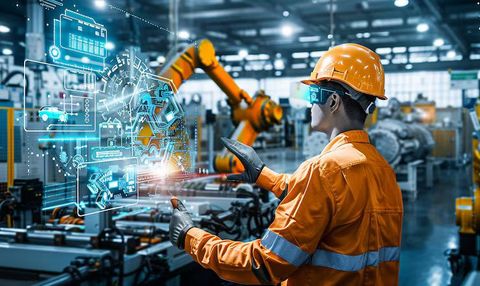
From 2024 through 2026, plastic extrusion technology has continued moving toward greater automation, digital monitoring, energy management, and material traceability. These developments are not limited to a single machine component; they involve the complete extrusion line.
Digital Process Monitoring
Modern extrusion lines increasingly use sensors to monitor temperature, pressure, motor load, screw speed, cooling conditions, and product dimensions. Data from these sensors can be displayed through industrial control systems.
Digital monitoring can help operators identify changes in processing conditions before they become larger production problems. Some systems also use historical process data to support maintenance planning and process analysis.
Advanced Screw and Die Design
Screw and die engineering continues to develop around specific polymers and applications. Screw elements can be designed for conveying, melting, mixing, or controlled pressure generation.
Computer-based engineering tools can model polymer flow and thermal behavior before physical equipment is produced. This approach can help engineers evaluate die geometry, pressure distribution, and potential flow problems.
Recycling and Circular Material Processing
Recycling has become an increasingly important consideration in extrusion engineering. Some extrusion systems are designed to process recycled polymer streams, although the suitability of recycled material depends on contamination, degradation, moisture, polymer type, and required product properties.
Processing systems may incorporate filtration, degassing, melt pumps, screen changers, and specialized feeding arrangements to manage variable recycled materials.
Automation and Quality Control
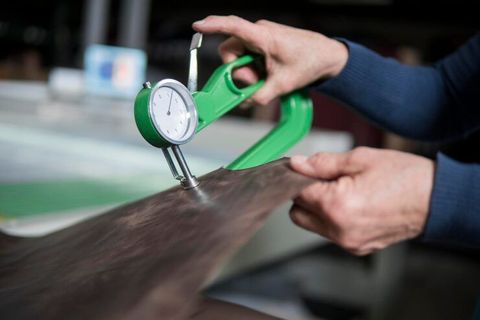
Extrusion lines are also incorporating automated measurement equipment. Laser-based diameter measurement, camera inspection, weight monitoring, and automated control loops can provide continuous information about product characteristics.
The broader trend is toward connecting extrusion equipment with plant-level manufacturing systems. This allows process information to be recorded and analyzed rather than relying entirely on manual observations.
Laws or Policies
Plastic extrusion is influenced by environmental, product-quality, workplace, and waste-management requirements. The exact rules depend on the material and the country where a machine or product is operated.
In India, the Plastic Waste Management Rules and subsequent amendments provide an important framework for plastic waste handling. The Plastic Waste Management (Amendment) Rules, 2024 introduced changes concerning definitions, reporting, and responsibilities connected with plastic materials and packaging.
Extended Producer Responsibility, commonly called EPR, is also relevant to plastic packaging. Regulatory requirements can affect how plastic packaging is documented, recycled, and managed after use. The Central Pollution Control Board has published environmental-compensation guidance related to non-fulfillment of specified plastic-waste obligations.
Product standards can also influence material selection. For example, the Bureau of Indian Standards maintains specifications for polyethylene and polypropylene materials used for molding and extrusion. The PE specification was revised as IS 7328:2026, while IS 10951:2020 covers polypropylene materials for molding and extrusion and has undergone amendments.
Manufacturers and processors therefore need to consider the applicable environmental requirements, material standards, product specifications, workplace requirements, and waste-management obligations associated with their particular application.
Tools and Resources
Several technical resources can help readers understand or evaluate plastic extrusion technology.
Extrusion Calculators
Engineering calculators can estimate parameters such as throughput, screw speed, residence time, pressure relationships, and material flow. These calculations are useful for understanding how machine settings interact, although actual processing conditions depend on the polymer and equipment design.
Polymer Data Sheets
Material data sheets provide information about processing temperatures, density, melt-flow characteristics, mechanical properties, and recommended processing conditions. These documents are particularly useful when comparing PE, PP, PVC, and engineering thermoplastics.
CAD and Flow Simulation
Computer-aided design software can be used to develop dies, screws, cooling components, and downstream equipment. Polymer-flow simulation tools can help examine pressure, temperature, velocity, and flow distribution.
Standards Databases
Standards databases help users identify applicable specifications for polymers, finished products, testing procedures, and safety-related requirements. The BIS Know Your Standard platform provides access to information associated with Indian Standards, including amendments and related documentation.
Process Monitoring Systems
Industrial monitoring platforms can collect information from temperature controllers, pressure sensors, motor drives, weighing systems, and dimensional measurement equipment. This information can support quality analysis and maintenance planning.
FAQs
What are plastic extrusion machines used for?
Plastic extrusion machines produce continuous plastic products such as pipes, films, sheets, profiles, tubing, insulation layers, and other shaped materials. The die determines the basic shape of the extruded material.
How does a plastic extrusion machine work?
A plastic extrusion machine feeds polymer material into a heated barrel. A rotating screw conveys, melts, mixes, and pressurizes the material before forcing it through a die, after which the product is cooled and dimensionally controlled.
What is the difference between single screw and twin screw extrusion?
Single screw extrusion uses one rotating screw and is widely used for general thermoplastic processing. Twin screw extrusion uses two screws and can provide enhanced mixing and material handling for compounding and more complex formulations.
What materials can plastic extrusion machines process?
Common materials include polyethylene, polypropylene, PVC, polystyrene, and various engineering thermoplastics. The machine configuration and processing conditions must match the material's thermal and flow characteristics.
How are plastic extrusion machines becoming more advanced?
Recent developments include digital process monitoring, automated dimensional measurement, improved screw and die designs, energy-management systems, recycling-oriented processing, and greater integration of sensors with industrial control platforms.
Conclusion
Plastic extrusion machines convert thermoplastic materials into continuous products through controlled feeding, melting, mixing, pressure generation, die forming, and cooling. Modern extrusion technology combines mechanical engineering with sensors, automation, process control, and material-management systems. Environmental requirements and material standards are also becoming increasingly relevant to extrusion operations. Understanding machine types, process variables, materials, and regulatory considerations provides a useful foundation for understanding modern plastic extrusion systems.