Complete Guide to Electric Cooking for Modern Kitchens and Everyday Meal Preparation
Electric cooking has become an important part of modern kitchen design, combining electrical heating technology with familiar everyday meal preparation.
Electric cooking includes appliances such as induction cooktops, ceramic cooktops, electric stoves, countertop ovens, electric grills, and other kitchen equipment that uses electricity as its primary energy source. Understanding how these systems work helps households choose suitable cooking methods, plan kitchen layouts, manage energy use, and prepare meals safely.
Context
What Electric Cooking Means
Electric cooking refers to preparing food with appliances that convert electrical energy into heat. Depending on the appliance, this heat may be transferred through a heated element, a ceramic surface, electromagnetic induction, or an electrically powered heating chamber.
Traditional electric stoves commonly use resistance heating elements. When electricity passes through a resistant material, the material becomes hot and transfers heat to cookware. Ceramic cooktops use a similar principle while placing the heating element beneath a smooth glass-ceramic surface.
Induction cooking works differently. An electromagnetic field generates heat directly within compatible cookware. This can provide rapid temperature changes while keeping the surrounding cooking surface relatively cooler than conventional heated elements.
Development of Electric Cooking
Electric cooking developed alongside the expansion of household electricity. Early electric cooking equipment introduced an alternative to wood, coal, and other fuel-based cooking methods. Over time, improvements in electrical controls, heating elements, insulation, thermostats, and cookware compatibility changed how electric kitchen appliances were designed.
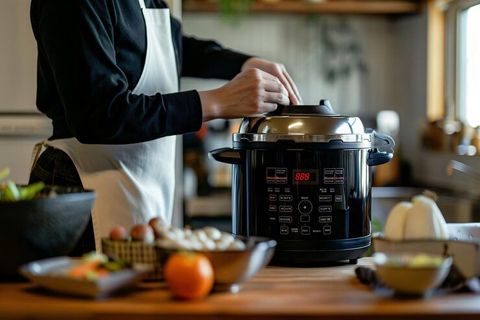
Modern kitchens now commonly combine several electric appliances. A household may use an induction cooktop for stovetop meals, an electric oven for baking, a microwave for reheating, and smaller appliances for tasks such as blending, boiling, grilling, or steaming.
Common Electric Cooking Methods
Electric cooking can involve several technologies:
Resistance heating uses electrical elements that become hot and transfer heat to cookware.
Ceramic cooking places heating elements beneath a smooth cooking surface.
Induction cooking uses electromagnetic energy to heat compatible cookware directly.
Electric ovens use heating elements and temperature controls for baking, roasting, and other preparation methods.
Countertop appliances provide dedicated heating functions for specific meal-preparation tasks.
Each method has different characteristics, so understanding the technology is useful when planning a modern kitchen.
Importance
Why Electric Cooking Matters Today
Electric cooking matters because kitchens increasingly contain several electrically powered appliances. Household cooking patterns have also changed, with many people preparing meals at different times of day and using appliances for both basic and specialized tasks.
Kitchen design is another important consideration. Electrical cooking equipment can influence countertop placement, ventilation planning, circuit requirements, storage arrangements, and appliance spacing. These factors become particularly relevant when renovating a kitchen or planning a new one.
Electric cooking can also provide precise controls. Many modern appliances allow users to select specific temperature levels, cooking modes, timers, or power settings. These controls can make it easier to repeat familiar cooking processes.
Who Uses Electric Cooking
Electric cooking is relevant to:
Households preparing daily meals
People living in apartments or compact homes
Families planning kitchen renovations
Home cooks who use multiple appliances
Property designers and kitchen planners
People comparing induction and conventional electric cooking
Users interested in monitoring household electricity consumption
The appropriate setup depends on cooking habits, available electrical capacity, cookware, kitchen dimensions, and the types of meals regularly prepared.
Energy Use and Kitchen Planning
Electric cooking does not automatically mean that every appliance consumes the same amount of electricity. Energy use depends on the appliance's power rating, cooking duration, temperature setting, efficiency, and frequency of use.
A simple planning table can help illustrate how different equipment is typically used.
| Appliance Type | Typical Function | Main Control | Common Consideration |
|---|---|---|---|
| Induction cooktop | Boiling, frying, simmering | Power or temperature | Compatible cookware |
| Ceramic cooktop | General stovetop cooking | Heat level | Surface heat retention |
| Electric oven | Baking and roasting | Temperature and timer | Preheating time |
| Microwave oven | Reheating and cooking | Power and time | Container compatibility |
| Electric grill | Grilling and browning | Heat level | Cooking surface size |
| Electric kettle | Heating water | Automatic or manual control | Capacity and power rating |
These are general categories rather than fixed performance measurements. Actual electrical consumption varies by appliance and household usage.
Safety in Everyday Meal Preparation
Electrical kitchen appliances require sensible handling. Users should follow the manufacturer's operating instructions and keep electrical connections away from water.
Important practices include:
Inspecting power cords and plugs periodically
Keeping ventilation openings unobstructed
Using cookware appropriate for the appliance
Avoiding overloaded electrical outlets
Allowing hot surfaces to cool before cleaning
Keeping children away from active cooking areas
Using appropriate electrical protection where required
Recent Updates
Induction Cooking Trends
From 2024 through 2026, induction cooking has continued to receive attention as kitchen design increasingly focuses on precise controls, easier surface cleaning, and integration with modern electrical appliances. Induction cooktops are also appearing in more compact kitchen layouts where surface space and appliance flexibility matter.
Some newer systems include features such as automatic pan detection, temperature sensors, power-level controls, timers, residual-heat indicators, and cooking-zone management. These features vary by appliance.
Smart Kitchen Integration
Connected kitchen technology has also expanded. Certain electric cooking appliances can communicate with mobile applications or household control systems, allowing users to monitor settings, timers, or appliance status.
Smart functions should be viewed as additional controls rather than replacements for normal kitchen supervision. A connected appliance still requires appropriate cookware, electrical installation, cleaning, and safe operating practices.
Energy Awareness
Energy monitoring has become more relevant as households examine how electrical appliances contribute to overall electricity consumption. Smart meters, appliance monitors, and energy-management platforms can help users understand patterns over time.
The useful comparison is not simply the appliance's maximum power rating. Actual energy consumption depends on how long the appliance operates and how its heating system cycles during cooking.
Laws or Policies
Electrical Safety Requirements in India
In India, electric cooking appliances are affected by electrical safety requirements, product standards, and household installation practices. Appliances may be subject to applicable standards administered through national regulatory and standards bodies.
Electrical installations also need to account for appropriate wiring, earthing, circuit protection, and appliance loads. Requirements can differ according to the building, installation type, appliance rating, and applicable local rules.
Consumers should rely on qualified electrical professionals for installation work involving new circuits, major wiring changes, or high-load appliances. Product documentation should also be checked for applicable electrical ratings and operating requirements.
Appliance Standards and Energy Information
Energy-related labeling and appliance standards can help households compare the electricity characteristics of applicable equipment. Labeling requirements vary by appliance category and can change as efficiency programs are updated.
When comparing appliances, users can examine rated power, operating modes, capacity, energy information, electrical requirements, and manufacturer instructions rather than relying on a single specification.
Building and Kitchen Installation Rules
Kitchen electrical planning may involve rules covering circuit protection, outlet placement, grounding, ventilation, clearances, and appliance installation. These requirements are not identical for every property.
For that reason, electrical work should follow the applicable building and electrical requirements for the installation location. General online information cannot replace the instructions or requirements that apply to a particular building.
Tools and Resources
Energy Calculators
Electricity-use calculators can estimate energy consumption from an appliance's power rating and operating time. A basic calculation uses:
Energy used in kilowatt-hours = Power in kilowatts × Operating time in hours
For example, an appliance rated at 2 kilowatts operating continuously for 30 minutes would use approximately 1 kilowatt-hour during that period. Actual household consumption can vary because many appliances cycle their heating elements.
Appliance Manuals
Manufacturer manuals are useful resources for understanding electrical ratings, cookware requirements, cleaning instructions, operating modes, safety warnings, and installation specifications.
Manuals can also explain symbols displayed on induction cooktops, ovens, and other digital appliances.
Energy Monitoring Tools
Smart meters and household energy-monitoring platforms can provide information about electricity consumption. Some systems provide appliance-level measurements, while others show broader household patterns.
These tools can help users understand how cooking fits into overall electricity use without relying on assumptions based solely on an appliance's maximum rating.
Kitchen Planning Templates
Kitchen planning templates can help organize appliance locations, countertop areas, storage, electrical outlets, and cooking zones. A practical layout normally considers workflow between food storage, preparation, cooking, and cleaning areas.
FAQs
What is electric cooking?
Electric cooking is the preparation of food using appliances that convert electrical energy into heat. Common examples include electric stoves, induction cooktops, ceramic cooktops, ovens, grills, and countertop cooking equipment.
Is induction cooking different from conventional electric cooking?
Yes. Conventional electric cooktops generally transfer heat from an electrical heating element to cookware. Induction cooking uses an electromagnetic field to generate heat directly in compatible cookware.
What cookware is needed for induction cooking?
Induction cooktops require cookware containing magnetic material that can interact with the electromagnetic field. Some stainless-steel cookware is compatible, while glass, ceramic, copper, and certain aluminum cookware may not work unless specifically designed with a suitable magnetic base.
How can electricity use for cooking be estimated?
Electricity use can be estimated from an appliance's power rating and operating duration. The basic calculation is power in kilowatts multiplied by operating hours, although real consumption can be lower when thermostats or automatic controls cycle the heating system.
Is electric cooking suitable for a modern kitchen?
Electric cooking can be incorporated into many modern kitchens, but suitability depends on electrical capacity, appliance type, cookware, kitchen layout, ventilation, and household cooking habits. Installation requirements should be reviewed before changing electrical circuits or adding high-power equipment.
Conclusion
Electric cooking includes several technologies that support everyday meal preparation, from conventional heating elements to induction systems and electrically powered ovens. Modern developments increasingly emphasize precise controls, energy awareness, smart functions, and flexible kitchen layouts. Safe electrical installation, suitable cookware, appliance instructions, and applicable standards remain important parts of kitchen planning. Understanding these fundamentals provides a practical foundation for evaluating electric cooking equipment and its role in modern meal preparation.